
Legal & Tax Disclosure
ATTORNEY ADVERTISING.
This article is provided for general informational purposes only and does not constitute legal, financial, or tax advice.
Reading this content does not create an attorney-client or professional advisory relationship.
Laws vary by jurisdiction and are subject to change. You should consult a qualified professional regarding your specific circumstances. |
DUI and impaired driving accidents in San Diego involve more than just negligence—they trigger a specific pathway for punitive damages under California Civil Code § 3294. While the criminal court handles the CVC § 23152 violation, the civil case at Morse Injury Law focuses on securing the full measure of justice through forensic toxicology, blood-alcohol data, and arrest records. In 2026, litigation often extends beyond the driver to “Dram Shop” liability and negligent entrustment theories. Whether your collision occurred on the I-5 or in a neighborhood like Pacific Beach, we build trial-ready files for San Diego Superior Court to ensure that “malice” is proven and that settlement values reflect the reckless nature of impaired conduct.
Kevin gets hit near the Gaslamp when a driver drifts through a red light, then tells the officer he “only had a couple.” The ambulance ride turns into imaging, stitches, and missed work, and the next call is an adjuster asking for a recorded statement before the toxicology even posts. The bills and wage loss stack fast, and the gap lands at $26,418.
DUI & impaired driving crashes in San Diego: what’s the first move under California Law that keeps the truth from getting “managed”?
The most important rule is simple: preserve the intoxication proof and the timeline before it evaporates. Under California Law, DUI liability often looks obvious, but insurers still attack causation and damages, and they will exploit missing body-cam references, delayed labs, and gaps in treatment.
How I build DUI injury cases when the defense is already planning the discount
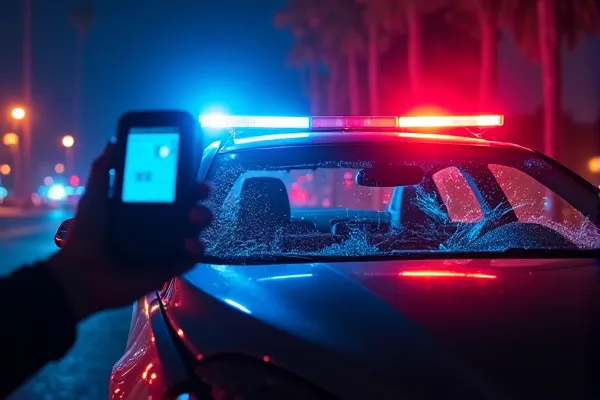
I’ve handled personal injury cases in California long enough to recognize the same pattern: the criminal DUI case gets treated like “someone else’s file,” and the civil insurer tries to settle your injury claim as if intoxication is a footnote. When the facts justify it, we prepare the case like it’s going to be tried in San Diego Superior Court, because that’s where selective storytelling collapses.
A realistic anonymized San Diego scenario: an impaired driver clips a vehicle on Harbor Drive, triggers a secondary impact, and the victim is left with a shoulder tear and post-concussion symptoms. The insurer pushes “comparative fault” and “minor property damage,” while quietly waiting for surveillance and lab timing to go stale. The strategy is to lock the negligence frame under Civ. Code § 1714, preserve intoxication proof tied to the DUI statutes, and calendar the civil deadline under CCP § 335.1.
- Proof priority: dispatch notes, body-cam, field sobriety observations, warrant timing, and lab chain-of-custody references.
- Damage priority: clear treatment chronology and functional loss documentation before the “it resolved” narrative takes hold.
- Valuation reality: punitive exposure is discussed early, but proven carefully, with the civil standard in mind.
Why California Law and San Diego Superior Court venue change leverage in DUI injury cases
DUI collisions carry a moral weight that insurers love to acknowledge in conversation and minimize on paper. Under California Law, negligence still has to be proven cleanly, which is why the duty framework in Civ. Code § 1714 stays at the center of the civil claim even when intoxication is obvious.
The venue matters because litigation forces commitment. In San Diego Superior Court, the defense can’t keep floating “maybe” theories forever; positions harden under discovery, experts get retained, and contradictions become exhibits. And no matter how serious the crash is, the statute of limitations under CCP § 335.1 is a hard wall.
The “Immediate 5”: questions San Diego victims ask after a DUI or impaired driving crash
1) If the driver was arrested for DUI, what parts of California Law actually matter in my injury claim?
The arrest helps, but the civil case still runs on proof and timing. The underlying impairment conduct is defined in Veh. Code § 23152 and, when injury is involved, in Veh. Code § 23153, while the civil duty and responsibility framework still tracks Civ. Code § 1714.
2) What evidence disappears fastest in San Diego DUI crashes, and how does that hurt valuation?
Time destroys leverage in DUI cases: bar or venue video overwrites, body-cam references get summarized, witnesses scatter, and lab timing arguments harden. When the intoxication proof is incomplete, insurers pivot to the familiar discount: “unclear impairment,” “unrelated symptoms,” and “inflated treatment,” even when liability should be straightforward.
3) Can punitive damages apply in a DUI injury case, and what does California Law require?
Punitive damages are not a slogan; they’re a legal standard with proof requirements. Under Civ. Code § 3294, the issue is whether the conduct meets the civil threshold for punitive exposure, and in a DUI fact pattern the details of impairment and choices leading up to the crash become central to that analysis.
4) What if the impaired driver is uninsured or underinsured — what law controls that coverage fight?
If the at-fault driver’s coverage is missing or inadequate, the claim often shifts into a contract-driven fight that insurers handle differently than standard liability negotiations. The statutory framework for UM/UIM coverage is in Ins. Code § 11580.2, and that shift affects procedure, deadlines, and what the carrier demands as “proof.”
5) How long do I have to file a civil lawsuit in San Diego, and what happens if I wait while the DUI case plays out?
The criminal case timeline does not protect the civil filing deadline. The general limitations period for many California personal injury actions is CCP § 335.1, and waiting for the DUI case to “finish” is how otherwise strong civil claims get boxed in or lost.
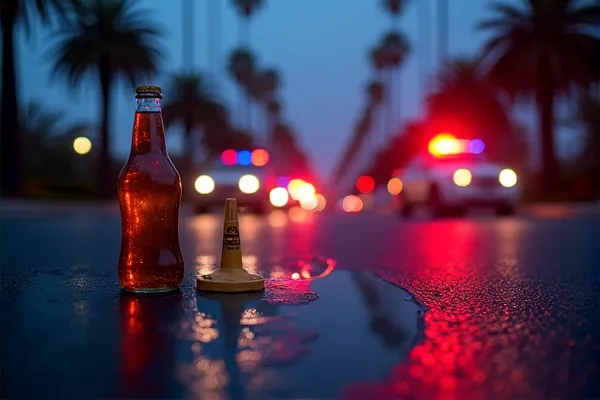
The civil case is where accountability becomes measurable. The insurer will act cooperative while quietly building a paper record that shrinks your injury, and the only antidote is documentation and procedure that holds up when the case is tested.
- Intoxication proof: capture what exists now, not what someone promises will exist later.
- Medical proof: consistent treatment and function notes make minimization harder.
- Litigation leverage: once filed, the defense has to pick a story and live with it.
Magnitude expansion: how DUI injury cases get proven (or quietly discounted) in San Diego
A) Evidence Evaluation in San Diego Cases
Police reports can be helpful, but they are not the whole case, and they often read like a summary designed for a criminal referral. For civil purposes, I compare the collision narrative with medical records, symptom onset, and objective findings, then tie the intoxication proof to the statutory DUI framework. When the file is thin, carriers turn uncertainty into a discount.
- Police reports vs medical records: the report frames the event, the records prove what it did to you over time.
- Scene photos vs repair documentation: impact mechanics matter, and “low damage” arguments still show up in DUI claims.
- Treatment timeline consistency: gaps are where insurers claim you “got better” or “changed the story.”
B) Settlement vs Litigation Reality
Before suit, insurers can posture without committing. Once a case is filed in San Diego Superior Court, positions become discoverable, experts get pinned down, and defense narratives have consequences. The clock is real, and it’s governed by CCP § 335.1, not by how long the DUI prosecution takes.
C) San Diego-Specific Claim Wrinkles
In San Diego, DUI crashes often tie to nightlife corridors, freeway merges, and late-night speeds that make the collision dynamics severe and the stories messy. Insurers still try the same Southern California resistance patterns: shared fault theories, “minor impact” messaging, and selective medical review. Your leverage rises when the intoxication proof is preserved and the civil duty and causation frame stays anchored to Civ. Code § 1714.
- Traffic density and rear-end patterns: chain-reaction impacts and “everyone stopped suddenly” blame shifting.
- Multi-vehicle freeway collisions: multiple insurers, multiple statements, and fast-evolving defense coordination.
- Common Southern California insurer resistance patterns: “comparative fault,” “treatment was excessive,” and “symptoms don’t match.”
Verified Outcomes or Lived Experiences
Amy
“They acted like the DUI arrest meant the insurance claim would be simple, but the adjuster still tried to pin my injuries on ‘pre-existing issues.’ Once the records were organized and the timeline was clear, the discounting stopped and the case finally moved.”
William
“I didn’t understand how quickly video and witnesses disappear until I was told the footage was gone. After we focused on what could still be proven and documented, the insurer stopped treating it like a low-value file.”
California Statutory Framework & Legal Authority
Attorney Advertising, Legal Disclosure & Authorship
ATTORNEY ADVERTISING.
This content is provided for general informational and educational purposes only and does not constitute legal, financial, or tax advice.
Under the California Rules of Professional Conduct and State Bar advertising regulations, this material may be considered attorney advertising.
Reading this content does not create an attorney-client relationship or any professional advisory relationship.
Laws vary by jurisdiction and are subject to change, including recent 2026 developments under California’s AB 2016 and evolving federal estate and reporting requirements.
You should consult a qualified attorney or advisor regarding your specific circumstances before taking action.
Responsible Attorney:
Richard Morse, California Attorney (Bar No. 289241).
Morse Injury Law is a practice location and trade name used by Richard Peter Morse III, a California-licensed attorney.
About the Author & Legal Review Process
This article was researched and drafted by the Legal Editorial Team of Richard Peter Morse III,
a collective of attorneys, legal writers, and paralegals dedicated to translating complex legal concepts into clear, accurate guidance.
Legal Review:
This content was reviewed and approved by Richard Morse, a California-licensed attorney (Bar No. 289241).
Mr. Morse concentrates his practice in estate planning and estate administration, advising clients on proactive planning strategies and representing fiduciaries in probate and trust administration proceedings when formal court involvement becomes necessary.
With more than 13 years of experience in California personal injury law,
Mr. Morse focuses on structuring enforceable estate plans, guiding fiduciaries through court-supervised proceedings,
resolving creditor and notice issues, and coordinating asset management to support compliant, timely distributions and reduce fiduciary risk. |