
Legal & Tax Disclosure
ATTORNEY ADVERTISING.
This article is provided for general informational purposes only and does not constitute legal, financial, or tax advice.
Reading this content does not create an attorney-client or professional advisory relationship.
Laws vary by jurisdiction and are subject to change. You should consult a qualified professional regarding your specific circumstances. |
Premises liability and slip-and-fall cases in San Diego are governed by the “Duty of Care” established in California Civil Code § 1714 and the landmark CACI 1000 jury instructions. Property owners are legally required to maintain their premises in a reasonably safe condition, which includes a proactive duty to inspect for “hidden” hazards. At Morse Injury Law, we specialize in overcoming the “Notice” defense—securing internal maintenance logs, employee training manuals, and digital surveillance to prove that a hazard existed long enough for a reasonable owner to have discovered it. Whether your injury occurred in a retail center, a private apartment complex, or a government building, we build trial-ready files for San Diego Superior Court to ensure that “comparative negligence” arguments do not shift the burden of safety onto the victim.
Melissa steps out of a Mission Valley grocery store, hits a slick entry mat that has curled at the edge, and her feet shoot forward. The manager says, “We didn’t know it was like that,” and a day later the incident video is “unavailable.” She is left with wrist hardware, missed shifts, and $22,410.
Slip and fall in San Diego: what is the one rule you must follow right now under California Law?
Treat a premises claim like perishable evidence, not a polite complaint. Under California Law, your case rises or falls on proving a dangerous condition and proving notice before it “disappears.” If you wait, the property owner controls the record, and the insurer prices your claim like a guess.
How slip-and-fall claims actually get discounted in San Diego, and how I force the file back into reality
I have been trained by people who used to defend these cases, and the playbook is predictable: deny the hazard, deny notice, and imply you were not watching where you were going. They lean on that because premises cases are evidence fights, not sympathy contests. The adjuster is not measuring your pain; they are measuring how hard it will be to prove notice and causation in court.
A realistic San Diego scenario: a fall at a La Jolla retail center where a leaking ice machine creates a wet path near the restrooms. The store claims it “inspects regularly,” but the logs are generic, and employees admit the leak happens “sometimes.” When the facts support it, I build it for San Diego Superior Court from the beginning, because the defense only stops hiding behind vague inspection claims when it knows those claims will be tested under oath.
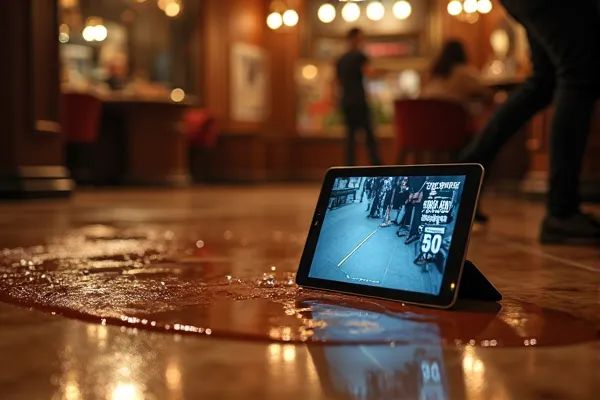
- Dangerous condition: the hazard must be described in concrete, provable terms (surface, slope, lighting, mats, spills, broken edges).
- Notice: insurers try to turn “we should have known” into “we had no idea,” which is why timing and documentation matter.
- Comparative fault: they routinely discount by arguing you were distracted, even when the condition was not open and obvious.
Why California Law and San Diego Superior Court venue change leverage in premises cases
Premises liability in California is grounded in negligence principles, and property owners can be held responsible for unsafe conditions under Civ. Code § 1714. The real battleground is whether the condition existed long enough, or was recurring enough, that the owner had actual or constructive notice. That is not philosophy; it is proof.
In San Diego, a claim that is positioned for San Diego Superior Court forces the defense to commit to details: when inspections happened, who did them, what they looked for, and what was documented. If the fall involves a public sidewalk, curb, or municipal facility, the rules shift again: liability can run through Gov. Code § 835, but only if you comply with the government claim procedures that insurers love to weaponize. The venue matters because discovery, subpoenas, and sworn testimony are how you replace “we didn’t know” with what the evidence actually shows.
The “Immediate 5”: questions San Diego people ask after a slip and fall
1) What do I need to prove in a San Diego slip-and-fall case under California Law?
You must prove a dangerous condition, prove the owner was negligent in addressing it, and prove that negligence caused your injuries under Civ. Code § 1714. The defense will focus on notice and argue the condition was not present long enough to be discovered. The strongest files document what the condition was, how long it existed, and why it was not reasonably safe.
2) The manager said “we didn’t know” and there is no video now. How does notice get proven?
Notice is often proven through timing, recurring problems, employee admissions, cleaning logs, and prior incident history rather than a single piece of “gotcha” evidence. If the hazard is a recurring condition, the owner cannot hide behind “no one reported it today” while still claiming reasonable care. This is why early documentation matters: it prevents the defense from rewriting the timeline after the fact.
3) If I fell on a public sidewalk or city property in San Diego, what changes immediately?
Public entity cases can be governed by Gov. Code § 835, and they live or die on government claim compliance before you ever reach the courthouse. Gov. Code § 911.2 imposes a short deadline to present the claim, and Gov. Code § 945.4 can bar a lawsuit if the claim procedure is not satisfied. The defense knows these deadlines cold, and they use delay as a strategy.
4) What evidence matters most in the first two weeks after a slip and fall?
Photos and measurements of the condition, your shoes, your clothing, and any visible injuries are critical, because the hazard often gets fixed quickly. Medical records matter just as much: a consistent treatment timeline is what ties symptoms to the fall instead of “something else.” If you can identify witnesses or employees, do it early, because turnover and memory loss are real.
5) How long do I have to file a San Diego slip-and-fall lawsuit, and what is the risk of waiting?
For many California personal injury cases, CCP § 335.1 controls the limitations period. Waiting makes the defense stronger: surveillance gets overwritten, mats get replaced, and maintenance records get “cleaner.” If the case belongs in San Diego Superior Court, you do not let an adjuster set the pace.
Premises cases are where insurers try to win by starving the file. They bet you cannot prove notice, and they price the claim like you will not file. I build these cases around what holds up in litigation: hazard proof, notice proof, and a clean medical timeline.
- Hazard proof: what exactly made the surface unsafe and why it was unreasonable under the circumstances.
- Notice proof: how long it existed, whether it was recurring, and what the owner did or failed to do.
- Injury proof: medical documentation that matches the mechanics of the fall and the timeline of symptoms.
Magnitude expansion: what moves a San Diego slip-and-fall case
A) Evidence Evaluation in San Diego Cases
Police reports are often not the centerpiece in premises cases, but incident reports and 911 calls can still matter for timing and witness identification. Medical records are the backbone: they show mechanism, complaints, and progression, and they expose gaps the defense will exploit. Photos and repair documentation are what keep the hazard from being “mysterious” or minimized.
- Incident reports vs medical records: the report timestamps the event; records prove injury and consistency.
- Scene photos vs repair documentation: photos show the hazard; repairs show the owner recognized the condition.
- Treatment timeline consistency: clean timelines reduce causation attacks and valuation discounts.
B) Settlement vs Litigation Reality
Pre-suit, the insurer delays while it hunts for comparative fault and insists the condition was “open and obvious.” Once filed in San Diego Superior Court, the defense has to produce logs, policies, and witnesses, and those details either support the owner or expose the gap in reasonable care. Filing pressure also forces the insurer to price the risk of sworn testimony instead of repeating the same denial language.
C) San Diego-Specific Claim Wrinkles
San Diego premises cases often involve fast-fix hazards: entry mats, restaurant spills in the Gaslamp, condensation near coastal storefronts, and cracked transitions in older buildings. Another recurring wrinkle is “who owns it”: landlord vs tenant vs maintenance vendor, which matters for discovery and leverage. If the hazard is tied to a public entity location, the government claim rules become the first fight, not the last.
- Traffic density and rear-end patterns: crowded venues and high foot traffic increase spill frequency and speed of cleanup defenses.
- Multi-vehicle freeway collisions: parking structures and shared access points create multi-party responsibility disputes.
- Common Southern California insurer resistance patterns: deny notice, blame footwear, and discount injuries as “soft tissue” unless the medical record is tight.
Lived Experiences
Anthony
“They acted like the fall was my fault because I didn’t see the slick area. Richard Morse focused on the timeline, the recurring problem, and the maintenance records, and the case finally got treated like a real liability claim.”
Crystal
“The adjuster kept saying there was no proof and no video. Richard Morse built the case around what could be proven, and the outcome reflected the surgery and the time I lost from work.”
California Statutory Framework & Legal Authority
Attorney Advertising, Legal Disclosure & Authorship
ATTORNEY ADVERTISING.
This content is provided for general informational and educational purposes only and does not constitute legal, financial, or tax advice.
Under the California Rules of Professional Conduct and State Bar advertising regulations, this material may be considered attorney advertising.
Reading this content does not create an attorney-client relationship or any professional advisory relationship.
Laws vary by jurisdiction and are subject to change, including recent 2026 developments under California’s AB 2016 and evolving federal estate and reporting requirements.
You should consult a qualified attorney or advisor regarding your specific circumstances before taking action.
Responsible Attorney:
Richard Morse, California Attorney (Bar No. 289241).
Morse Injury Law is a practice location and trade name used by Richard Peter Morse III, a California-licensed attorney.
About the Author & Legal Review Process
This article was researched and drafted by the Legal Editorial Team of Richard Peter Morse III,
a collective of attorneys, legal writers, and paralegals dedicated to translating complex legal concepts into clear, accurate guidance.
Legal Review:
This content was reviewed and approved by Richard Morse, a California-licensed attorney (Bar No. 289241).
Mr. Morse concentrates his practice in estate planning and estate administration, advising clients on proactive planning strategies and representing fiduciaries in probate and trust administration proceedings when formal court involvement becomes necessary.
With more than 13 years of experience in California personal injury law,
Mr. Morse focuses on structuring enforceable estate plans, guiding fiduciaries through court-supervised proceedings,
resolving creditor and notice issues, and coordinating asset management to support compliant, timely distributions and reduce fiduciary risk. |