
Legal & Tax Disclosure
ATTORNEY ADVERTISING.
This article is provided for general informational purposes only and does not constitute legal, financial, or tax advice.
Reading this content does not create an attorney-client or professional advisory relationship.
Laws vary by jurisdiction and are subject to change. You should consult a qualified professional regarding your specific circumstances. |
Soft tissue injuries in San Diego—including whiplash, strains, and sprains—are frequently undervalued by insurers who label them as “minor” or “subjective.” In 2026, California litigation has shifted toward the “Objective Functional Impact” model, where recovery is driven by documented limitations in daily life and specialized imaging that captures what X-rays miss. At Morse Injury Law, we neutralize the “Low-Impact” defense by connecting the physics of the collision—under CVC § 21703—to the clinical reality of myofascial trauma. Whether your injury occurred on the I-5 or in a neighborhood collision, we build trial-ready files for San Diego Superior Court, utilizing expert medical testimony to ensure that chronic pain and reduced mobility are valued as the permanent life-altering injuries they often are.
Amanda walks away from a crash near I-5 and Garnet thinking she “got lucky.” Two days later, her neck locks up, her shoulder burns, and she can’t lift her kid without a jolt. The adjuster calls it “just soft tissue,” then quietly demands recorded statements and gaps in care to devalue it. The first month of treatment, missed work, and co-pays hits $12,640.
Soft tissue injuries in San Diego: what do you need to do right now under California Law?
Treat soft tissue claims like they will be challenged in writing and under oath—because they will. Under California Law, your proof is the timeline: symptoms, examination findings, consistent care, and documented functional loss. If this turns into litigation, San Diego Superior Court won’t reward “I toughened it out” if the record looks like delay or inconsistency.
How I build soft tissue cases when insurers are trained to dismiss them
Soft tissue cases are where defense training shows up the clearest. The insurer isn’t confused; it’s strategic—downplay the injury, hunt for gaps, and force you into explaining why you didn’t get the “right” imaging. I learned that mindset from the inside, and I use it to build a file they can’t casually label “minor.”
A realistic San Diego scenario: a rear-end on Morena Blvd, whiplash with radiating arm pain, urgent care visit, then PT that gets interrupted by scheduling and childcare. The adjuster seizes on the gap, offers nuisance value, and implies the pain is “subjective.” Under California Law, the case is still about responsibility and damages—Civ. Code § 1714 for fault, and Civ. Code § 3333 for what the injury actually cost in your life. When the carrier won’t move, filing in San Diego Superior Court forces real accountability through discovery instead of phone-call theater.
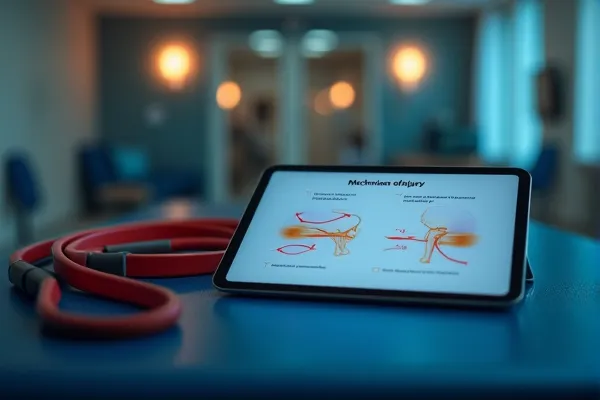
- Soft tissue isn’t “small”: it’s often a proof fight, not a medicine fight.
- The defense targets gaps: missed appointments, delayed evaluation, inconsistent complaints.
- Your record is leverage: it either supports causation or invites discounting.
Why California Law and San Diego Superior Court venue change outcomes in soft tissue cases
Carriers handle soft tissue injuries with a valuation model that assumes you’ll get tired and quit. California negligence responsibility starts at Civ. Code § 1714, but the case value is built through damages under Civ. Code § 3333—medical costs, wage loss, and the human impact the defense tries to minimize as “sprain/strain.” They also posture that “no MRI equals no injury,” even when the clinical findings and functional limitations are documented and consistent.
Venue matters because San Diego Superior Court is where the file stops being a negotiation and becomes evidence. Discovery forces the defense to commit: what they’re disputing, what they’re relying on, and what they ignored in your medical timeline. If multiple parties are in play, Civ. Code § 1431.2 can affect allocation of non-economic damages, which is part of how defendants price risk in settlement discussions.
The “Immediate 5”: questions San Diego victims ask when the insurer calls it “just soft tissue”
1) If the ER said “sprain/strain,” how do I prove a soft tissue injury is real under California Law?
You prove it with consistency and objective markers: documented tenderness, range-of-motion limits, positive orthopedic tests, and functional restrictions recorded over time. Under Civ. Code § 3333, damages are tied to what the injury actually cost you, so your medical record has to show impact, not just a diagnosis label. The defense can’t “disagree” with a clean timeline the way it can dismiss a vague complaint.
2) What timing mistakes do insurers use to devalue soft tissue injuries in San Diego?
The first mistake is delay: waiting days or weeks to get evaluated gives them an opening to argue an intervening cause. The second is gaps: missed treatment or long pauses allow them to claim the injury resolved or wasn’t serious. CCP § 335.1 sets the filing deadline, but your leverage usually rises or falls long before that based on how tight your documentation is.
3) Do I need an MRI or surgery for a San Diego insurer to take a soft tissue case seriously?
No, but you do need credible medical documentation that matches your mechanism of injury and the progression of symptoms. Soft tissue injuries are often diagnosed clinically; what matters is whether the findings and treatment plan are consistent and reasonable. Civ. Code § 3333 is about proving losses, and a well-documented course of care can do that without dramatic imaging.
4) How does comparative fault get argued in soft tissue car cases, and why does it matter?
The defense will use any detail—speed, following distance, lane position, even seat posture—to argue you share fault and should be discounted. Civ. Code § 1714 frames responsibility, and any fault allocation becomes a lever the adjuster uses to lower the number. In practice, the cleaner your evidence and timeline, the harder it is for them to use “fault haze” to dodge damages.
5) When does filing in San Diego Superior Court actually change the value of a soft tissue claim?
It changes value when the insurer is stalling or discounting because it thinks you won’t push the case into a proof forum. Filing triggers discovery and deadlines that force accountability, and it stops the carrier from hiding behind informal “we’re still reviewing” delays. If non-economic damages are a major component, Civ. Code § 1431.2 can also shape how defendants evaluate exposure across parties.
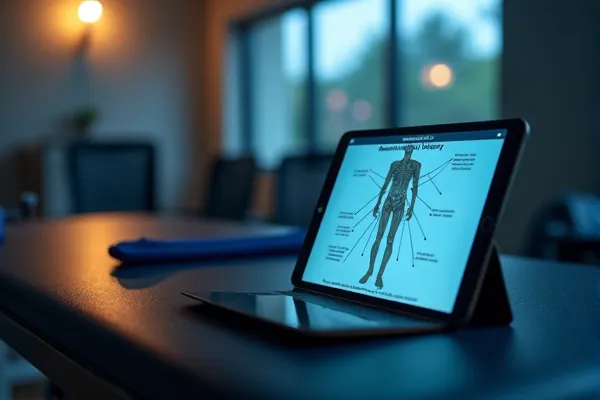
The quickest way to lose a soft tissue case is to let the defense define it as “subjective.” My job is to make it measurable—through the medical timeline, functional loss, and the real-world consequences the carrier hopes you won’t document.
- Police reports vs medical records: the report explains the crash; the records prove injury and causation.
- Scene photos vs repair documentation: photos show mechanism; repairs support force and timing.
- Treatment timeline consistency: consistent care shuts down the “it resolved” argument.
Magnitude expansion: what increases or destroys value in San Diego soft tissue claims
A) Evidence Evaluation in San Diego Cases
Soft tissue claims win or lose on alignment: mechanism, symptoms, findings, and the treatment plan matching over time. The defense looks for mismatches—new complaints that appear late, inconsistent reporting, or long gaps that make causation arguable. Your best leverage is a record that reads clean, calm, and consistent.
- Police reports vs medical records: police reports help with occurrence; medical records prove injury progression.
- Scene photos vs repair documentation: photos preserve angles and impact; repairs support severity and timing.
- Treatment timeline consistency: consistent follow-through reduces defense arguments about exaggeration or resolution.
B) Settlement vs Litigation Reality
Before filing, many carriers treat soft tissue files as a patience test. Once the case is filed in San Diego Superior Court, the defense has to commit to positions and produce information instead of vague “evaluation” language. Litigation doesn’t guarantee anything, but it removes the adjuster’s ability to devalue you with delay and silence.
C) San Diego-Specific Claim Wrinkles
San Diego traffic patterns create common mechanisms: sudden stops on I-5, chain reactions near interchanges, and low-speed impacts that still generate significant neck and back symptoms. The defense routinely calls these “minor impact” cases and tries to disconnect force from injury. The counter is disciplined documentation and a timeline that makes their dismissal look irresponsible.
- Traffic density and rear-end patterns: stop-and-go collisions create predictable whiplash mechanisms.
- Multi-vehicle freeway collisions: chain reactions create blame-shifting that can cloud valuation without clean evidence.
- Common Southern California insurer resistance patterns: delay, discount, and push you to “close it out” before the record matures.
Lived Experiences
Samantha
“They kept calling it ‘just soft tissue’ like it didn’t count. Richard Morse focused on the timeline and the proof, and the adjuster’s tone changed once the file was built like a case, not a complaint.”
Timothy
“I felt judged for not having dramatic imaging. Richard Morse explained what matters in California Law and kept everything consistent, and the outcome finally reflected what the injury actually did to my life.”
California Statutory Framework & Legal Authority
Attorney Advertising, Legal Disclosure & Authorship
ATTORNEY ADVERTISING.
This content is provided for general informational and educational purposes only and does not constitute legal, financial, or tax advice.
Under the California Rules of Professional Conduct and State Bar advertising regulations, this material may be considered attorney advertising.
Reading this content does not create an attorney-client relationship or any professional advisory relationship.
Laws vary by jurisdiction and are subject to change, including recent 2026 developments under California’s AB 2016 and evolving federal estate and reporting requirements.
You should consult a qualified attorney or advisor regarding your specific circumstances before taking action.
Responsible Attorney:
Richard Morse, California Attorney (Bar No. 289241).
Morse Injury Law is a practice location and trade name used by Richard Peter Morse III, a California-licensed attorney.
About the Author & Legal Review Process
This article was researched and drafted by the Legal Editorial Team of Richard Peter Morse III,
a collective of attorneys, legal writers, and paralegals dedicated to translating complex legal concepts into clear, accurate guidance.
Legal Review:
This content was reviewed and approved by Richard Morse, a California-licensed attorney (Bar No. 289241).
Mr. Morse concentrates his practice in estate planning and estate administration, advising clients on proactive planning strategies and representing fiduciaries in probate and trust administration proceedings when formal court involvement becomes necessary.
With more than 13 years of experience in California personal injury law,
Mr. Morse focuses on structuring enforceable estate plans, guiding fiduciaries through court-supervised proceedings,
resolving creditor and notice issues, and coordinating asset management to support compliant, timely distributions and reduce fiduciary risk. |