
Legal & Tax Disclosure
ATTORNEY ADVERTISING.
This article is provided for general informational purposes only and does not constitute legal, financial, or tax advice.
Reading this content does not create an attorney-client or professional advisory relationship.
Laws vary by jurisdiction and are subject to change. You should consult a qualified professional regarding your specific circumstances. |
E-bike battery fires and thermal events in San Diego are governed by the rigorous new standards of SB 1271 and California’s strict product liability framework. As of 2026, any e-bike battery sold in the state must carry permanent UL 2271 or UL 2849 certification marks; the absence of these labels provides a definitive pathway to establish liability following a fire. At Morse Injury Law, we specialize in “Thermal Runaway Forensics”—using battery management system (BMS) data and chemical analysis to prove design defects or manufacturing flaws. Whether your fire occurred in a North Park apartment or a Mission Valley garage, we build trial-ready files for San Diego Superior Court to neutralize corporate defenses that attempt to blame “user charging habits” for preventable lithium-ion explosions.
Melissa plugs her e-bike battery into a charger in her North Park apartment, and ten minutes later the room fills with a chemical-smoke smell. The pack hisses, vents, and flashes into a thermal event that burns her hand and forearm as she tries to pull it away from the wall. Before she’s even discharged, a claim rep starts asking whether she “modified” anything and whether she can “send the battery back” for inspection. The first round of ER care, burn treatment, and lost shifts hits $18,760.
E-bike battery fires & thermal events in San Diego: what is the one rule you must follow under California Law?
Do not discard, ship, or “return” the battery, charger, or bike until you have documented the scene and preserved the evidence in a way that holds up under California Law. In thermal cases, liability turns on the physical items and the timeline. If you lose the hardware, you hand the defense its favorite argument: “We can’t verify what happened.”
What I see in these cases when the product side and the insurance side start coordinating
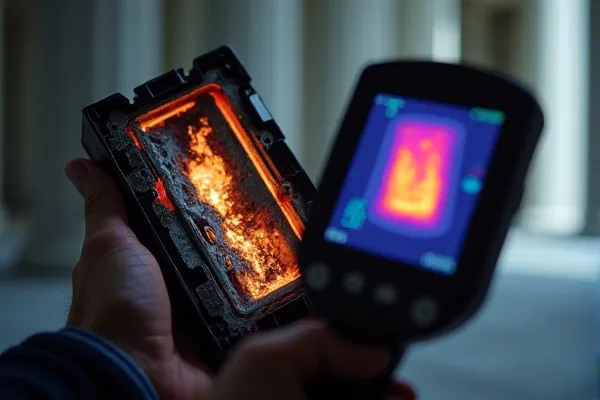
When a lithium battery vents and ignites, the injuries can be obvious, but liability is fought like a chess match. The defense doesn’t start with compassion; it starts with containment: capture your statements, move the hardware, and push “misuse” before anyone talks about defect. Under California Law, basic responsibility still begins with reasonable care (Civ. Code § 1714) and damages are measured by real loss (Civ. Code § 3333).
A realistic San Diego scenario: a rider charges an e-bike battery in a University Heights garage, the pack overheats, and the fire damages property and causes burn injuries. The landlord’s carrier points at the product; the product side points at “charging habits”; everyone wants someone else to pay. If the case has to be filed, San Diego Superior Court is where vague finger-pointing gets replaced by sworn positions and evidence preservation duties.
- The first move is always “misuse”: aftermarket chargers, “wrong outlet,” “left it unattended,” or “modified battery.”
- The second move is evidence control: they ask to “inspect” before you’ve documented and secured chain of custody.
- The third move is value suppression: “minor burn,” “soft tissue,” “no long-term impact,” even when treatment says otherwise.
Jurisdictional authority: why California Law and San Diego Superior Court venue change leverage
Thermal-event claims live at the intersection of product responsibility, negligence, and damages proof. Even when multiple parties are involved, the civil framework is not optional: fault starts with Civ. Code § 1714, and damages follow Civ. Code § 3333. If the defense tries to scatter blame across sellers, manufacturers, and “user error,” Civ. Code § 1431.2 affects how non-economic exposure gets evaluated when more than one defendant is in the case.
Venue matters because San Diego Superior Court is where preservation, discovery, and sworn testimony force clarity. Pre-suit, “we’re investigating” can drag for months while evidence disappears and memories drift. In court, deadlines and formal responses pressure the defense to pick a narrative and back it with proof.
The “Immediate 5”: questions San Diego victims ask after an e-bike battery fire
1) Who can be held responsible under California Law when an e-bike battery goes into thermal runaway and injures me?
Liability can involve negligence and product responsibility, but the starting point is still Civ. Code § 1714: who failed to use reasonable care and how that failure caused harm. In practice, the defense tries to funnel everything into “misuse” while the injured person is still in treatment. Your job is to preserve the evidence and document the damage so causation and damages under Civ. Code § 3333 are not left to argument.
2) What evidence matters most in a San Diego battery fire claim before anyone “inspects” the hardware?
Evidence is the case: the battery, charger, bike, burn photos, scene photos, and a clean timeline from incident to treatment. If the hardware is moved, altered, or shipped, the defense will claim it cannot be trusted. Preserve the items, document the chain of custody, and keep your losses grounded in real numbers under Civ. Code § 3333.
3) How do insurers and manufacturers use “misuse” and “aftermarket charger” arguments to reduce value?
They treat “misuse” like a magic word because it muddies causation and gives them a reason to deny or lowball before full evaluation. They will look for any deviation from a manual, any non-original component, and any delay in treatment to argue the burn severity is overstated. You counter it by locking the timeline, preserving hardware, and proving damages under Civ. Code § 3333 with medical records and wage documentation.
4) What deadlines apply if I’m injured by a battery thermal event in San Diego?
Many California personal injury claims fall under CCP § 335.1, but waiting is a strategic mistake because evidence degrades fast in fire cases. The legal deadline is not the practical deadline, especially when hardware is “lost,” disposed of, or returned. Move early so the proof is still intact when liability is contested.
5) When does filing in San Diego Superior Court become necessary in an e-bike fire case?
It becomes necessary when the defense tries to control the hardware, stall the investigation, or deny responsibility while your losses keep stacking. Filing forces formal discovery, preservation pressure, and sworn answers instead of informal “send it back to us” requests. In multi-party cases, Civ. Code § 1431.2 also changes how settlement risk is calculated for non-economic damages.
Thermal events trigger a predictable defense sequence: blame the user, seize the battery, and argue the injuries are “limited.” I’ve seen it enough times to know that the fastest way to lose leverage is to lose the evidence. In San Diego, the cleanest cases are the ones where the proof is preserved before the defense gets to shape the story.
- Police reports vs medical records: a report helps the narrative; medical records prove injury and progression.
- Scene photos vs repair documentation: photos preserve layout; repairs and receipts show what was installed and when.
- Treatment timeline consistency: consistent care shuts down the “it wasn’t that bad” and “it healed” arguments.
Magnitude expansion: what increases or destroys value in San Diego e-bike battery fire cases
A) Evidence Evaluation in San Diego Cases
Fire cases are evidence cases first, injury cases second, because the defense fights cause before it ever discusses compensation. Your medical records establish burn depth, infection risk, scarring, and functional limitation. The product side will test every gap in your timeline to argue the injuries are unrelated or exaggerated.
- Police reports vs medical records: the report sets the event; the records prove the harm.
- Scene photos vs repair documentation: photos capture outlet placement and charger setup; documentation confirms what equipment was used.
- Treatment timeline consistency: a clean sequence from incident to care is harder to attack.
B) Settlement vs Litigation Reality
Pre-suit, the defense often dangles quick money tied to broad releases and “product return” language. Once filed in San Diego Superior Court, the defense has to answer with evidence and sworn testimony, not just suspicion and implication. Litigation doesn’t guarantee a result, but it forces the process to become real.
C) San Diego-Specific Claim Wrinkles
San Diego’s dense housing, shared garages, and apartment charging setups add extra layers: property damage, landlord carriers, and competing narratives about “rules” and “charging policies.” The defense will also look for social media and app data to imply risky behavior or misuse. The cleanest way through is discipline: preserve hardware, document losses, and keep everything anchored to what can be proven.
- Traffic density and rear-end patterns: unrelated, but insurers still use the same playbook of delay and devaluation across claim types.
- Multi-vehicle freeway collisions: the “too many variables” argument mirrors how they talk about “too many causes” in thermal events.
- Common Southern California insurer resistance patterns: blame-shifting, early statement pressure, and fast settlement offers tied to sweeping releases.
Lived Experiences
Kelly
“They kept saying it was my fault and wanted the battery shipped out immediately. Richard Morse focused on preserving the evidence and the timeline, and the tone changed once the proof was locked down.”
Jeffrey
“I felt pressured to settle fast because the bills were piling up. Richard Morse explained what California Law actually requires and why San Diego Superior Court procedures matter when the defense refuses to be specific.”
California Statutory Framework & Legal Authority
Attorney Advertising, Legal Disclosure & Authorship
ATTORNEY ADVERTISING.
This content is provided for general informational and educational purposes only and does not constitute legal, financial, or tax advice.
Under the California Rules of Professional Conduct and State Bar advertising regulations, this material may be considered attorney advertising.
Reading this content does not create an attorney-client relationship or any professional advisory relationship.
Laws vary by jurisdiction and are subject to change, including recent 2026 developments under California’s AB 2016 and evolving federal estate and reporting requirements.
You should consult a qualified attorney or advisor regarding your specific circumstances before taking action.
Responsible Attorney:
Richard Morse, California Attorney (Bar No. 289241).
Morse Injury Law is a practice location and trade name used by Richard Peter Morse III, a California-licensed attorney.
About the Author & Legal Review Process
This article was researched and drafted by the Legal Editorial Team of Richard Peter Morse III,
a collective of attorneys, legal writers, and paralegals dedicated to translating complex legal concepts into clear, accurate guidance.
Legal Review:
This content was reviewed and approved by Richard Morse, a California-licensed attorney (Bar No. 289241).
Mr. Morse concentrates his practice in estate planning and estate administration, advising clients on proactive planning strategies and representing fiduciaries in probate and trust administration proceedings when formal court involvement becomes necessary.
With more than 13 years of experience in California personal injury law,
Mr. Morse focuses on structuring enforceable estate plans, guiding fiduciaries through court-supervised proceedings,
resolving creditor and notice issues, and coordinating asset management to support compliant, timely distributions and reduce fiduciary risk. |