
High-speed collisions often cause “Seatbelt Syndrome”—blunt force trauma that tears internal organs without breaking the skin. A common result is a Splenectomy (removal of the spleen). While you can survive without a spleen, California law recognizes this as a Permanent Impairment. Losing this organ compromises your immune system for life, increasing your risk of severe infections. We calculate the cost of this lifetime medical vulnerability, ensuring your settlement covers not just the surgery, but the decades of risk that follow.
Internal organ damage lawyer in San Diego: what do you do when symptoms are delayed but the clock is already running?
The single most important rule under California Law is to preserve the timeline—scene proof, symptom onset, triage notes, imaging orders, and surgical records—because organ injury cases are routinely attacked as “unrelated,” “delayed,” or “pre-existing” the moment the defense sees a gap.
How these cases actually get handled in San Diego—when the injury is inside and the defense wants it to stay invisible
Internal organ damage cases are where insurers test how well you can prove what you can’t photograph. They’ll admit there was an incident, then pivot to causation: “Symptoms started later,” “Vitals were stable,” “No acute findings,” “Could be something else.” That’s not medicine. That’s valuation strategy.
In an anonymized San Diego case, a driver involved in a side-impact collision near Mission Valley developed worsening abdominal pain after discharge. Imaging later revealed an organ injury requiring operative care. Under California Law, we built it like it belonged in San Diego Superior Court: EMS run sheets, ER triage, serial vitals, imaging orders and reads, consult timing, operative reports, and the post-op restriction schedule tied to wage loss. Once the chronology was locked, the “it’s unrelated” narrative stopped working.
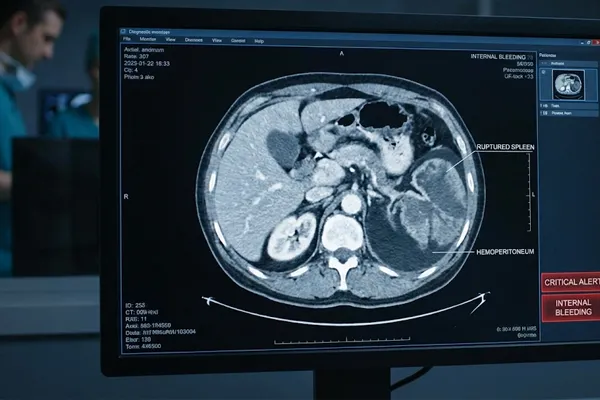
Common internal injuries that get minimized early (until the records tell the truth) include:
- Spleen or liver injury with bleeding risk and follow-up restrictions.
- Bowel injury where delayed diagnosis increases complications.
- Kidney injury involving hematuria, imaging findings, or ongoing impairment.
- Thoracic injuries like lung contusion or hemothorax with oxygenation issues.
Liability still tracks duty and breach—most often anchored through Civ. Code § 1714—but damages live and die on the medical timeline.
Why California Law and San Diego Superior Court venue change leverage in internal organ damage claims
Organ injury cases often start with an adjuster “waiting for records” while quietly shaping a story: delayed symptoms equals unrelated injury. Venue matters because filing in San Diego Superior Court forces the defense to stop posturing and start producing—scene evidence, statements, maintenance logs, and internal communications—under enforceable deadlines.
Discovery scope under CCP § 2017.010, document demands under CCP § 2031.010, and depositions under CCP § 2025.010 let us lock down what happened, who knew what, and when—before the defense has months to “interpret” it into harmlessness.
The “Immediate 5”: internal organ damage questions that decide proof and value in San Diego
1) What evidence matters most when the injury isn’t visible but the consequences are severe?
The case is the chronology: mechanism of injury, symptom onset, vitals, imaging timing, consult timing, and operative findings. Under Civ. Code § 1714, you still must prove causation, and insurers exploit gaps to argue “something else did this.” Build the file like it will be tested in San Diego Superior Court, with records that line up and don’t rely on memory.
2) What deadlines control an internal organ injury claim in California?
Most personal injury actions are governed by CCP § 335.1, which provides a two-year limitations period. That doesn’t mean you have two years to act—video overwrites, vehicles get repaired, and third-party witnesses disappear. In San Diego, delay is a leverage donation to the defense.
3) How does the defense use “stable vitals” or “delayed symptoms” to discount organ damage?
They use it as a causation wedge: “If it were real, it would have shown immediately.” That’s not how blunt trauma works in real life, but it’s a familiar insurance argument. The practical response is to connect the dots with contemporaneous records—serial exams, labs, imaging orders, radiology reads, and operative notes—so the story reads like medicine, not speculation.
4) How does comparative fault show up in San Diego organ injury cases?
Comparative fault gets used to shrink exposure: seatbelt narratives, speed assumptions, lane position arguments, or “you should have sought care sooner.” Allocation issues under Civ. Code § 1431.2 can affect how defendants view non-economic risk, and they price that into settlement. We answer it with objective reconstruction sources and clean medical continuity.
5) What changes once we file in San Diego Superior Court?
Filing triggers enforceable discovery: broad scope under CCP § 2017.010, document demands under CCP § 2031.010, and depositions under CCP § 2025.010. That matters because the defense can’t “investigate” forever; they must commit to positions you can test and impeach.
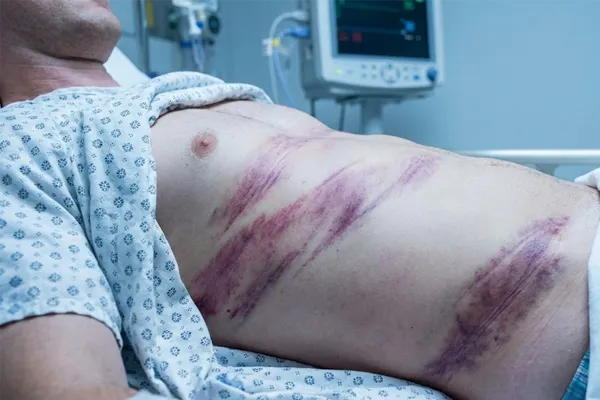
In internal organ cases, I look for leverage markers that insurers can’t talk around:
- Mechanism consistency: crash dynamics or incident forces that match the organ injury pattern.
- Objective medical anchors: imaging, labs, operative findings, and documented complications.
- Restricted life impact: work restrictions, follow-ups, and recovery limits tied to the records.
The defense can argue about pain. They struggle to argue with blood loss, imaging, and operative notes.
Magnitude expansion: how internal organ damage claims get evaluated and fought in San Diego
A) Evidence Evaluation in San Diego Cases
Organ cases are won by the record, not the rhetoric. We compare incident proof to medical proof and make sure the sequence reads clean: impact, symptoms, assessment, imaging, intervention, and recovery restrictions.
- Scene and vehicle evidence to support the force mechanism and injury plausibility.
- Medical records: triage notes, serial exams, labs, imaging orders, and radiology impressions.
- Treatment timeline consistency: consults, surgery, follow-up restrictions, and complications.
B) Settlement vs Litigation Reality
Before filing, carriers use uncertainty as a discount tool. After filing in San Diego Superior Court, uncertainty narrows because discovery compels production and testimony. That changes risk, and risk changes numbers.
- Document production reduces “missing records” games.
- Depositions lock down what defendants knew and what they did after the incident.
- Medical chronology becomes demonstrable and harder to reframe.
C) San Diego-Specific Claim Wrinkles
San Diego cases often involve congested corridors (805, 5, 15, 8), layered liability, and defense teams trained to stall until people get tired. Organ injuries don’t give you that luxury—medical costs and lost time pile up fast, and insurers know it.
- Traffic density and multi-vehicle sequencing disputes that complicate causation narratives.
- Commercial defendants and vendors with layered insurance and preservation issues.
- Common Southern California resistance patterns: delay, minimization, and “alternative cause” pivots.
Lived Experiences
Hunter
“They acted like it was just soreness because I didn’t go back the same day. Richard focused on the timing, the imaging, and the surgery notes, and the insurer stopped pretending the injury was ‘unrelated.’”
Kelly
“The adjuster kept saying my vitals were stable so it couldn’t be serious. Richard built the file like a trial case, and the final resolution finally reflected what the injury actually did to my work and recovery.”
California Statutory Framework & Legal Authority
|
Attorney Advertising, Legal Disclosure & Authorship
ATTORNEY ADVERTISING.
This content is provided for general informational and educational purposes only and does not constitute legal advice.
Under the California Rules of Professional Conduct and applicable State Bar of California advertising regulations,
this material may be considered attorney advertising.
Viewing or reading this content does not create an attorney-client relationship.
Laws and procedures governing personal injury claims vary by jurisdiction and may change over time.
You should consult a qualified California personal injury attorney regarding your specific situation before taking any legal action.
Responsible Attorney:
Richard Morse, California Attorney (Bar No. 289241).
Morse Injury Law is a practice name and location used by Richard Peter Morse III, a California-licensed attorney.
About the Author & Legal Review Process
This article was prepared by the legal editorial team supporting Richard Peter Morse III,
with the goal of explaining California personal injury law and claims procedures in clear, accurate, and practical terms for injured individuals in San Diego and surrounding communities.
Legal Review:
This content was reviewed and approved by Richard Morse, a California-licensed attorney (Bar No. 289241),
who concentrates his practice on personal injury litigation and insurance claim disputes.
With more than 13 years of experience representing injury victims throughout California,
Mr. Morse focuses on serious personal injury matters including motor vehicle collisions, uninsured and underinsured motorist claims,
premises liability, catastrophic injury, and wrongful death.
His practice emphasizes claims evaluation, insurance carrier accountability, and litigation in California courts when fair resolution cannot be achieved.
|