
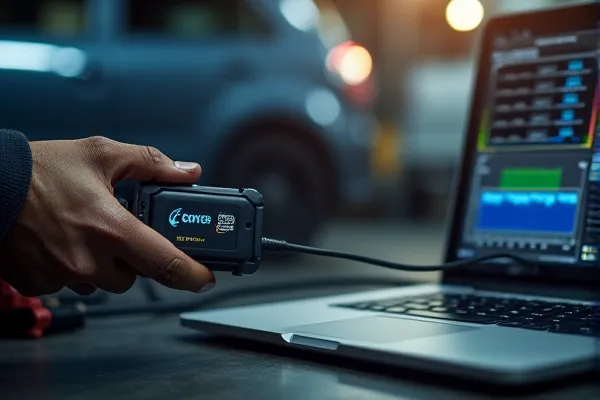
Witnesses forget. Computers don’t. Modern vehicles are equipped with an Event Data Recorder (EDR). This “Black Box” records critical data in the 5 seconds before impact: speed, brake application, steering angle, and seatbelt use. Insurance companies often try to “total” and crush the car quickly to destroy this evidence. We send forensic engineers to download this encrypted data immediately, proving exactly how fast the defendant was going, regardless of what they told the police.
Investigation Phase: when do you need an accident reconstruction expert in San Diego?
The most important rule: preserve evidence before the insurer writes your crash for you. Under California Law, the side with the better physical proof usually controls liability leverage, especially when the case ends up in San Diego Superior Court.
If your case depends on speed, timing, lane position, or who hit who first, “wait and see” is how evidence disappears.
How I use reconstruction early to flip the claims narrative
I’ve been trained by people who used to defend these cases for insurers, so I know how they think. They look for ambiguity, then they assign fault fast—because every percentage point they can pin on you is money off the table.
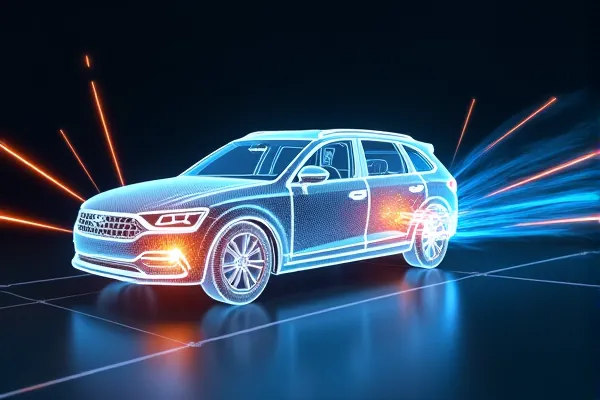
Here’s a realistic San Diego scenario: a multi-vehicle freeway crash, conflicting witness statements, and a police report that lists “unsafe speed” without hard measurements. We bring in a reconstruction expert early, lock down the scene geometry, match crush patterns to impact sequence, and preserve electronic vehicle data before a shop wipes it or a yard auctions the car.
- Problem: insurer blames the injured driver based on a vague report and selective photos.
- Escalation: vehicles move, data is at risk, and the defense starts “comparative fault” positioning.
- Strategy: preserve, measure, model, and force the other side to answer the physics.
- Resolution: liability becomes a proof issue, not a storytelling contest, and valuation follows the risk.
In court, a reconstruction opinion has to be built on a reliable foundation, not vibes. Under Evidence Code §§ 720 and 801, the expert must be qualified and the opinion must be based on a type of matter experts reasonably rely on.
And if the opinion is going to matter at trial, it has to be disclosed the right way and on time under California’s expert discovery rules, not “surprise-dropped” after the defense has already set their theme.
Why California Law and San Diego Superior Court venue change the investigation
San Diego Superior Court doesn’t reward sloppy investigation. Once litigation starts, discovery deadlines and expert disclosure rules create real consequences for the side that waited too long or failed to preserve evidence.
Insurers know this. That’s why they push early recorded statements and quick “liability decisions” before you’ve had a fair shot to secure photos, measurements, data, and witness contact information.
- Leverage: physics-based reconstruction reduces “he said / she said” and forces risk-based evaluation.
- Procedure: expert opinions live or die by disclosure and admissibility rules, not confidence.
- Timing: vehicles get repaired, salvaged, or sold—often within weeks—so preservation is the first battle.
The “Immediate 5” questions San Diego crash victims ask about reconstruction experts
1) When is reconstruction actually necessary, instead of just using the police report?
Reconstruction is necessary when liability turns on measurable facts: impact sequence, speed estimates, braking, perception-reaction timing, lane positioning, or line-of-sight. Police reports are helpful, but they are not a physics report, and insurers exploit gaps when the report is based on assumptions instead of measurements.
2) What evidence should be preserved immediately so a reconstruction expert can do real work?
Preserve vehicle condition, scene photos, skid/mark documentation, repair estimates, EDR/telematics where available, and witness identifiers before memory fades. If a third party holds key evidence—like a tow yard, repair facility, or custodian of records—California subpoenas under Code of Civil Procedure § 1985.010 are one of the tools used to compel production.
3) How does expert testimony get admitted in a California case, and what can get it excluded?
Expert testimony in California requires a qualified expert (Evidence Code § 720) and opinions based on reliable matter and methods experts reasonably rely on (Evidence Code § 801). It can be weakened or excluded when the opinion rests on speculation, ignores key physical evidence, or the expert can’t explain the basis with the kind of material covered by Evidence Code § 802.
4) If we file in San Diego Superior Court, what are the disclosure rules for reconstruction experts?
California’s expert discovery framework requires proper designation and exchange, including the rules for demanding and exchanging expert witness information under Code of Civil Procedure §§ 2034.210 and 2034.260. If a party fails to comply, Code of Civil Procedure § 2034.300 can authorize exclusion of the expert testimony, which is a litigation-ending risk in a close-liability crash.
5) How does reconstruction affect “shared fault” arguments and settlement leverage?
Reconstruction narrows the fight to what can be proved, which makes it harder for an insurer to inflate your percentage of fault with generic “following too close” language. When the physics shows impact order and avoidability, it directly changes valuation because comparative negligence reduces damages mathematically and juries tend to punish speculation.
What changes the value of reconstruction in San Diego cases
A) Evidence Evaluation in San Diego Cases
- Police reports vs medical records: the injury timeline and mechanics must match the crash sequence the insurer is pushing.
- Scene photos vs repair documentation: crush patterns, overlap, and angle-of-impact get compared to estimates and tear-down notes.
- Treatment timeline consistency: early complaints and documented symptoms reduce “delayed onset” attacks.
- San Diego claims handling: carriers use ambiguity to lowball; reconstruction collapses ambiguity into measurable facts.
B) Settlement vs Litigation Reality
Once the case is filed in San Diego Superior Court, discovery forces commitment: positions get locked, testimony gets taken, and expert opinions become the centerpiece of liability risk. The defense stops “discussing” and starts “proving,” which is where a well-supported reconstruction shifts leverage.
- Discovery obligations: written discovery and expert exchanges create deadlines the insurer can’t ignore.
- Leverage: a defensible reconstruction makes the defense pay for risk instead of arguing theory.
- Risk: bad or late reconstruction can backfire; timing and foundation matter.
C) San Diego-Specific Claim Wrinkles
- Traffic density and rear-end patterns: freeway compression and sudden slowdowns create chain reactions that insurers oversimplify.
- Multi-vehicle freeway collisions: impact sequencing is the case; without it, everyone blames everyone.
- Common SoCal insurer resistance: “no contact,” “minimal damage,” and “you could have avoided it” are standard scripts.
Lived Experiences
Noah
“The insurance adjuster kept saying the report made it ‘my fault.’ Once Richard brought in a reconstruction expert and the photos were matched to the impact sequence, they stopped lecturing and started negotiating.”
Katie
“I didn’t realize the tow yard could release my car so fast. Richard treated preservation like an emergency, and the reconstruction work made the case about facts instead of finger-pointing.”
California Statutory Framework & Legal Authority
|
Attorney Advertising, Legal Disclosure & Authorship
ATTORNEY ADVERTISING.
This content is provided for general informational and educational purposes only and does not constitute legal advice.
Under the California Rules of Professional Conduct and applicable State Bar of California advertising regulations,
this material may be considered attorney advertising.
Viewing or reading this content does not create an attorney-client relationship.
Laws and procedures governing personal injury claims vary by jurisdiction and may change over time.
You should consult a qualified California personal injury attorney regarding your specific situation before taking any legal action.
Responsible Attorney:
Richard Morse, California Attorney (Bar No. 289241).
Morse Injury Law is a practice name and location used by Richard Peter Morse III, a California-licensed attorney.
About the Author & Legal Review Process
This article was prepared by the legal editorial team supporting Richard Peter Morse III,
with the goal of explaining California personal injury law and claims procedures in clear, accurate, and practical terms for injured individuals in San Diego and surrounding communities.
Legal Review:
This content was reviewed and approved by Richard Morse, a California-licensed attorney (Bar No. 289241),
who concentrates his practice on personal injury litigation and insurance claim disputes.
With more than 13 years of experience representing injury victims throughout California,
Mr. Morse focuses on serious personal injury matters including motor vehicle collisions, uninsured and underinsured motorist claims,
premises liability, catastrophic injury, and wrongful death.
His practice emphasizes claims evaluation, insurance carrier accountability, and litigation in California courts when fair resolution cannot be achieved.
|