
Insurance companies have a statutory duty under California Insurance Code § 790.03(h)(5) to attempt “in good faith to effectuate prompt, fair, and equitable settlements” when liability is clear. When they fail to do this—by rejecting a reasonable demand within policy limits—they can “pop the policy.” This means that under the rule established in Johansen v. California State Auto. Assn., the insurance company becomes liable for the entire judgment, even if it exceeds the policy cap. We use this law to turn a small $15,000 policy into a limitless source of recovery if the insurer plays games.
Insurance Claims: Policy Limits & Coverage Disputes in San Diego — what you must lock down early
In San Diego injury claims, the fastest way to lose leverage is to treat coverage like a back-office detail. Under California Law, you must force clarity on what policies exist, what limits apply, and what defenses the carrier is asserting before you build your settlement plan around money that may never be available.
How policy limits fights really unfold once the carrier stops being friendly
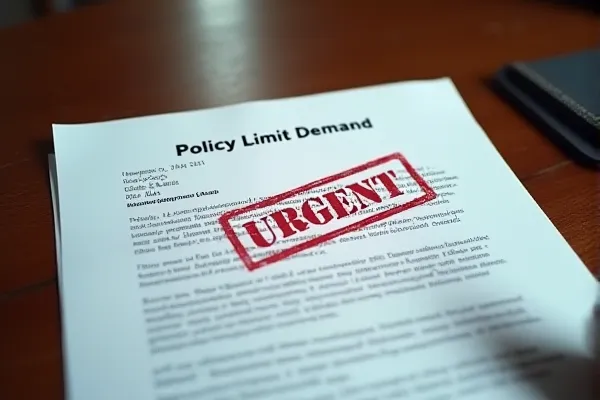
When coverage gets disputed, the insurer is no longer “adjusting” your injury. They are defending a contract. In San Diego Superior Court, that shift changes the playbook and the timeline, and under California Law your case strategy has to account for it early.
A real San Diego scenario: a freeway crash near the 163 connector, clear liability, meaningful treatment, and then a policy issue surfaces—either limits are lower than expected, or the carrier claims an exclusion or “no permission” defense. The defense knows you can’t negotiate what you can’t prove, so they slow-roll coverage letters while they push you to settle cheap. My job is to make the policy fight visible: use discovery to identify insurance agreements, pressure-test the carrier’s position, and if needed, posture the case so coverage disputes stop being a private insurer conversation and start becoming litigation risk.
Why California venue and procedure control leverage in coverage disputes
Coverage disputes live at the intersection of injury facts and contract defenses. In San Diego, carriers bank on delay because injured people feel cash pressure faster than insurers feel courtroom pressure. California Law gives tools to pry open what the insurer wants to keep vague, including discovery focused on insurance agreements under CCP § 2017.210.
And when the real dispute becomes “does this policy apply,” the procedural pathway often turns on declaratory relief concepts under CCP § 1060. The carrier understands these tools. If you don’t, you negotiate in the dark.
The “Immediate 5” questions San Diego victims ask when policy limits or coverage get contested
1) How do I confirm the at-fault driver’s policy limits and whether the policy actually applies?
Do not rely on an adjuster’s summary. Under California Law, you push for proof of the insurance agreement and the terms the carrier is relying on, and you use targeted discovery designed for insurance agreements under CCP § 2017.210. Limits are only useful if coverage is not being carved out through defenses the carrier hasn’t fully disclosed.
2) What does it mean when the insurer sends a reservation-of-rights letter in a San Diego injury claim?
A reservation-of-rights letter is the carrier signaling it may defend or investigate while preserving contract defenses that could reduce or eliminate payment. You evaluate those defenses against the policy’s required liability provisions and duties, including frameworks reflected in Ins. Code § 11580. The practical point is leverage: the carrier is telling you the money may be conditional, and your strategy must respond before settlement deadlines box you in.
3) If the at-fault policy is too small, how does UM/UIM coverage work for a San Diego crash?
UM/UIM is often the second pocket when the liability limits are insufficient, but it is still a contract claim with its own rules and proof expectations. The governing structure is in Ins. Code § 11580.2, and carriers treat it as an adversarial evaluation even when you paid the premiums. If you do not build the claim like litigation, you get “policy math” instead of full-value analysis.
4) What counts as an unfair insurance tactic when coverage is disputed?
In California, certain claim-handling practices are identified as unfair methods and deceptive acts, including patterns of delay or misrepresentation, under Ins. Code § 790.03. The reason this matters in San Diego is simple: insurers often use “coverage questions” as a timing weapon, and documenting the conduct correctly protects negotiation leverage and litigation options.
5) When does a coverage dispute force a lawsuit path instead of “just negotiating” with the adjuster?
When the real disagreement is whether the policy must pay at all, you may need a court-driven mechanism to resolve the controversy rather than endless letters. Declaratory relief procedure is addressed in CCP § 1060, and it changes the insurer’s incentive structure because ambiguity stops being free. If the defense sees you can translate coverage talk into litigation posture, the case stops drifting.
Policy limits and coverage disputes are where insurers try to “win the case” without arguing about your injuries. They want your file to look expensive to fight and cheap to pay.
If you do it right, you flip that math: you prove the policy landscape, you expose the defenses early, and you keep settlement decisions tied to verified coverage instead of carrier storytelling.
Magnitude expansion: what actually changes value when coverage gets contested
A) Evidence Evaluation in San Diego Cases
Coverage disputes feed on missing proof. The defense will argue, “We can’t evaluate this,” while quietly building contract defenses.
- Police reports vs medical records: consistent facts reduce “this isn’t our insured’s loss” narratives.
- Scene photos vs repair documentation: counters minimization that drives low-limit “take it or leave it” offers.
- Treatment timeline consistency: prevents the insurer from using gaps as justification to cap value at policy limits.
- Insurance agreement visibility: discovery under CCP § 2017.210 keeps coverage from being a moving target.
B) Settlement vs Litigation Reality
Once a case is filed in San Diego Superior Court, insurers stop “being busy” and start being accountable. Coverage posturing becomes risk-managed: will the carrier have to defend its position in a forum where delay creates consequences?
Settlement leverage increases when the insurer believes you can force clarity and, if necessary, translate a coverage dispute into a court-resolved controversy under CCP § 1060. Negotiations change when ambiguity stops being free.
C) San Diego-Specific Claim Wrinkles
San Diego collisions often involve multi-vehicle chains, rideshare activity, and overlapping policies that insurers use to point fingers and slow the money. In those cases, you can’t just “ask” for limits—you map the coverage and force confirmation of what applies.
- Traffic density and rear-end chains: insurers try to split fault to shrink the available liability payment.
- Multi-vehicle freeway collisions: multiple insureds means multiple carriers and a higher chance of coverage defenses.
- Underinsured situations: UM/UIM evaluation under Ins. Code § 11580.2 becomes central when liability limits are thin.
Lived Experiences
Miguel
“The adjuster kept talking like the limits were ‘unclear’ and I had to wait. Richard forced the issue, got the coverage story pinned down, and the case stopped drifting while my bills piled up.”
Molly
“When the insurer tried to deny coverage, I thought that was the end. Richard treated it like a litigation problem, not a phone-call problem, and the pressure finally moved the case toward a real resolution.”
California Statutory Framework & Legal Authority
|
Attorney Advertising, Legal Disclosure & Authorship
ATTORNEY ADVERTISING.
This content is provided for general informational and educational purposes only and does not constitute legal advice.
Under the California Rules of Professional Conduct and applicable State Bar of California advertising regulations,
this material may be considered attorney advertising.
Viewing or reading this content does not create an attorney-client relationship.
Laws and procedures governing personal injury claims vary by jurisdiction and may change over time.
You should consult a qualified California personal injury attorney regarding your specific situation before taking any legal action.
Responsible Attorney:
Richard Morse, California Attorney (Bar No. 289241).
Morse Injury Law is a practice name and location used by Richard Peter Morse III, a California-licensed attorney.
About the Author & Legal Review Process
This article was prepared by the legal editorial team supporting Richard Peter Morse III,
with the goal of explaining California personal injury law and claims procedures in clear, accurate, and practical terms for injured individuals in San Diego and surrounding communities.
Legal Review:
This content was reviewed and approved by Richard Morse, a California-licensed attorney (Bar No. 289241),
who concentrates his practice on personal injury litigation and insurance claim disputes.
With more than 13 years of experience representing injury victims throughout California,
Mr. Morse focuses on serious personal injury matters including motor vehicle collisions, uninsured and underinsured motorist claims,
premises liability, catastrophic injury, and wrongful death.
His practice emphasizes claims evaluation, insurance carrier accountability, and litigation in California courts when fair resolution cannot be achieved.
|