
Your legal duties begin the moment the crash happens. Under California Vehicle Code § 20008, the driver of a vehicle involved in an accident resulting in injuries must make a written report to the CHP or police department within 24 hours. This is not just paperwork; it is evidence. If you fail to file a police report, the insurance company will argue the accident “wasn’t serious enough” to warrant police involvement. Furthermore, Evidence Code § 1220 allows anything you say at the scene (like “I’m sorry” or “I didn’t see you”) to be used against you as an “Admission of a Party Opponent.” The rule is simple: Report the facts to the police, but never apologize to the other driver.

What to do after an accident in San Diego — what you do in the first 48 hours controls the whole case
The single most important rule under California Law is this: treat the scene, the paperwork, and the medical timeline like evidence, because insurers value claims based on what can be proven later, not what “should be obvious” in the moment.
What I do when a San Diego accident turns from “exchange info” into a claim fight
If a case is going to be litigated, it ends up in San Diego Superior Court, and the rules of proof matter from day one. Under California Law, negligence starts with duty and reasonableness under Civ. Code § 1714, and damages are measured by the harm caused under Civ. Code § 3333.
A realistic San Diego scenario: a crash at an I-5 on-ramp, two cars, nobody “looks hurt,” and the police don’t write a full report. Three days later, symptoms show up, the insurer points to “no ambulance” and “no report,” and suddenly the burden shifts to the injured person to prove the mechanism, the timeline, and the consistency of complaints. My strategy is boring and effective: lock down documentation, tighten the medical narrative, and make sure the claim file matches reality before the carrier’s version becomes the only version.
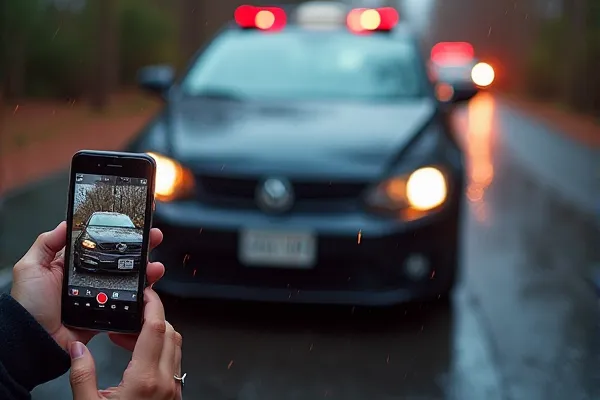
Here’s the defense-side truth: claims don’t get “denied” as often as they get slowly discounted. The discount starts with missing photos, gaps in care, and a recorded statement that doesn’t match later medical notes.
Why California procedure and San Diego venue change the way you should act after a crash
Deadlines are real. The general statute of limitations for personal injury in California is two years under CCP § 335.1, and waiting to “see if it gets better” is exactly how evidence disappears and leverage collapses.
Reporting duties also matter. If there’s an injury crash, California requires a report to law enforcement within 24 hours under Veh. Code § 20008. If a driver leaves the scene, hit-and-run rules trigger under Veh. Code § 20001, and that can change everything about insurance posture and investigative urgency.
The “Immediate 5” questions San Diego accident victims ask when they’re trying not to make it worse
1) What are the first three things I should do right after a crash in San Diego?
First, get safe and get medical evaluation when symptoms exist, even if they feel delayed, because your damages will be measured by the injury’s real impact under Civ. Code § 3333. Second, document: photos, witness names, plate numbers, and the exact location so liability under Civ. Code § 1714 can be proven rather than argued. Third, report when required; for injury crashes, the 24-hour law enforcement report duty under Veh. Code § 20008 is not optional.
2) Do I have to call the police, and what happens if there’s no report?
If there’s an injury, California requires reporting to the local police or CHP within 24 hours under Veh. Code § 20008. If there’s no report, the case isn’t “dead,” but insurers use the absence to question fault and mechanism, which forces you to prove duty and causation under Civ. Code § 1714 with independent evidence. In San Diego, that usually means heavier reliance on photos, witnesses, and consistent medical documentation.
3) What should I say to insurance, and what should I not say?
Stick to objective facts: where it happened, who was involved, and that you’re seeking evaluation; avoid opinions on fault, speed, or “I’m fine” statements that can later conflict with symptoms. Insurers value claims based on provable damages under Civ. Code § 3333, and they weaponize inconsistencies to discount. If a recorded statement is requested early, understand it’s being taken to lock in a version before your medical records fully exist.
4) What if the other driver leaves or I can’t identify them?
A leaving driver triggers hit-and-run rules under Veh. Code § 20001, and you should treat that as an evidence emergency: photos, nearby cameras, witness calls, and a fast police report. If the identity is unknown, the claim becomes documentation-driven, and delays make proof harder and harder to reconstruct. Even when liability feels obvious, you still have to build a record that would hold up in San Diego Superior Court.
5) How long do I have to make a claim or file a lawsuit in California?
For most personal injury cases, California’s general limitations period is two years under CCP § 335.1. That deadline is the outer wall, not the plan; evidence, witnesses, and treatment continuity degrade long before the limitations period runs. In San Diego claims handling, waiting often hands the insurer a ready-made argument that the injury wasn’t serious or wasn’t connected.

After an accident, you don’t need to “win the internet argument.” You need a clean record that survives insurance scrutiny and, if necessary, survives litigation procedure.
If you follow a disciplined checklist, you reduce the insurer’s ability to shrink your claim through confusion, delay, or selective documentation.
Magnitude expansion: the post-accident checklist that actually protects a San Diego injury claim
A) Evidence Evaluation in San Diego Cases
Evidence is not just photos. It’s the alignment between scene facts, medical records, and a timeline that makes sense. When that alignment is tight, duty and breach under Civ. Code § 1714 become harder to “negotiate away.”
- Police reports vs medical records: medical documentation often carries more weight than a short report, but both help when available.
- Scene photos vs repair documentation: photos establish mechanism; repair records can corroborate force and timing.
- Treatment timeline consistency: early, consistent care prevents “gap in treatment” discount arguments.
- Witness follow-through: get names and numbers immediately; people vanish after the adrenaline fades.
B) Settlement vs Litigation Reality
Before a case is filed, insurers can posture indefinitely and “investigate” without meaningful consequence. Once filed in San Diego Superior Court, deadlines, discovery, and judicial oversight start squeezing the vague excuses out of the file.
That’s why I treat the first month like it matters: it builds the foundation that either makes settlement rational or makes litigation unavoidable. The hard deadline under CCP § 335.1 exists, but the practical deadline is when evidence quality drops below “trial-ready.”
C) San Diego-Specific Claim Wrinkles
San Diego crashes have predictable patterns: congested freeway merges, rear-end chains, and intersection collisions where multiple stories compete. Those patterns drive predictable insurer resistance: “low property damage,” “pre-existing condition,” and “no report.”
- Traffic density: more witnesses, more cameras, and more conflicting narratives—capture what you can fast.
- Multi-vehicle collisions: liability becomes sequence-based, so your photos and statements must be precise.
- Hit-and-run pressure: when Veh. Code § 20001 is in play, urgency increases because proof disappears quickly.
Lived Experiences
Mackenzie
“I thought the insurer would ‘just handle it,’ but they kept focusing on what I didn’t do at the scene. Once Richard helped me rebuild the timeline and documents, the case finally started being valued like a real injury claim.”
Chase
“The other driver tried to change the story later. Richard’s approach was simple: evidence, consistency, and no unnecessary talking. That discipline is what kept the claim from getting discounted.”
California Statutory Framework & Legal Authority
|
Attorney Advertising, Legal Disclosure & Authorship
ATTORNEY ADVERTISING.
This content is provided for general informational and educational purposes only and does not constitute legal advice.
Under the California Rules of Professional Conduct and applicable State Bar of California advertising regulations,
this material may be considered attorney advertising.
Viewing or reading this content does not create an attorney-client relationship.
Laws and procedures governing personal injury claims vary by jurisdiction and may change over time.
You should consult a qualified California personal injury attorney regarding your specific situation before taking any legal action.
Responsible Attorney:
Richard Morse, California Attorney (Bar No. 289241).
Morse Injury Law is a practice name and location used by Richard Peter Morse III, a California-licensed attorney.
About the Author & Legal Review Process
This article was prepared by the legal editorial team supporting Richard Peter Morse III,
with the goal of explaining California personal injury law and claims procedures in clear, accurate, and practical terms for injured individuals in San Diego and surrounding communities.
Legal Review:
This content was reviewed and approved by Richard Morse, a California-licensed attorney (Bar No. 289241),
who concentrates his practice on personal injury litigation and insurance claim disputes.
With more than 13 years of experience representing injury victims throughout California,
Mr. Morse focuses on serious personal injury matters including motor vehicle collisions, uninsured and underinsured motorist claims,
premises liability, catastrophic injury, and wrongful death.
His practice emphasizes claims evaluation, insurance carrier accountability, and litigation in California courts when fair resolution cannot be achieved.
|