
There is no “magic number” for settlements, but there is a legal formula. Civil Code § 3333 allows you to recover “the amount which will compensate for all the detriment proximately caused.” This falls into two buckets: 1) Economic Damages (Medical bills, lost wages, future care costs) which are exact math. 2) Non-Economic Damages (Pain and suffering), which are subjective. Insurers often try to use a “1.5x Multiplier” on your medical bills to calculate pain. We fight for a “3x to 5x Multiplier” based on how the injury has actually destroyed your daily quality of life.
How much is my claim worth in San Diego — and how do I keep the insurance company from pricing it like a nuisance?
Here’s the single most important rule under California Law: your claim is worth what you can prove in liability and damages, not what you feel is fair. Value is built from documentation, timelines, and risk to the insurer if the case is filed and tried.
How I value San Diego injury claims when “worth” has to survive a real fight
In San Diego, the true pricing question is what a carrier believes a jury might do and what it costs them to get there. If litigation becomes necessary, it’s in San Diego Superior Court, and the file gets evaluated through the lens of proof burdens and litigation exposure under California Law.
An anonymized example: a sideswipe in Clairemont, modest vehicle damage, but the client’s treatment is consistent and the symptoms match the mechanism. The insurer tries the “minimal impact” routine. My move is boring on purpose: lock liability, lock medical causation, and lock wage loss proof. Once the damages story is clean, the carrier’s discount excuses get thin.

Valuation isn’t a magic formula. It’s a risk assessment: what does the insurer lose if they’re wrong, and how hard is it for you to prove every piece of harm?
Under Civ. Code § 3333, damages track harm caused by the wrongful act. Under Civ. Code § 1714, liability tracks unreasonable conduct that caused the harm.
Why California venue and San Diego Superior Court reality control claim value
Insurance companies price claims based on two things: (1) how likely you are to prove fault and damages, and (2) what it costs them if the case gets filed and pushed. The general filing deadline in most personal injury cases is two years under CCP § 335.1, and delay is a valuation killer even before that deadline matters.
Value also changes when fault is contested. Comparative fault allocation matters in real negotiations, and California’s framework is reflected in Civ. Code § 1431.2. If the insurer thinks they can stick you with a percentage, they’ll do it—unless the evidence makes the argument expensive.
The “Immediate 5” valuation questions I use to pressure-test what your claim is worth
1) What is the legal framework for valuing damages in a California personal injury claim?
In general terms, damages are measured by the harm caused by the wrongful act under Civ. Code § 3333. That means the value tracks provable medical expenses, wage loss, and the human impact that can be supported by medical records and credible testimony. In San Diego, “worth” rises when the documentation is consistent enough that a defense lawyer would advise the carrier to pay rather than roll the dice.
2) How does fault (and shared fault) change the number?
Fault is the gatekeeper, and shared fault is the discount lever. If an insurer can credibly argue you contributed to the incident, they’ll push comparative percentages, and California’s allocation framework is reflected in Civ. Code § 1431.2. In a San Diego claim, clean liability proof is often the fastest way to protect value.
3) What documentation actually drives value in San Diego claims handling?
The strongest drivers are medical consistency and timeline discipline: contemporaneous treatment notes, objective findings where they exist, and follow-through that matches the complaint. Liability proof under Civ. Code § 1714 matters too—photos, witnesses, repair evidence, and admissions carry weight. Weak documentation lets adjusters rewrite your injury as a “soft complaint” and price it down.
4) How do treatment gaps and “I felt okay at first” impact value?
Treatment gaps are one of the most reliable ways insurers discount a claim. A delay gives them room to argue an alternate cause, a minor injury, or exaggeration, which directly undercuts damages measured under Civ. Code § 3333. In San Diego, the “felt okay at first” fact isn’t fatal, but it has to be explained by a coherent medical timeline.
5) When does a claim’s “worth” change once a case is filed in San Diego Superior Court?
Value changes when the insurer faces real procedural cost and risk—defense spend, discovery exposure, and trial uncertainty. Filing must still be timely under CCP § 335.1, but the bigger practical point is that a filed case has deadlines and consequences. In San Diego Superior Court, a well-documented case forces the carrier to deal with proof instead of delay.

When someone asks me “how much is it worth,” I’m listening for what the insurer will attack: liability, causation, or credibility. If you can’t defend those three, the number is going to get cut—fast.
If you can defend them, the claim becomes expensive to underpay.
Magnitude expansion: what actually moves a San Diego claim number up or down
A) Evidence Evaluation in San Diego Cases
Insurers value what can be proven without heroics. Under Civ. Code § 1714, liability needs a clean, provable story, and under Civ. Code § 3333, damages need documentation that holds up.
- Police reports vs medical records: reports help set the scene, but medical notes often decide causation.
- Scene photos vs repair documentation: both matter; repairs corroborate impact, photos corroborate conditions.
- Treatment timeline consistency: gaps reduce value because they create causation arguments.
- Wage loss proof: payroll records, schedules, and doctor restrictions beat estimates every time.
B) Settlement vs Litigation Reality
Before filing, carriers can test your patience. After filing, they have to account for defense costs, discovery obligations, and trial exposure in San Diego Superior Court. The statute of limitations under CCP § 335.1 is the legal boundary, but leverage comes from being prepared to litigate, not from threatening it.
A claim with clean proof becomes a business decision. A claim with messy proof becomes a waiting game.
C) San Diego-Specific Claim Wrinkles
San Diego claims get messy in predictable ways: freeway chains on I-5/I-8/I-15, multi-vehicle disputes, rideshare overlays, and “everybody was going slow” narratives. Carriers lean into comparative fault arguments, using the allocation reality reflected in Civ. Code § 1431.2 to shave value unless the evidence makes that play expensive.
- Traffic density and rear-end patterns: chain impacts trigger sequencing fights; document early.
- Multi-vehicle freeway collisions: the “first hit” often decides the whole liability map.
- Common insurer resistance patterns: “minimal damage,” “gap in care,” and “pre-existing” are standard discount tools.
Lived Experiences
Spencer
“I kept hearing random numbers online and it made me more anxious. Richard explained what actually drives value in San Diego—proof, timelines, and how the insurer will attack the file—and that finally made the process make sense.”
Diana
“The adjuster acted like my case was small because the car didn’t look wrecked. Richard focused on medical consistency and documentation, and once the file was organized, the carrier stopped treating it like a nuisance.”
California Statutory Framework & Legal Authority
|
Attorney Advertising, Legal Disclosure & Authorship
ATTORNEY ADVERTISING.
This content is provided for general informational and educational purposes only and does not constitute legal advice.
Under the California Rules of Professional Conduct and applicable State Bar of California advertising regulations,
this material may be considered attorney advertising.
Viewing or reading this content does not create an attorney-client relationship.
Laws and procedures governing personal injury claims vary by jurisdiction and may change over time.
You should consult a qualified California personal injury attorney regarding your specific situation before taking any legal action.
Responsible Attorney:
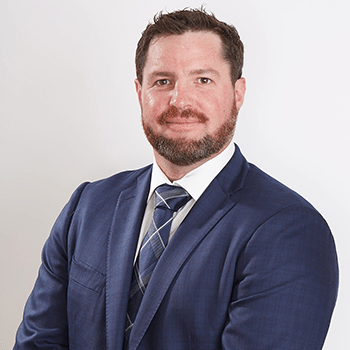
Richard Morse, California Attorney (Bar No. 289241).
Morse Injury Law is a practice name and location used by Richard Peter Morse III, a California-licensed attorney.
About the Author & Legal Review Process
This article was prepared by the legal editorial team supporting Richard Peter Morse III,
with the goal of explaining California personal injury law and claims procedures in clear, accurate, and practical terms for injured individuals in San Diego and surrounding communities.
Legal Review:
This content was reviewed and approved by Richard Morse, a California-licensed attorney (Bar No. 289241),
who concentrates his practice on personal injury litigation and insurance claim disputes.
With more than 13 years of experience representing injury victims throughout California,
Mr. Morse focuses on serious personal injury matters including motor vehicle collisions, uninsured and underinsured motorist claims,
premises liability, catastrophic injury, and wrongful death.
His practice emphasizes claims evaluation, insurance carrier accountability, and litigation in California courts when fair resolution cannot be achieved.
|