
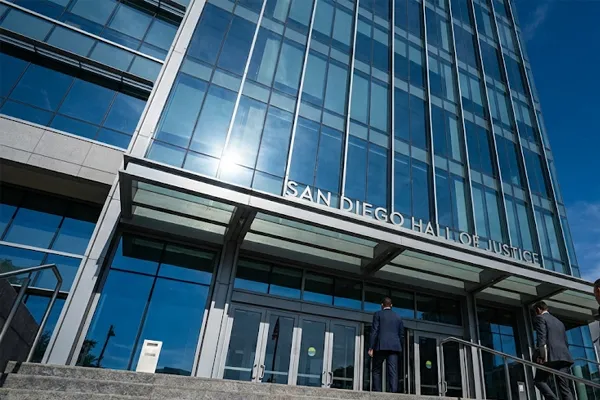
One of the most powerful tools in a local trial lawyer’s arsenal is Code of Civil Procedure § 170.6. This statute gives us the right to disqualify a judge if we believe they are prejudiced against our client. We get to do this once per case, without needing to prove actual bias. But this weapon is useless if you don’t know the judges. Because we are in the San Diego Hall of Justice, Vista, and El Cajon courts daily, we know which judges tend to favor insurance companies and which are fair. An out-of-town lawyer walks into the courtroom blind; we walk in with a map.
My San Diego court experience: what should I expect the moment a case goes “official”?
The single most important rule under California Law: your court experience is not a movie scene—it’s a timeline with consequences. If you don’t protect deadlines and proof early, you lose leverage before you ever see a courtroom, especially with the filing clock in CCP § 335.1.
What “going to court” in San Diego actually feels like in a real injury case
I’ve represented injured people in San Diego long enough to see the same shock every time: the first courthouse step feels like you’re behind, even when you’re not. Under California Law, the system is structured, but it’s not gentle. You’re dealing with calendars, service, discovery, and defense strategies that were built to reduce value.
A realistic San Diego scenario: a client is hit in a chain-reaction on the 163 near Balboa Park. The insurer drags its feet, “reviewing liability,” while medical records stack up. We file in San Diego Superior Court, then move immediately on service under CCP § 583.210, because delay is a defense weapon.
- What the courthouse experience really is: a sequence of deadlines and decision points, not one dramatic day.
- What changes once filed: the defense has to respond and participate instead of “considering your demand.”
- How it resolves: most cases resolve before trial, but only after the defense feels credible trial risk.
Jurisdictional authority: why San Diego Superior Court changes the temperature of your case
Before filing, the insurer controls pace and pressure. After filing in San Diego Superior Court, procedure starts controlling pace—and that matters because insurance carriers price risk, not sympathy.
Discovery is where the defense tests your story and tries to manufacture doubt. The timeline tightens as trial approaches, and discovery has real cutoff pressure under CCP § 2024.020. That’s why your “court experience” often feels quiet for months, then suddenly intense: it’s the schedule doing what it’s designed to do.
The “Immediate 5” court questions San Diego victims ask when the case turns serious
1) If I file in San Diego Superior Court, what happens first and how fast does it move?
Once a case is filed, the first practical priority is getting the defendant served correctly and on time. Service delay can hand the defense momentum, and the statute that governs the service timeline after filing is CCP § 583.210. The earlier service is completed, the sooner the defense shifts from “adjusting” to “defending,” which is when real movement starts.
2) What is the biggest deadline that can kill my case before I ever get a courtroom date?
The biggest one most people underestimate is the lawsuit filing deadline. For many California injury cases, the baseline is two years from the date of injury under CCP § 335.1. If that clock runs out, the “court experience” ends before it begins, and insurers know exactly how to stall toward that edge.
3) Why am I being asked to sit for a deposition, and what does the defense actually do with it?
A deposition is sworn testimony used to lock down facts, probe inconsistencies, and set up future motions and trial cross-examination. The notice mechanics and structure live inside the deposition statutes, including CCP § 2025.210. In real San Diego defense practice, it’s also a valuation tool: they test whether your story stays consistent under pressure.
4) What paperwork should I expect during discovery, and why does it feel like an interrogation?
Discovery is the engine of your case: documents, questions, and inspections. For documents, one of the core authorizing statutes is CCP § 2031.010, which is why you’ll see formal requests for records, photos, repair documents, and sometimes broader categories the defense hopes you’ll answer loosely.
The defense is not collecting paperwork out of curiosity. They are building themes like “gap in treatment,” “prior condition,” or “minimal impact,” and then trying to turn those themes into discount.
5) Why does everyone talk about “trial dates” if most cases settle—what is the court actually doing in the background?
Courts manage cases through scheduling pressure, not by “trying the case” every week. As trial approaches, discovery compresses and strategic decisions become forced, including cutoffs governed by CCP § 2024.020. That background pressure is what often drives realistic settlement positions, because defense lawyers and carriers price the risk of a jury in San Diego, not just the cost of a claim file.
If you’ve never been in court, here’s what I want you to understand: you’re not expected to love it. You’re expected to be consistent, prepared, and protected by procedure. That’s how good cases survive insurance games.
- What helps you most: a clean timeline, complete records, and no casual “off the record” side stories.
- What hurts you most: gaps, contradictions, and handing the defense months of silence to write your narrative for you.
Magnitude expansion: what makes the San Diego court experience easier or harder
A) Evidence Evaluation in San Diego Cases
Your court experience gets smoother when evidence is organized and defensible. It gets ugly when the defense can credibly argue confusion, exaggeration, or missing proof.
- Police reports vs medical records: the report helps liability; medical records prove injury timing, mechanism, and consistency.
- Scene photos vs repair documentation: objective impact proof reduces “low damage” arguments that stall valuation.
- Treatment timeline consistency: gaps invite deposition pressure and discount narratives.
B) Settlement vs Litigation Reality
Litigation is not a threat; it’s a structure. Once filed, the defense operates inside a courthouse schedule, service rules, and discovery boundaries rather than endless “review.”
That’s why I push disciplined early movement: service under CCP § 583.210, focused document strategy under CCP § 2031.010, and depo preparation that respects the reality of CCP § 2025.210.
C) San Diego-Specific Claim Wrinkles
San Diego cases have predictable defense rhythms because the roads create predictable crash patterns. In multi-vehicle events, insurers love to argue sequencing, comparative fault, and “someone else caused the real injury.”
- Traffic density and rear-end patterns: chain reactions on the 5, 805, and 15 create “who hit first” disputes.
- Multi-vehicle freeway collisions: defense counsel uses delay to gather statements, vehicle photos, and leverage.
- Common SoCal resistance patterns: record delays and “still investigating” language aimed at the CCP § 335.1 clock.
Lived Experiences
Angel
“Walking into San Diego Superior Court was intimidating, but Richard explained what mattered and what didn’t. Once I understood the schedule and how discovery really works, I stopped feeling like the insurance company controlled everything.”
Christine
“The defense tried to make me doubt my own case during the deposition prep. Richard drilled the facts, kept it calm, and made sure my story stayed consistent. The outcome felt earned because the process finally made sense.”
California Statutory Framework & Legal Authority
|
Attorney Advertising, Legal Disclosure & Authorship
ATTORNEY ADVERTISING.
This content is provided for general informational and educational purposes only and does not constitute legal advice.
Under the California Rules of Professional Conduct and applicable State Bar of California advertising regulations,
this material may be considered attorney advertising.
Viewing or reading this content does not create an attorney-client relationship.
Laws and procedures governing personal injury claims vary by jurisdiction and may change over time.
You should consult a qualified California personal injury attorney regarding your specific situation before taking any legal action.
Responsible Attorney:
Richard Morse, California Attorney (Bar No. 289241).
Morse Injury Law is a practice name and location used by Richard Peter Morse III, a California-licensed attorney.
About the Author & Legal Review Process
This article was prepared by the legal editorial team supporting Richard Peter Morse III,
with the goal of explaining California personal injury law and claims procedures in clear, accurate, and practical terms for injured individuals in San Diego and surrounding communities.
Legal Review:
This content was reviewed and approved by Richard Morse, a California-licensed attorney (Bar No. 289241),
who concentrates his practice on personal injury litigation and insurance claim disputes.
With more than 13 years of experience representing injury victims throughout California,
Mr. Morse focuses on serious personal injury matters including motor vehicle collisions, uninsured and underinsured motorist claims,
premises liability, catastrophic injury, and wrongful death.
His practice emphasizes claims evaluation, insurance carrier accountability, and litigation in California courts when fair resolution cannot be achieved.
|