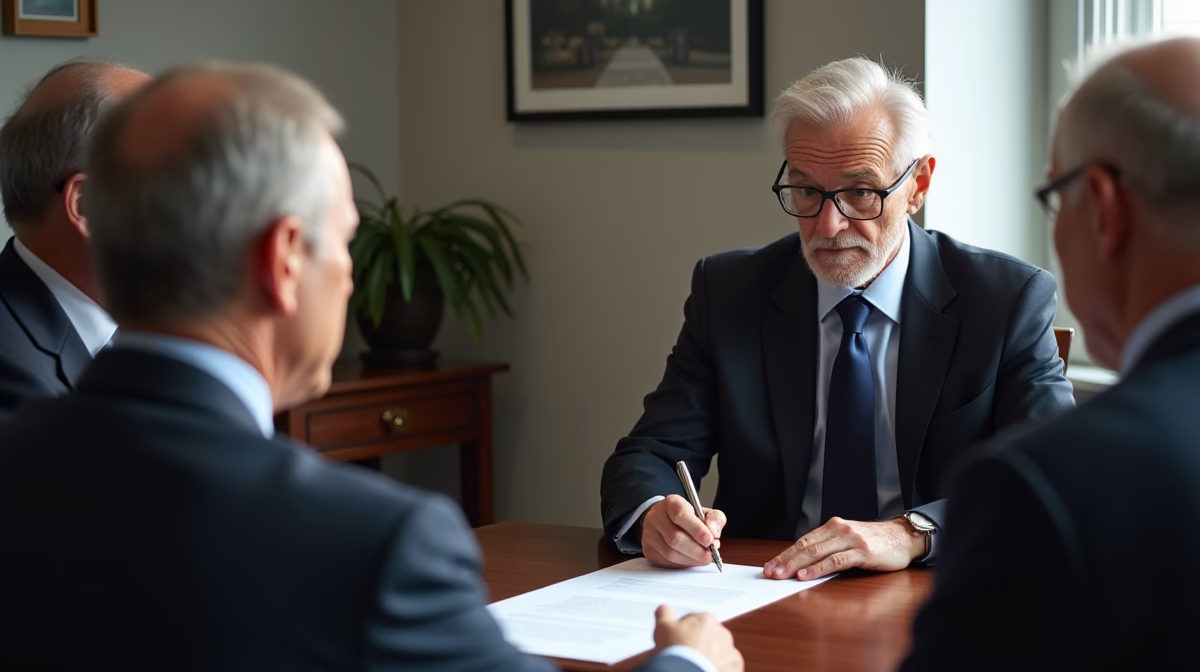
Are hospital signings more closely scrutinized?
Robert stood anxiously beside his father’s hospital bed, watching as the notary signed the hastily prepared will. Weeks later, his sister informed him the document was likely invalid. The hospital setting, coupled with the unusual presence of nurses in the room, raised serious questions about undue influence and proper attestation. The cost? Years of litigation and a fractured family, all because of a flawed execution.
Why are hospital signings often more complex?

As an Estate Planning Attorney and CPA in Temecula, California, I frequently advise clients on the critical importance of proper will execution. Hospital signings, while sometimes necessary due to unforeseen circumstances, inherently carry a higher risk of challenge. This isn’t about distrust of healthcare professionals, but about the unique vulnerabilities present in those settings. Patients are often medicated, under duress, and surrounded by individuals who may appear to exert influence, even unintentionally.
The scrutiny stems from several factors. First, establishing testamentary capacity – the legal requirement that the patient understands they are signing a will and the implications of doing so – is more difficult when a patient is ill. Second, proving the absence of undue influence – pressure from another party – is crucial, and the hospital environment can muddy the waters.
What specific issues arise with hospital witnesses?
The biggest challenges involve witness qualifications and potential conflicts of interest. California law requires two disinterested witnesses to attest to a will. This means witnesses cannot be beneficiaries of the will, nor can they have a close personal relationship with a beneficiary. Nurses, doctors, and other hospital staff often fall into this gray area. While they aren’t necessarily disqualified, their professional relationship with the patient—and potentially with family members—can be used to argue a lack of impartiality.
Furthermore, hospital staff are often busy and may not be fully aware of the legal requirements for proper attestation. They may not ask the necessary questions to confirm the patient’s understanding or ensure the document is signed correctly. This can lead to technical errors that invalidate the will. If the will fails, assets may fall under intestacy, though estates under $208,850 (effective April 1, 2025) might still avoid full probate.
How can you minimize risks with a hospital signing?
While not ideal, hospital signings can be legally sound if you take specific precautions.
- Seek Disinterested Witnesses: If possible, locate two individuals who have no connection to the patient or beneficiaries. This could be hospital administration, or even strangers visiting other patients.
- Ensure Clear Capacity: A physician should assess the patient’s mental capacity and document their findings. This provides strong evidence that the patient understood the implications of signing the will.
- Strict Adherence to Protocol: The notary must meticulously follow all legal requirements, including verifying the patient’s identity and ensuring all signatures are witnessed correctly.
- Document Everything: Keep a detailed record of the entire process, including witness statements, physician’s assessment, and the notary’s certificate.
As a CPA, I also emphasize the importance of addressing potential tax liabilities within the will. Improper execution can trigger unintended consequences, and a comprehensive estate plan should account for these risks. My license allows me to navigate these complex issues effectively, protecting your family from unforeseen financial burdens.
While California allowed temporary remote witnessing during the pandemic, strict adherence to current presence requirements is critical to avoid invalidation. If a beneficiary also serves as a witness, the gift to that beneficiary may be voided under California Probate Code § 6112 (the Purging Statute), though the will itself often remains valid. And while the court may validate a flawed will by ‘clear and convincing evidence’ of intent, relying on this exception is a costly and risky gamble, referencing Probate Code § 6110 (Harmless Error).
Using a self-proving affidavit satisfies the court’s proof requirements immediately, avoiding the need to track down witnesses years later, as defined in Probate Code § 8220. Even a validly attested will must grant specific RUFADAA powers to access digital accounts.
You can find more information about the probate process at Riverside Superior Court – Probate Division.
What is the difference between a notary and a witness on a will?
While “holographic” (handwritten) wills are technically legal in California, they are notoriously difficult to prove in court. Without the formal structure of a witnessed attestation clause, judges are left to decipher intent.
- Ambiguity: Handwritten notes often lack necessary legal language.
- Probate Costs: Proving validity consumes time and money.
- Thresholds: Even with the small estate limit rising to $208,850 in April 2025, a valid will is needed to direct those assets.
For practical tips on execution, read our discussion on requirements for a holographic will in California to avoid court delays. Whether you are worried about the validity of an old will or preparing to sign a new one, expert supervision is your best defense against future contests. We are dedicated to providing rigorous legal support to families in San Diego and Riverside Counties. Call us today to schedule a signing appointment and take the final step in protecting your family.
About Steve Bliss: An estate planning attorney in Temecula
The Law Firm of Steven F. Bliss Esq. is a dedicated legal firm serving Temecula, Riverside County, and the Inland Empire. Led by Steven F. Bliss, the firm offers a unique advantage: Steve is an experienced CPA & Estate Planning Lawyer.
Whether the court requires a formal probate or allows for an unsupervised process, having a skilled attorney is essential to avoid delays. Don’t face the costly and confusing legal process alone—call attorney Steve Bliss today.
Visit The Law Firm of Steven F. Bliss Esq:
Address:
The Law Firm of Steven F. Bliss Esq.43920 Margarita Rd Ste F
Temecula, CA 92592
(951) 223-7000