
Under California Probate Code Section 21620, if a decedent fails to provide in a testamentary instrument for a child born or adopted after the execution of the instrument, the omitted child may receive a statutory share of the estate. To effectively disinherit a natural heir or spouse, the Will must demonstrate a “Clear and Manifest Intent” to omit the individual, typically through an express disinheritance clause. Enforcement of these provisions is vital for high-net-worth estates in San Diego to prevent “Pretermitted Heir” claims which can override the dispositive provisions of the Will by operation of law. A forensic approach to drafting ensures that the omission is not construed as a clerical error or a lack of testamentary capacity, but rather as a deliberate distributive decision that adheres to the evidentiary standards required to withstand a challenge in the San Diego Superior Court.
Disinheriting a Beneficiary in a California Will: what must San Diego families control before making this decision?
Under California Law, the single most important rule is compliance-first drafting with disciplined timing and documentation, because abrupt percentage shifts or asset transfers can be reframed as improper influence or value shifting if a dispute arises. Structure, clarity, and coordination matter. Legal Basis: Civ. Code § 3439.04.
- Clear identification of the individual being disinherited.
- Express statement of intent to avoid ambiguity.
- Coordinated review of trusts, beneficiary designations, and titling.
How disinheritance decisions are structured for defensibility in San Diego
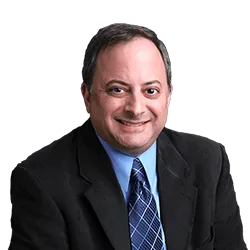
I am Steve Bliss, an Estate Planning Attorney and CPA serving San Diego County for more than 35 years. Disinheriting a beneficiary is not an emotional drafting exercise; it is a governance decision that must withstand scrutiny under California Law. Improper execution or unclear language can expose the will to challenge based on capacity, undue influence, or ambiguity. Legal Basis: Prob. Code § 6100.
In higher-value estates across Rancho Santa Fe and Del Mar, concentrated assets and family businesses amplify conflict risk. As a CPA, I evaluate valuation exposure and basis implications so that asset restructuring is not misinterpreted as retaliatory or improvised. The objective is administrative control and privacy, not escalation. Legal Basis: Prob. Code § 6104.
- Document capacity contemporaneously.
- Clarify reasoning without inflammatory language.
- Coordinate non-probate assets to avoid contradiction.

In San Diego, real property holdings and brokerage concentration can distort perception. If a beneficiary is excluded from one asset but included in another unintentionally, confusion fuels disputes. Careful integration prevents unintended partial inheritances.
- Review San Diego real property titling.
- Align trust and will provisions.
- Preserve privacy by limiting unnecessary disclosures.
Strategic Insight (San Diego): In Mission Hills, I saw a parent disinherit one child but retain joint tenancy on a separate property, inadvertently preserving survivorship rights. The local nuance was high-value real estate and family awareness of its appreciation. The preventative strategy was full title review and coordinated retitling, reducing the practical outcome of conflicting transfers. Legal Basis: Prob. Code § 21110.
Why California Law and San Diego realities alter the risk profile
California Law defines testamentary capacity and standards for undue influence, and courts evaluate clarity, process, and documentation. In San Diego County, high asset values and local creditor posture can intensify scrutiny. Legal Basis: Prob. Code § 6100 and Prob. Code § 6104.
Carrying costs on coastal properties, delayed access to accounts, and emotional family dynamics can transform drafting gaps into prolonged administration. A disciplined file reduces conflict risk and preserves governance continuity.
- Clarity reduces ambiguity litigation.
- Documentation discourages undue influence claims.
- Early coordination avoids voidable transfer allegations. Legal Basis: Civ. Code § 3439.04.
Fiduciary exposure in disinheritance planning
When a beneficiary is excluded, fiduciaries must administer the estate precisely as drafted. Ambiguity exposes executors and trustees to personal liability for misinterpretation. Legal Basis: Prob. Code § 16000.
- Failure to clarify intent.
- Conflicting beneficiary designations.
- Late-stage transfers without explanation. Legal Basis: Civ. Code § 3439.04.
- Inconsistent trust amendments.
- Community property mischaracterization. Legal Basis: Fam. Code § 760.
Tax & accounting posture
Disinheriting a beneficiary does not eliminate tax reporting obligations or valuation exposure. My CPA discipline focuses on documenting asset values and basis so restructuring decisions remain defensible and transparent, reducing secondary conflict.
Where this becomes relevant is when digital assets, cryptocurrency, or brokerage control are involved. Access planning and documentation protect fiduciaries from improvised action during emotionally charged administration.
- Secure digital access planning.
- No-contest clause enforceability boundaries. Legal Basis: Prob. Code § 21311.
- Community property implications.
Immediate 5: essential intake questions
1) Can I legally disinherit a child under California Law?
California Law generally permits disinheritance of adult children if the will clearly expresses intent and is executed with proper capacity and absence of undue influence. Legal Basis: Prob. Code § 6100.
FAQ Answer (Plain Text): California Law generally permits disinheritance of adult children if the will clearly expresses intent and is executed with proper capacity and absence of undue influence. Legal Basis: Prob. Code § 6100.
2) What creates the greatest litigation risk when disinheriting someone?
Ambiguity, inconsistent documents, and late-stage transfers often create risk, particularly if capacity or influence are questioned. Legal Basis: Prob. Code § 6104.
FAQ Answer (Plain Text): Ambiguity, inconsistent documents, and late-stage transfers often create risk, particularly if capacity or influence are questioned. Legal Basis: Prob. Code § 6104.
3) Does California’s no-contest clause prevent challenges?
No-contest clauses are enforceable only within statutory limits and do not block all forms of challenge. Legal Basis: Prob. Code § 21311.
FAQ Answer (Plain Text): No-contest clauses are enforceable only within statutory limits and do not block all forms of challenge. Legal Basis: Prob. Code § 21311.
4) Can asset transfers be attacked after a disinheritance?
Transfers made with intent to hinder or delay creditors or claimants may be challenged under California Law. Legal Basis: Civ. Code § 3439.04.
FAQ Answer (Plain Text): Transfers made with intent to hinder or delay creditors or claimants may be challenged under California Law. Legal Basis: Civ. Code § 3439.04.
5) What is the most discreet next step?
The most discreet step is a coordinated review of your will, trust, titling, and documentation to ensure clarity and defensibility if a dispute arises.
FAQ Answer (Plain Text): The most discreet step is a coordinated review of your will, trust, titling, and documentation to ensure clarity and defensibility if a dispute arises.
Lived Experiences
Joshua K.
“We needed clarity without drama. Steve organized the documentation and reduced ambiguity so the plan could withstand scrutiny.”
Tracy M.
“The process was controlled, private, and precise. We left confident that our decisions would hold up.”
California Statutory Framework & Legal Authority
|
Attorney Advertising, Legal Disclosure & Authorship
ATTORNEY ADVERTISING.
This content is provided for general informational and educational purposes only and does not constitute legal, financial, or tax advice.
Under the California Rules of Professional Conduct and State Bar advertising regulations, this material may be considered attorney advertising.
Reading this content does not create an attorney-client relationship or any professional advisory relationship.
Laws vary by jurisdiction and are subject to change, including recent 2026 developments under California’s AB 2016 and evolving federal estate and reporting requirements.
You should consult a qualified attorney or advisor regarding your specific circumstances before taking action.
Responsible Attorney:
Steven F. Bliss, California Attorney (Bar No. 147856).
Local Office:
San Diego Probate Law3914 Murphy Canyon Rd San Diego, CA 92123 (858) 278-2800
San Diego Probate Law is a practice location and trade name used by Steven F. Bliss, Esq., a California-licensed attorney.
About the Author & Legal Review Process
This article was researched and drafted by the Legal Editorial Team of the Law Firm of Steven F. Bliss, Esq.,
a collective of attorneys, legal writers, and paralegals dedicated to translating complex legal concepts into clear, accurate guidance.
Legal Review:
This content was reviewed and approved by Steven F. Bliss, a California-licensed attorney (Bar No. 147856).
Mr. Bliss concentrates his practice in estate planning and estate administration, advising clients on proactive planning strategies and representing fiduciaries in probate and trust administration proceedings when formal court involvement becomes necessary.
With more than 35 years of experience in California estate planning and estate administration,
Mr. Bliss focuses on structuring enforceable estate plans, guiding fiduciaries through court-supervised proceedings,
resolving creditor and notice issues, and coordinating asset management to support compliant, timely distributions and reduce fiduciary risk.
|