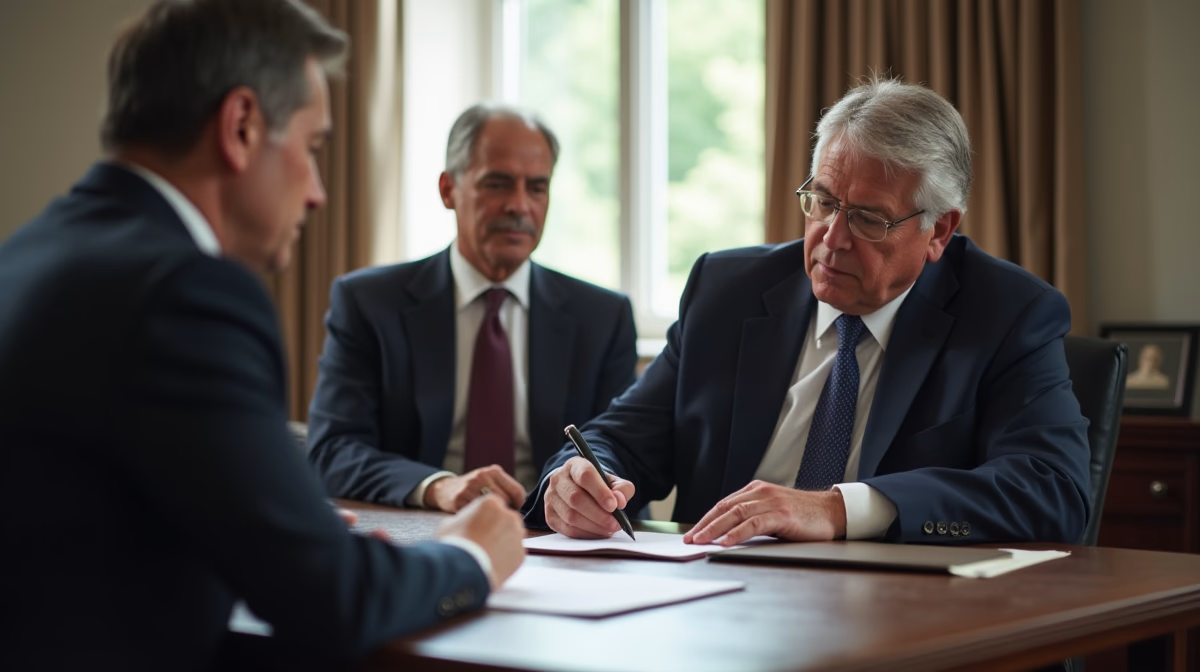
Can a will be challenged based on faulty attestation?
Robert stood in stunned silence as the probate judge declared his mother’s will invalid. Years of planning, gone, because the notary hadn’t properly completed the attestation – a seemingly minor detail with devastating consequences. This is a scenario I see far too often as an Estate Planning Attorney and CPA in Temecula, California, and it underscores the critical importance of proper will execution.
What Does “Proper Attestation” Mean?

Attestation refers to the process of having your will signed and witnessed according to California law. It’s more than just signatures on paper; it’s a legal safeguard ensuring your wishes are carried out. California Probate Code requires a will to be signed by the testator (the person making the will) and witnessed by two disinterested individuals – meaning they aren’t beneficiaries in the will. The witnesses must observe the testator signing the document, and then sign it themselves in the presence of both the testator and each other.
How Can Faulty Attestation Lead to a Will Contest?
A will can be challenged on several grounds related to faulty attestation. Common issues include:
- Insufficient Witnessing: If only one witness is present, or if the witnesses don’t actually see the testator sign, the will is vulnerable.
- Interested Witnesses: If a beneficiary witnesses the will, it doesn’t automatically invalidate it, but under California Probate Code § 6112, the gift to that interested witness may be voided. The will itself could still be valid if there are also two disinterested witnesses.
- Improper Notarization: While not always required, a notarized will often includes a self-proving affidavit, making probate much smoother. If the notarization is flawed – improper identification, wrong dates, or failure to follow statutory procedures – it can raise doubts about the will’s authenticity.
- Lack of Presence: California law requires witnesses to sign “in the presence” of the testator and each other. This means physically present, not via video conference. While California allowed temporary remote witnessing during the pandemic, strict adherence to current presence requirements is critical to avoid invalidation.
What Happens If a Will Is Found Invalid?
If a court determines a will is invalid due to faulty attestation, the estate will be distributed according to California’s intestacy laws – meaning the state dictates who receives the assets. This may not align with the testator’s wishes at all. Furthermore, if the will fails, assets may fall under intestacy, though estates under $208,850 (effective April 1, 2025) might still avoid full probate. The process can be expensive and time-consuming, creating unnecessary stress for grieving families.
Can Mistakes in Execution Be Forgiven?
Sometimes, a court may overlook minor technical flaws in execution, relying on Probate Code § 6110 (Harmless Error). This allows the court to validate a flawed will by “clear and convincing evidence” of the testator’s intent. However, relying on this exception is a costly and risky gamble. It’s far better to ensure the will is executed correctly from the start.
Why a CPA’s Expertise Matters in Estate Planning
As a CPA, I bring a unique perspective to estate planning. Proper execution isn’t just about legal formalities; it’s also about understanding the tax implications of your estate. I can help you minimize estate taxes, navigate the complexities of the step-up in basis for inherited assets, and ensure your estate plan is financially sound. Incorrectly drafted or executed wills can result in significant tax liabilities, and I’m well-equipped to address those concerns.
Don’t leave the validity of your estate plan to chance. It’s crucial to work with an experienced Estate Planning Attorney to ensure your will is properly executed and reflects your wishes accurately. Riverside Superior Court – Probate Division provides additional information on probate procedures.
Can a beneficiary witness a will without losing their inheritance?
Many people mistakenly believe that simply getting a document notarized makes it a valid will, but in California, this is often a fatal error. Unless specific statutory requirements are met, a stamp alone is insufficient.
- Notary vs. Witness: A notary verifies identity; a witness verifies capacity and intent.
- The Rule: California generally requires two witnesses to be present.
- Exceptions: While holographic wills exist, they are prone to expensive legal challenges.
If you want to ensure your documents are self-proving, we suggest reading our overview of benefits of a self-proving affidavit in probate to navigate these rules. I have seen valid wills thrown out of court simply because the witnesses were not present at the same time or failed to sign in the correct order. You deserve the assurance that comes with a professionally supervised execution process right here in Temecula. Reach out to us now, and let us help you turn your estate plan into a legally binding reality.
About Steve Bliss: An estate planning attorney in Temecula
The Law Firm of Steven F. Bliss Esq. is a dedicated legal firm serving Temecula, Riverside County, and the Inland Empire. Led by Steven F. Bliss, the firm offers a unique advantage: Steve is an experienced CPA & Estate Planning Lawyer.
Whether the court requires a formal probate or allows for an unsupervised process, having a skilled attorney is essential to avoid delays. Don’t face the costly and confusing legal process alone—call attorney Steve Bliss today.
Visit The Law Firm of Steven F. Bliss Esq:
Address:
The Law Firm of Steven F. Bliss Esq.43920 Margarita Rd Ste F
Temecula, CA 92592
(951) 223-7000