Are holographic wills accepted in all states?
Robert stood in my Temecula office, visibly shaken. His mother had passed away unexpectedly, leaving behind what he believed was a valid will – a video recording of her clearly stating her wishes. Unfortunately, California, like many states, does not recognize holographic wills—those created entirely in the testator’s handwriting or, increasingly, in video or audio recordings—unless they meet very specific requirements. The emotional and financial toll on Robert was immense, as his mother’s intentions weren’t legally binding, forcing his family into a lengthy and expensive probate process.
What is a Holographic Will?

A holographic will is a will that is entirely handwritten (or, in modern discussions, recorded) by the person making the will (the testator). Traditionally, this meant a document written entirely in the testator’s hand, without the use of a typist or pre-printed forms. The idea behind it is that the entire document represents the testator’s unique expression of intent. However, the legal acceptance of these wills varies dramatically from state to state.
Which States Accept Holographic Wills?
Currently, approximately half of U.S. states recognize holographic wills, but with significant variations in requirements. Some of the states that generally accept them include:
- Arizona: The will must be entirely handwritten.
- California: While California does recognize holographic wills (Probate Code § 6111), they are very strictly construed. The entire document must be in the testator’s handwriting and signed. Any printed or typed portions will invalidate the will.
- Texas: A holographic will must be wholly handwritten and signed.
- New Mexico: Similar to other states, it must be entirely handwritten.
- Nevada: Accepts holographic wills as long as they are wholly handwritten.
It’s crucial to understand that even within these states, the will must meet very specific requirements to be considered valid. Even a minor deviation from the rules can lead to the will being deemed invalid.
What About Video or Audio Recordings?
The question of whether video or audio recordings can serve as a valid will is becoming increasingly relevant in our digital age. The short answer is, generally no—not without satisfying very specific requirements, and even then, it’s a gray area. Most states still require a physical, handwritten document. However, some states are beginning to explore legislation that would allow for electronic wills, but these are still in their early stages. Even if a recording captures a person’s wishes, it won’t be legally binding unless it adheres to the state’s stringent requirements for will execution. If relying on a recording, you absolutely need to consult with an estate planning attorney.
Why is Proper Execution So Important?
The strict requirements surrounding will execution aren’t merely formalities. They are designed to ensure that the will truly reflects the testator’s wishes and to prevent fraud or undue influence. I’ve seen too many cases where a poorly executed will has led to years of litigation and significant financial losses for the family. If the will fails, assets may fall under intestacy, though estates under $208,850 (effective April 1, 2025) might still avoid full probate. Furthermore, improper execution can create challenges for beneficiaries, especially when dealing with complex assets or potential tax liabilities. As a CPA as well as an attorney, I understand the significant tax implications involved, and a properly prepared will can minimize those burdens. Consider the potential step-up in basis lost, or increased estate tax consequences, simply because of a technicality.
What are the Risks of Trying to Create a Will Yourself?
While it may be tempting to try and create a will yourself using online templates or DIY kits, it’s a risk I strongly advise against. Estate planning is a complex area of law, and even a seemingly minor error can have disastrous consequences. Furthermore, the law is constantly evolving. While California allows temporary remote witnessing during the pandemic, strict adherence to current presence requirements is critical to avoid invalidation. I’ve seen numerous instances where individuals, attempting to save money, ended up costing their families far more in legal fees and lost assets.
If you’re considering creating a will, or if you have questions about estate planning, I encourage you to consult with a qualified estate planning attorney. At my firm in Temecula, we can help you create a comprehensive estate plan that meets your specific needs and ensures that your wishes are carried out.
Riverside Superior Court – Probate Division
Why is the signing ceremony so critical for estate planning?
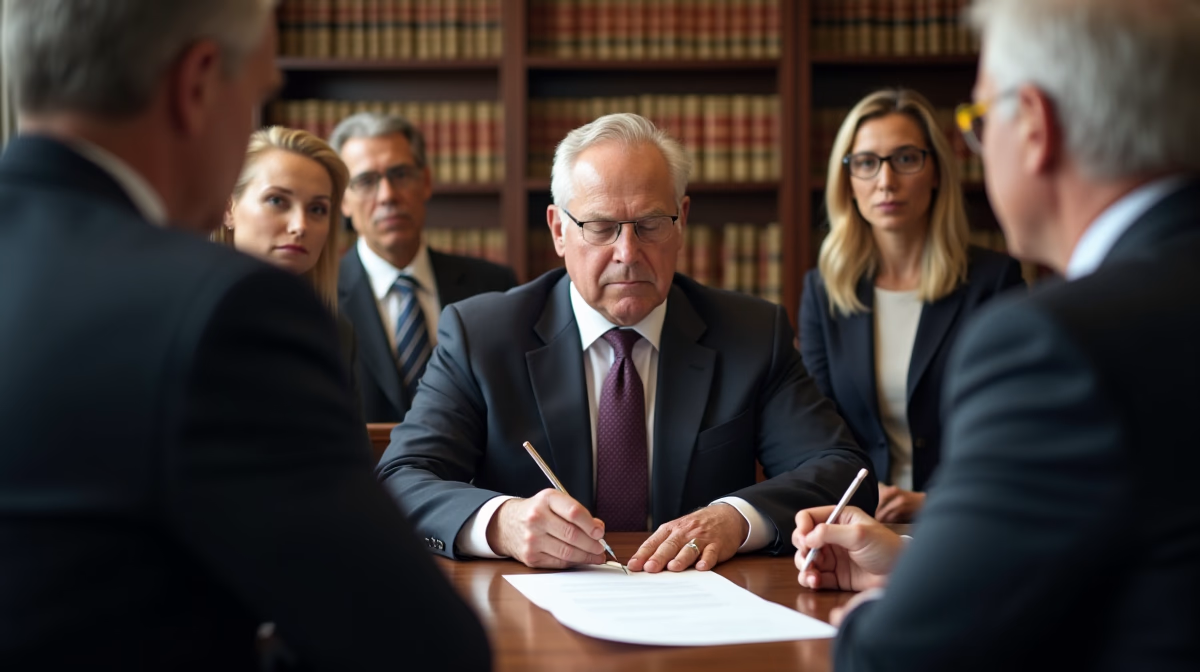
The most heartbreaking cases in probate court are not the ones where no will exists, but where a perfectly crafted will is thrown out due to a technical error. California law is specific about who can serve as a witness.
- Strict Rules: Witnesses must generally be disinterested and present at the same time.
- High Stakes: A single error can void the document, sending your estate into intestacy.
- Legal Limits: Remember, the Statute of Limitations for legal malpractice is generally one year, so getting it right the first time is vital.
For guidance on self-proving wills, read our resource on benefits of a self-proving affidavit in probate to stay legally protected. The “signing ceremony” is a legal term of art for a reason; it is the moment your wishes become law, and it requires professional oversight to be valid. As a dual-licensed attorney and CPA, I ensure that every document is executed in strict compliance with the California Probate Code. Do not let a procedural mistake destroy your legacy—contact our office today to finalize your plan with confidence.
About Steve Bliss: An estate planning attorney in Temecula
The Law Firm of Steven F. Bliss Esq. is a dedicated legal firm serving Temecula, Riverside County, and the Inland Empire. Led by Steven F. Bliss, the firm offers a unique advantage: Steve is an experienced CPA & Estate Planning Lawyer.
Whether the court requires a formal probate or allows for an unsupervised process, having a skilled attorney is essential to avoid delays. Don’t face the costly and confusing legal process alone—call attorney Steve Bliss today.
Visit The Law Firm of Steven F. Bliss Esq:
Address:
The Law Firm of Steven F. Bliss Esq.43920 Margarita Rd Ste F
Temecula, CA 92592
(951) 223-7000