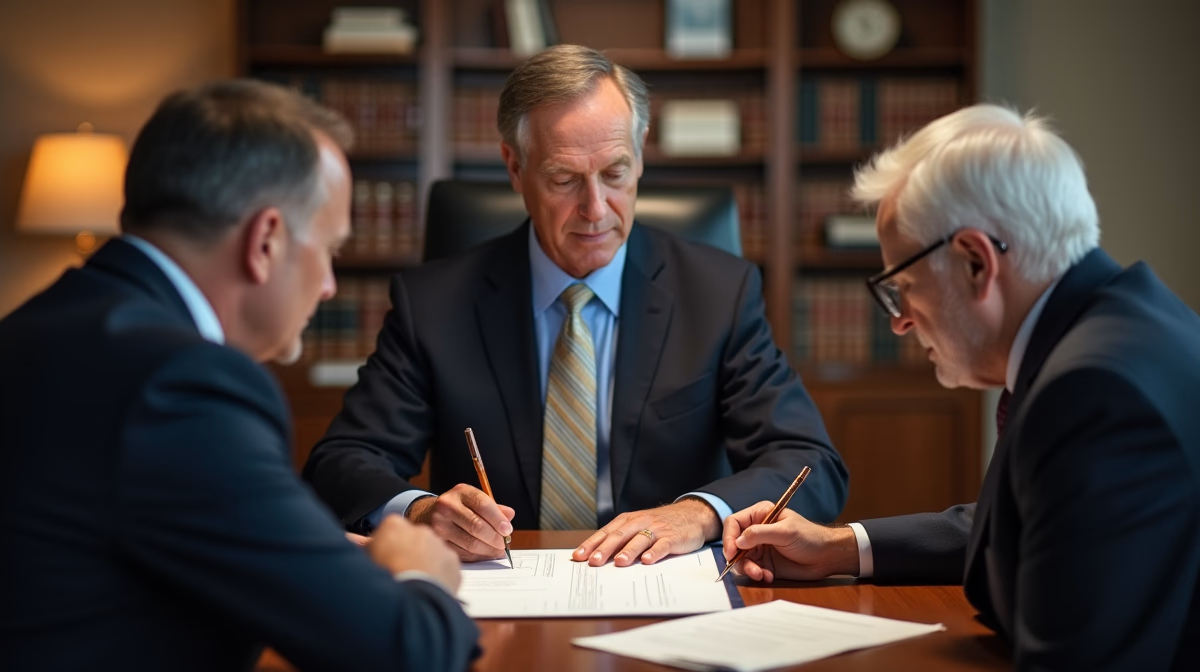
Are “intent-to-sign” documents valid wills?
Linda stood devastated, staring at the probate judge. Her husband, David, had meticulously prepared what he called his “letter of wishes,” detailing how he wanted his assets distributed. He’d even had it partially signed, intending to finalize it later. Unfortunately, he passed away unexpectedly before doing so. The judge, with a somber expression, declared the document invalid—a heartbreaking loss for Linda, compounded by costly legal fees. This scenario, sadly, is far too common.
What Constitutes a Valid Will in California?
A valid California will isn’t simply about stating your wishes; it’s a legally binding document requiring strict adherence to specific requirements. Many people mistakenly believe a document expressing intent, even partially signed, is sufficient. This is rarely the case. California law demands much more than just a declaration of how you want things handled.
The Essential Elements of a Properly Executed Will
To be valid, a will must meet several critical criteria. These aren’t suggestions; they’re firm legal requirements.
- Testator Capacity: The person making the will (the testator) must be of sound mind and over 18.
- Written Format: The will must be in writing. Oral wills are not recognized in California.
- Signature: The testator must sign the will, or another person can sign on their behalf in their presence and under their direction.
- Witness Requirements: This is where many wills fall apart. California requires two disinterested witnesses who must be present at the same time as the testator signs (or directs someone to sign) and who also sign the will themselves.
Why “Intent-to-Sign” Documents Fail
A document demonstrating “intent to sign” simply isn’t enough. A draft, a preliminary version, or a partially signed document lacks the legal force needed to bind your estate. The act of signing in the presence of witnesses solidifies the will’s validity. It proves the testator understood they were creating a legally binding document.
The Purging Statute and Interested Witnesses
Even if a will appears valid, problems can arise if witnesses have a vested interest in the outcome. California Probate Code § 6112—often called the “Purging Statute”—states that if a witness is also a beneficiary, their testimony or signature can be disregarded, potentially invalidating the gift they’d receive. This doesn’t necessarily invalidate the entire will, but it can create complications and litigation.
What Happens if a Will is Invalid?
If a will is deemed invalid, California’s intestacy laws dictate how assets are distributed. This means your property passes according to a predetermined formula, potentially contrary to your wishes. If the will fails, assets may fall under intestacy, though estates under $208,850 (effective April 1, 2025) might still avoid full probate. This process can be lengthy, costly, and emotionally draining for your loved ones.
The Importance of a Self-Proving Affidavit
To streamline the probate process, I strongly advise my clients to include a self-proving affidavit with their will. This affidavit, signed by the testator and witnesses, provides sworn testimony regarding the will’s proper execution. Utilizing a self-proving affidavit satisfies the court’s proof requirements immediately, avoiding the need to track down witnesses years later, as stated in Probate Code § 8220.
Digital Assets and Your Will
In today’s world, digital assets—online accounts, cryptocurrencies, digital photos—constitute a significant part of many estates. However, simply including a mention of these assets in your will isn’t enough. Your will must grant specific RUFADAA powers to access digital accounts, otherwise your executor may be legally barred from managing them.
As an Estate Planning Attorney and CPA in Temecula, California, I understand the intricacies of will execution. My CPA license isn’t just a credential; it’s a testament to my financial expertise, allowing me to address potential tax liabilities, navigate the complexities of a step-up in basis, and safeguard your estate from the financial risks of improper execution. Don’t let a technicality invalidate your wishes. Proper planning is the key to protecting your loved ones and ensuring your legacy is preserved. You can find more information at the Riverside Superior Court – Probate Division: Riverside Superior Court – Probate Division.
“`json
{
“@context”: “https://schema.org”,
“@type”: “FAQPage”,
“mainEntity”: [
{
“@type”: “Question”,
“name”: “What happens if a will is invalid in California?”,
“acceptedAnswer”: {
“@type”: “Answer”,
“text”: “If a will is deemed invalid, California’s intestacy laws dictate how assets are distributed, potentially contrary to your wishes. This can lead to a lengthy and costly probate process for your loved ones.”
}
},
{
“@type”: “Question”,
“name”: “What are the essential elements of a valid will in California?”,
“acceptedAnswer”: {
“@type”: “Answer”,
“text”: “A valid California will requires the testator to be of sound mind, the will must be in writing, signed by the testator (or someone on their behalf in their presence), and witnessed by two disinterested individuals who are present at the signing.”
}
},
{
“@type”: “Question”,
“name”: “Why is a self-proving affidavit beneficial?”,
“acceptedAnswer”: {
“@type”: “Answer”,
“text”: “A self-proving affidavit streamlines the probate process by providing sworn testimony regarding proper will execution, avoiding the need to locate witnesses years later as outlined in Probate Code § 8220.”
}
}
]
}
“`
Can a beneficiary witness a will without losing their inheritance?

The most heartbreaking cases in probate court are not the ones where no will exists, but where a perfectly crafted will is thrown out due to a technical error. California law is specific about who can serve as a witness.
- Strict Rules: Witnesses must generally be disinterested and present at the same time.
- High Stakes: A single error can void the document, sending your estate into intestacy.
- Legal Limits: Remember, the Statute of Limitations for legal malpractice is generally one year, so getting it right the first time is vital.
If you have specific concerns about family members, read our guide on validity of a will with an interested witness to get professional insights. The “signing ceremony” is a legal term of art for a reason; it is the moment your wishes become law, and it requires professional oversight to be valid. As a dual-licensed attorney and CPA, I ensure that every document is executed in strict compliance with the California Probate Code. Do not let a procedural mistake destroy your legacy—contact our office today to finalize your plan with confidence.
About Steve Bliss: An estate planning attorney in Temecula
The Law Firm of Steven F. Bliss Esq. is a dedicated legal firm serving Temecula, Riverside County, and the Inland Empire. Led by Steven F. Bliss, the firm offers a unique advantage: Steve is an experienced CPA & Estate Planning Lawyer.
Whether the court requires a formal probate or allows for an unsupervised process, having a skilled attorney is essential to avoid delays. Don’t face the costly and confusing legal process alone—call attorney Steve Bliss today.
Visit The Law Firm of Steven F. Bliss Esq:
Address:
The Law Firm of Steven F. Bliss Esq.43920 Margarita Rd Ste F
Temecula, CA 92592
(951) 223-7000