Are professional signing ceremonies offered by law firms?
Robert stared in disbelief as the judge dismissed his mother’s will. Years of planning, reduced to nothing because a crucial witness hadn’t initialed every page as required. The emotional toll was immense, but the financial consequences – a protracted and expensive probate battle – were devastating. This scenario, unfortunately, is far too common, and often stems from improper will execution.
Why is Proper Will Execution So Critical?

A will isn’t valid simply because it’s written down. California law demands strict adherence to specific rules for attestation – the signing and witnessing process. A flawed execution can render the entire document invalid, leading to intestate succession – where your assets are distributed according to state law, not your wishes. This can create significant hardship for your loved ones, as we saw with Robert’s case. If the will fails, assets may fall under intestacy, though estates under $208,850 (effective April 1, 2025) might still avoid full probate.
What Does a Professional Signing Ceremony Entail?
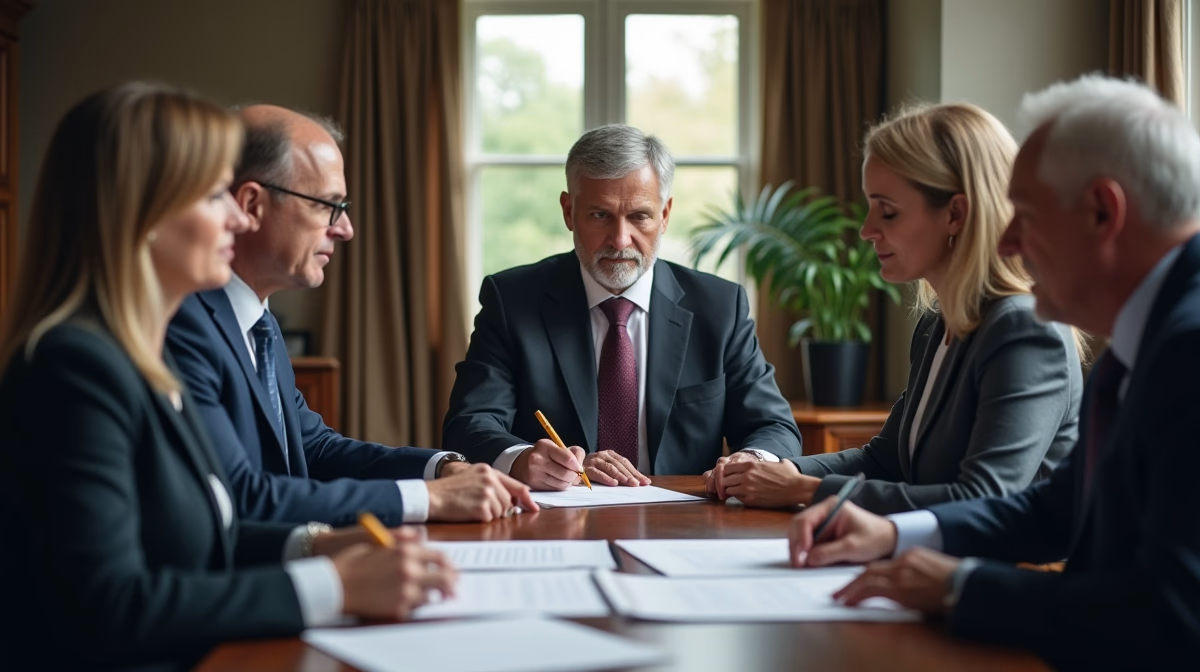
Yes, many estate planning law firms, including ours here in Temecula, offer professional signing ceremonies. These aren’t just about getting signatures on paper; they are a comprehensive process designed to ensure rock-solid validity. We guide clients through each step, ensuring compliance with all legal requirements. Here’s what’s typically involved:
- Qualified Witnesses: We provide disinterested witnesses—individuals who aren’t beneficiaries in your will—to attest to your signature.
- Proper Attestation: We ensure witnesses observe you signing, and that they, in turn, sign in your presence and in the presence of each other. Every page is initialed, as is required by law.
- Notarial Acknowledgement: We often include a notarial acknowledgement to further solidify the validity of the will.
- Document Organization: We organize all documents properly, including any codicils or amendments.
What if a Witness is Also a Beneficiary?
California Probate Code § 6112, often called the Purging Statute, is critical here. If a beneficiary witnesses your will, their gift is automatically voided – essentially, they receive nothing. However, the will itself doesn’t necessarily become invalid. To avoid this, we always utilize disinterested witnesses – those with no financial stake in the outcome.
Can Mistakes Be Corrected After the Fact?
Sometimes errors happen, even with careful attention. Probate Code § 6110 allows courts to validate a flawed will if there’s ‘clear and convincing evidence’ of your intent. However, relying on this ‘harmless error’ provision is a risky gamble – it involves litigation, legal fees, and no guarantee of success. Prevention is always better – and cheaper – than cure.
What About Self-Proving Affidavits?
A self-proving affidavit, authorized by Probate Code § 8220, is a powerful tool. It’s a sworn statement signed by you and the witnesses, affirming the validity of the signing ceremony. This eliminates the need to track down witnesses years later to testify in court, significantly streamlining the probate process.
Why Choose an Attorney – and a CPA – for Estate Planning?
As both an Estate Planning Attorney and a CPA, I bring a unique perspective to my clients’ needs. I don’t just focus on distributing assets; I also understand the tax implications of those distributions. Proper estate planning minimizes estate taxes, ensures the step-up in basis of inherited assets, and protects your beneficiaries from unnecessary financial burdens. I can also address the increasingly complex issue of digital assets – even a validly attested will must grant specific RUFADAA powers to access digital accounts.
If you’re considering estate planning, I encourage you to schedule a consultation. We can discuss your specific needs and goals, and create a plan that protects your loved ones and your legacy. You can find more information about probate procedures at Riverside Superior Court – Probate Division.
Does a trust need to be witnessed like a will?
While “holographic” (handwritten) wills are technically legal in California, they are notoriously difficult to prove in court. Without the formal structure of a witnessed attestation clause, judges are left to decipher intent.
- Ambiguity: Handwritten notes often lack necessary legal language.
- Probate Costs: Proving validity consumes time and money.
- Thresholds: Even with the small estate limit rising to $208,850 in April 2025, a valid will is needed to direct those assets.
If you want to ensure your documents are self-proving, we suggest reading our overview of benefits of a self-proving affidavit in probate to navigate these rules. I have seen valid wills thrown out of court simply because the witnesses were not present at the same time or failed to sign in the correct order. You deserve the assurance that comes with a professionally supervised execution process right here in Temecula. Reach out to us now, and let us help you turn your estate plan into a legally binding reality.
About Steve Bliss: An estate planning attorney in Temecula
The Law Firm of Steven F. Bliss Esq. is a dedicated legal firm serving Temecula, Riverside County, and the Inland Empire. Led by Steven F. Bliss, the firm offers a unique advantage: Steve is an experienced CPA & Estate Planning Lawyer.
Whether the court requires a formal probate or allows for an unsupervised process, having a skilled attorney is essential to avoid delays. Don’t face the costly and confusing legal process alone—call attorney Steve Bliss today.
Visit The Law Firm of Steven F. Bliss Esq:
Address:
The Law Firm of Steven F. Bliss Esq.43920 Margarita Rd Ste F
Temecula, CA 92592
(951) 223-7000