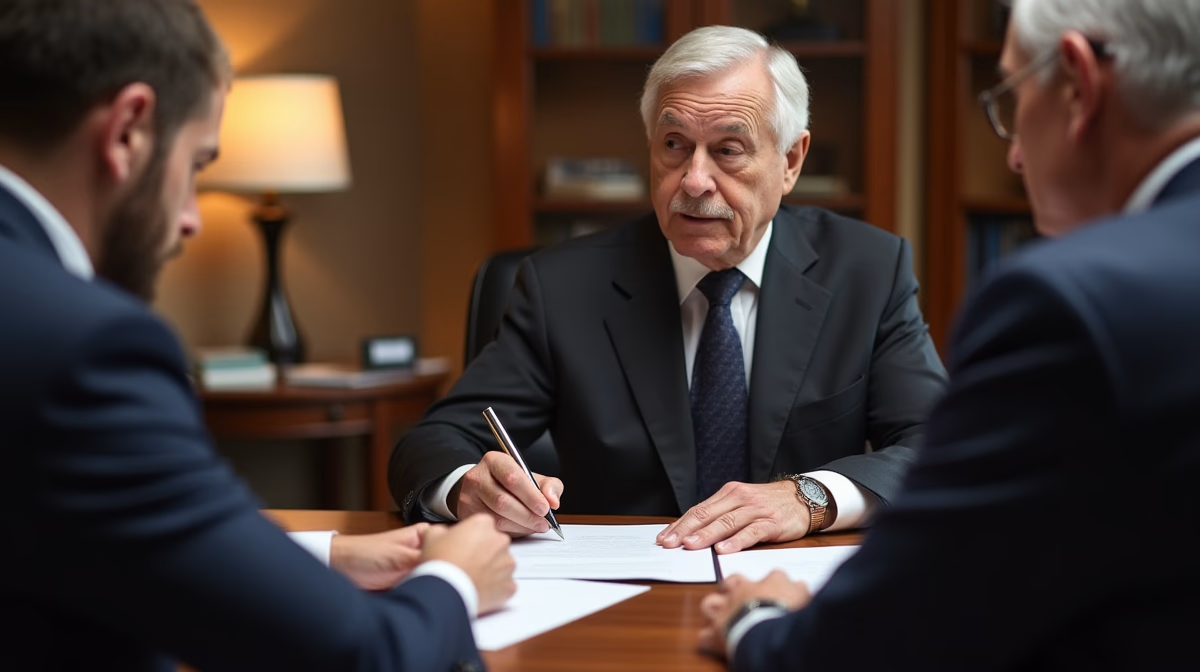
Are temporary remote-witnessing laws still active?
Linda stood in the hospital waiting room, devastated. Her mother’s carefully crafted will, prepared just months before, was deemed invalid. A key witness, unable to travel due to a sudden illness, had participated in the signing via video conference. The judge had no choice – the will was rejected, creating a protracted and expensive probate battle for Linda and her siblings. The emotional and financial toll could have been avoided with proper, in-person attestation.
What is the current status of remote will witnessing in California?

The landscape of will witnessing shifted dramatically during the COVID-19 pandemic. Recognizing the need for safe and accessible estate planning, California temporarily allowed for remote witnessing of wills. However, those emergency provisions have largely expired. While California allowed temporary remote witnessing during the pandemic, strict adherence to presence requirements is critical to avoid invalidation. Currently, California law generally requires all witnesses to be physically present with the testator (the person making the will) at the time of signing.
What are the specific requirements for valid will witnessing?
To ensure a will is legally sound, certain requirements must be met:
- Physical Presence: All witnesses must be in the physical presence of the testator and each other when the will is signed and acknowledged.
- Witness Capacity: Witnesses must be at least 18 years old and of sound mind.
- Disinterested Witnesses: Ideally, witnesses should be “disinterested,” meaning they don’t stand to benefit from the will. However, California Probate Code § 6112 states that if a beneficiary is a witness, the gift to that beneficiary is void, but the will itself remains valid. It’s best practice to avoid beneficiary witnesses whenever possible.
- Proper Attestation: Witnesses must sign the will in the presence of the testator and each other, attesting that they witnessed the signing and believe the testator was of sound mind.
What happens if a will is improperly witnessed?
An improperly witnessed will can be challenged in probate court. If the court finds the will invalid, the testator’s assets will be distributed according to California’s intestacy laws (the laws governing inheritance when there is no valid will). This can lead to significant delays, legal fees, and unintended consequences for your loved ones. If the will fails, assets may fall under intestacy, though estates under $208,850 (effective April 1, 2025) might still avoid full probate.
What about self-proving affidavits and the probate process?
A self-proving affidavit is a sworn statement signed by the testator and witnesses, affirming the validity of the will. It streamlines the probate process by eliminating the need to locate and testify from the witnesses years later. Using a self-proving affidavit satisfies the court’s proof requirements immediately, avoiding the need to track down witnesses years later, as codified in Probate Code § 8220. However, even with a self-proving affidavit, the underlying witnessing requirements must be met.
As an Estate Planning Attorney and CPA in Temecula, California, I understand the complexities of estate planning. My CPA license allows me to navigate the tax implications of estate distribution, including crucial issues like the step-up in basis and avoiding unintended tax liabilities. Improper execution of a will, even with seemingly minor errors, can have significant financial consequences.
For more information on probate procedures, you can visit the Riverside Superior Court – Probate Division or the State Bar of California.
What is the role of the attorney during the signing process?
Many people mistakenly believe that simply getting a document notarized makes it a valid will, but in California, this is often a fatal error. Unless specific statutory requirements are met, a stamp alone is insufficient.
- Notary vs. Witness: A notary verifies identity; a witness verifies capacity and intent.
- The Rule: California generally requires two witnesses to be present.
- Exceptions: While holographic wills exist, they are prone to expensive legal challenges.
To learn the best practices for attestation, explore our guide on the purpose of an attestation clause to streamline probate. I have seen valid wills thrown out of court simply because the witnesses were not present at the same time or failed to sign in the correct order. You deserve the assurance that comes with a professionally supervised execution process right here in Temecula. Reach out to us now, and let us help you turn your estate plan into a legally binding reality.
About Steve Bliss: An estate planning attorney in Temecula
The Law Firm of Steven F. Bliss Esq. is a dedicated legal firm serving Temecula, Riverside County, and the Inland Empire. Led by Steven F. Bliss, the firm offers a unique advantage: Steve is an experienced CPA & Estate Planning Lawyer.
Whether the court requires a formal probate or allows for an unsupervised process, having a skilled attorney is essential to avoid delays. Don’t face the costly and confusing legal process alone—call attorney Steve Bliss today.
Visit The Law Firm of Steven F. Bliss Esq:
Address:
The Law Firm of Steven F. Bliss Esq.43920 Margarita Rd Ste F
Temecula, CA 92592
(951) 223-7000