
Under California Probate Code Section 8252, the allocation of the burden of proof in a Will contest is strictly bifurcated. The proponent of the Will has the initial burden of establishing “due execution” under Section 6110, requiring a preponderance of evidence that the instrument was properly signed and witnessed. Once due execution is established, the burden shifts to the contestant to prove, by a preponderance of evidence, the grounds for invalidity—including lack of testamentary capacity, undue influence, fraud, or duress. However, this burden can shift back to the proponent in specific circumstances, such as when a “confidential relationship” combined with active participation in the Will’s preparation triggers a presumption of undue influence. In the San Diego Superior Court, enforcement hinges on the quality of the contemporaneous record. While the “preponderance of evidence” is the general standard, certain rebuttable presumptions, such as those involving “disqualified persons” under Section 21380, raise the evidentiary threshold to “clear and convincing evidence,” making the forensic documentation of the execution ceremony the primary variable in determining the outcome of the litigation.
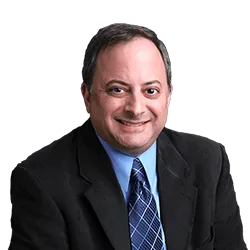
In a California will contest, outcomes often turn on burden allocation, not on emotion. The general rule is that a party who asserts a fact bears the burden of proving it under Evid. Code § 500, while certain procedural challenges must be brought within the probate contest framework under Prob. Code § 8252. The controlling focus is disciplined proof: who must prove what, by what evidence, and in what sequence.
How I Frame Burden of Proof So the Case Stays Controlled

I have handled contested estate matters in San Diego for more than 35 years, and I start with a clean map of what must be proven, by whom, and in what order. In a Del Mar file involving a closely held business interest and a La Jolla residence, the family assumed “the truth” would carry the day, but the court only responds to admissible proof tied to specific claims. Under California Law, even a straightforward validity argument must be supported with proper execution evidence under Prob. Code § 6110. My CPA discipline matters here because valuations, liquidity, and carrying costs drive strategy while the will is being tested, and a controlled budget prevents pressure-driven concessions.
Strategic Insight (San Diego): The hidden risk in La Jolla and Rancho Santa Fe disputes is that evidence access is often gated by devices, portals, and informal “family administrators.” I secure records early, then lock the foundation so the case does not devolve into conflicting recollections. When medical or financial records are going to matter, I build admissibility from the start using the custodian declaration pathway under Evid. Code § 1561. The practical outcome is privacy preserved and a timeline that can be proven.
Why San Diego + California Law Changes the Outcome
San Diego County cases move on documentation discipline, not volume. When a contest is filed, the estate still pays for property insurance, maintenance, and carrying costs, and those realities create pressure that can distort decision-making if you do not control the burden analysis under Evid. Code § 500. If a dispute arises, the goal is to keep the matter evidence-forward and discreet, with a clear sequence of what must be proven first.
- Assuming the other side must “disprove” a claim when you actually must prove it.
- Relying on family narratives instead of admissible records and witness foundation.
- Missing the practical timeline: access delays, record retrieval, and document authentication.
- Letting carrying costs on San Diego real property force premature settlement posture.
- Failing to separate validity issues from influence, capacity, and procedural defects.
Presumptions are where people get surprised: they can shift the burden and change what must be produced, and the court will apply them with precision under Evid. Code § 605. This is general information under California Law; specific facts change strategy.
My CPA advantage is not a marketing line, it is operational control: I quantify carrying costs, track liquidity, and protect valuation support so the estate can hold its posture while proof is gathered. That attention keeps the case grounded in defensible evidence, not in urgency or noise.
The “Immediate 5 Burden of Proof Questions”
Who has the burden of proof in a California will contest, and why does it matter?
Burden of proof determines which party must produce evidence on each claim and what happens if that evidence is thin. If you carry the burden on a point and you cannot prove it with admissible facts, the court does not “split the difference.” Strategy begins with identifying each contested issue and assigning responsibility for proof before anyone spends money on the wrong fight.
What is the difference between proving invalid execution and proving undue influence?
Invalid execution focuses on whether the will was signed and witnessed in compliance with the legal rules, which is usually document- and witness-driven. Undue influence focuses on conduct and pressure that overcame free will, which is usually relationship- and timeline-driven. The evidence sets, witnesses, and sequence are different, so the burden map has to separate them cleanly.
How do presumptions change the burden of proof in real cases?
Presumptions can shift the burden or force a party to rebut a legal inference that would otherwise stand. When a presumption applies, the case becomes about rebuttal quality, not about general fairness. That is why you do not want to discover a presumption after discovery has already been mishandled.
What evidence moves the needle most in San Diego County contests?
The needle moves on contemporaneous records and credible witnesses with clean foundation. Practical proof often includes execution witnesses, drafting attorney observations, neutral third-party records, and consistent financial or medical timelines. The strongest cases avoid gaps that allow speculation to replace evidence.
What is the most common burden-of-proof mistake families make?
The most common mistake is treating the contest like a moral argument instead of a proof exercise. Families often spend early resources on accusations, then realize too late they needed records, foundation, and a sequence that matches the burden on each claim. A close second is letting cost pressure drive decisions before the burden map is stabilized.

In San Diego County, proof problems become expensive quickly because the estate continues to carry real property and administrative overhead while evidence is assembled. My focus is to keep the contest contained: stabilize access, preserve records, and prevent informal gatekeepers from controlling what can be proven. When the burden is clear, negotiations become disciplined and private.
Procedural Realities
Evidence & Documentation Discipline
Evidence wins will contests when it is reliable, time-anchored, and obtained through controlled channels that preserve integrity. When third-party records matter, I secure them early using the custodian production pathway under Evid. Code § 1560.
- Transfer documents vs actual control/ownership
- Valuation support vs later audit/challenge risk
- Timeline consistency for planning vs creditor/liability exposure
- Tie to California compliance and defensibility
The next focal point is foundation: if the records cannot be authenticated cleanly, the burden carrier loses leverage fast. I use a records declaration that satisfies Evid. Code § 1561 so the dispute stays about substance, not technical defects.
Negotiation vs Transaction-Challenge Reality
Once a will contest is litigated, the posture changes because discovery and evidence exchange become structured and unavoidable. Even when the case resolves privately, leverage is shaped by what can be compelled, produced, and tested under the discovery framework in CCP § 2016.010.
- What changes once a transaction is challenged
- Documentation, timing, valuation, compliance posture
- Procedural reality only
Complex Scenarios
Where this becomes relevant is when burden of proof intersects with modern control problems. Digital assets and cryptocurrency access planning can determine who can retrieve emails, portals, and account alerts that anchor timelines, while no-contest clause enforceability boundaries influence whether a beneficiary will risk filing at all. Community property and spousal control issues can also change what facts must be proven about ownership and intent, and presumptions about influence can shift the fight quickly under Prob. Code § 21380.
When digital access is disputed, the estate may need a statutory path to request and manage certain digital assets and communications under Prob. Code § 870. That access control can determine whether proof is gathered privately and promptly or whether the record becomes fragmented.
Lived Experiences
Wendy P.“We were stuck in a loop of accusations and nothing felt concrete. Steve broke the case down into what had to be proven, gathered the right records, and kept everything calm and private. The outcome was clarity and a controlled resolution instead of a long public fight.”
Adam C.“The stress was the uncertainty, not just the disagreement. Steve focused on documentation discipline and explained where the burden actually sat on each issue. That structure reduced conflict and let us make decisions based on proof, not panic.”
If you are facing a potential will contest in San Diego, my role is to bring controlled, California Law-based structure to the burden of proof before the situation becomes expensive and public. The goal is not drama or promises; it is a disciplined plan for what must be proven, what can be preserved, and how to protect the estate while the dispute is evaluated.
California Statutory Framework & Legal Authority
|
Attorney Advertising, Legal Disclosure & Authorship
ATTORNEY ADVERTISING.
This content is provided for general informational and educational purposes only and does not constitute legal, financial, or tax advice.
Under the California Rules of Professional Conduct and State Bar advertising regulations, this material may be considered attorney advertising.
Reading this content does not create an attorney-client relationship or any professional advisory relationship.
Laws vary by jurisdiction and are subject to change, including recent 2026 developments under California’s AB 2016 and evolving federal estate and reporting requirements.
You should consult a qualified attorney or advisor regarding your specific circumstances before taking action.
Responsible Attorney:
Steven F. Bliss, California Attorney (Bar No. 147856).
Local Office:
San Diego Probate Law3914 Murphy Canyon Rd San Diego, CA 92123 (858) 278-2800
San Diego Probate Law is a practice location and trade name used by Steven F. Bliss, Esq., a California-licensed attorney.
About the Author & Legal Review Process
This article was researched and drafted by the Legal Editorial Team of the Law Firm of Steven F. Bliss, Esq.,
a collective of attorneys, legal writers, and paralegals dedicated to translating complex legal concepts into clear, accurate guidance.
Legal Review:
This content was reviewed and approved by Steven F. Bliss, a California-licensed attorney (Bar No. 147856).
Mr. Bliss concentrates his practice in estate planning and estate administration, advising clients on proactive planning strategies and representing fiduciaries in probate and trust administration proceedings when formal court involvement becomes necessary.
With more than 35 years of experience in California estate planning and estate administration,
Mr. Bliss focuses on structuring enforceable estate plans, guiding fiduciaries through court-supervised proceedings,
resolving creditor and notice issues, and coordinating asset management to support compliant, timely distributions and reduce fiduciary risk.
|