
The validity of an estate plan hinges on strict adherence to execution formalities under CA Probate Code §6110. While online templates offer accessibility, they often fail the “clear and convincing” evidentiary standard required for trust creation under §15200. Statutory mechanics regarding witness competency and disinterested parties are enforced under §6112 to prevent undue influence. Furthermore, enforcement logic under §16040 mandates a “prudent person” standard for fiduciary instructions—a threshold professional counsel ensures, but automated software frequently neglects, risking judicial invalidation under California Civil Code standards.
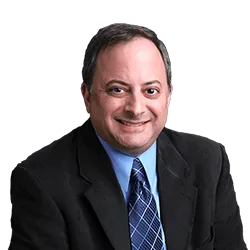
Under California Law, “documents” are not strategy unless they are validly executed, internally consistent, and aligned with how assets are titled and controlled in the real world. A will’s formal execution rules are strict, and noncompliance can collapse the plan when it is tested. Legal Basis: Prob. Code § 6110. When capacity is questioned, the timeline and clinical records around signing become central to enforceability posture. Legal Basis: Prob. Code § 6100.5.
What I see when “online documents” meet San Diego wealth, real property, and privacy

I have practiced for more than 35 years, and the pattern is consistent: online forms can produce paperwork, but they rarely produce administrative control. In San Diego, I often see this with higher-value homes, closely held business interests, and layered accounts at institutions like San Diego County Credit Union, where “who can act” matters as much as “who should inherit.” Under California Law, execution and consistency are not optional if you want defensibility when a lender, successor fiduciary, or skeptical family member scrutinizes the file. Legal Basis: Prob. Code § 6110. My CPA lens adds discipline where forms tend to be silent: basis awareness, valuation support, and documentation that anticipates future tax questions without inviting unnecessary disclosure.
- Title and beneficiary alignment is verified against real accounts and recorded interests.
- Authority is mapped: who can sign, who can access, and what evidence will be demanded.
- Valuation support is planned early, not reconstructed later under pressure.
Strategic Insight (San Diego): In Del Mar, I have seen “template trusts” create a false sense of privacy while quietly leaving key assets outside the intended control structure, which invites ad hoc decisions when access friction hits. The local nuance is practical: real property title, HOA obligations, and carrying costs do not pause while families debate what a form “meant.” My preventative step is always the same: confirm authority and ownership on paper, then confirm it against the actual accounts and recorded interests so the plan can operate without improvisation if a dispute arises. Legal Basis: Prob. Code § 850.
Why California Law and San Diego realities change the outcome
California Law is not impressed by intent if execution, capacity, and authority are vulnerable, and San Diego reality adds pressure points: time-sensitive access issues, high-value real property, and families who expect discretion. When a document’s validity is questioned, the standard for capacity is evaluated in context, and the quality of the signing record often determines how much leverage a challenge can gain. Legal Basis: Prob. Code § 6100.5.
- Authority gaps: a successor cannot act if institutions do not recognize the appointment or the document is internally inconsistent.
- Title gaps: the plan says one thing, but the deed, account registration, or beneficiary form says another.
- Timing gaps: delays create carrying costs and maintenance exposure for San Diego real property.
- Proof gaps: no clean signing file, no capacity timeline, and no reliable witnesses.
- Privacy gaps: unnecessary disclosures occur when the record has to be rebuilt after the fact.
The focal point is defensibility: if a transfer is challenged or authority is questioned, you want your fiduciary to show a disciplined paper trail, not an online printout with missing context. In practice, that means designing for admissible records, consistent dates, and a clear chain of custody for what was signed and when. Legal Basis: Evid. Code § 1271. This is general information under California Law; specific facts change strategy.
My CPA advantage is operational: I build documentation discipline around valuation, basis awareness, and future capital gains recognition so the plan does not create avoidable tax friction later. When Rancho Santa Fe or La Jolla real property is involved, we also pay attention to how refinancing, insurance renewals, and future sales will test the paperwork and force third parties to read it. The goal is quiet continuity: a plan that works without drama, without improvisation, and without forcing your family into unnecessary disclosure.
The Immediate 5: the questions that determine whether your plan holds under review or unravels in real life
These are the first questions I ask when someone brings in online documents and wants to know if they are “good enough” for San Diego reality. The answers determine documentation gaps, timing exposure, and whether a fiduciary can act without delays or unnecessary disclosure. This is intake-style thinking: we are not admiring language, we are testing control.
- We identify what must be proven, not what “feels” correct.
- We map authority to real accounts, deeds, and access points.
- We isolate the few corrections that meaningfully change risk posture.
Practitioner’s Note: In La Jolla, I have seen a “signed online will” rejected by a financial institution’s internal review because the execution file could not be verified and the witnesses were not trackable. The diagnostic signal was simple: no controlled signing record and no supporting file for what was actually executed. The corrective move is to rebuild execution discipline and preserve the proof trail under Prob. Code § 6110.
Were your online documents executed in a way California will actually recognize if they are tested?
The first step is recognizing that execution is not “paperwork,” it is an enforceability gate. If your plan relies on a will, California requires specific formalities, and missing them can turn a clean plan into a negotiation with whoever has leverage at the moment of review. Legal Basis: Prob. Code § 6110. Connection: Prob. Code § 6110 interacts with Prob. Code § 6100.5 because capacity challenges often turn on whether a disciplined execution process existed at the time of signing.
Do the documents match how your assets are actually titled in San Diego County today?
Online documents often assume the plan controls the assets, but title and registration control access in real life. The practical test is whether deeds, account ownership, and beneficiary designations align with the governance the document describes; if they do not, the plan can fail quietly through misalignment, not litigation. When title is unclear, judicial clarification may become necessary to determine ownership and authority. Legal Basis: Prob. Code § 850. Connection: Prob. Code § 850 ties back to Evid. Code § 1271 because the quality of your records can determine how efficiently ownership facts can be proven without recreating history.
What is your proof file if someone later claims you lacked capacity or were pressured?
Capacity and undue influence concerns are not solved by better adjectives in a template; they are addressed through timing, witnesses, and an organized record that matches the signing date. I focus on the few items that matter most: a controlled execution setting, the identity and independence of witnesses, and contemporaneous notes or records that reduce ambiguity. Legal Basis: Prob. Code § 6100.5. Connection: Prob. Code § 6100.5 complements Evid. Code § 1271 because admissible records often become the practical tool that stabilizes a capacity narrative.
Who can actually act on day one, and will your banks and advisors accept that authority without delays?
The difference between “named” and “recognized” authority is where online documents commonly fail. Institutions may require specific forms, identity verification, and record integrity before honoring authority, especially when privacy is important and the file has to withstand internal review. Planning for record admissibility and authentication reduces access delays and prevents unnecessary disclosure. Legal Basis: Evid. Code § 1400. Connection: Evid. Code § 1400 supports the strategy behind Evid. Code § 1271 because authentication and reliable recordkeeping work together to make your file usable when it is scrutinized.
What is your “change protocol” so updates do not create contradictions across documents, deeds, and beneficiaries?
Online platforms encourage piecemeal edits, but contradictions create fiduciary exposure and invite reinterpretation when the plan is administered. The safer posture is a controlled update protocol: confirm what changes, confirm what must be revoked or replaced, and then reconcile the change against deeds, account registrations, and beneficiary designations so nothing conflicts quietly. Legal Basis: Prob. Code § 6120. Connection: Prob. Code § 6120 interacts with Prob. Code § 6110 because revocation and execution discipline must be coordinated to avoid leaving multiple versions that compete for authority.

When people in San Diego bring me online documents, my focus is not whether the language is “nice,” but whether the plan can operate quietly under real-world friction. That means anticipating third-party review, minimizing privacy leakage, and ensuring the file can be proven without recreating history. If you own San Diego real property, the carrying costs and access delays can be immediate, so the plan has to be usable on day one, not “good in theory.”
- Authority that institutions will actually honor
- Records that hold up under review
- Updates that do not create contradictions
Procedural realities: what actually controls outcomes when documents are questioned
Evidence & Documentation Discipline
The basis of control is evidence: what was signed, when, by whom, and under what conditions. If your plan ever needs to be proven to a bank, a buyer, an advisor, or a skeptical relative, you want the record to be clean enough that the facts do not need to be reconstructed through informal emails and memory. Legal Basis: Evid. Code § 1400.
- Transfer documents vs actual control/ownership
- Valuation support vs later audit/challenge risk
- Timeline consistency for planning vs creditor/liability exposure
- Tie to California compliance and defensibility
I also pay attention to how proof will be handled if originals are unavailable or if a third party requests a secondary evidentiary route; online workflows often fail here because the “final” file is unclear. The practical fix is a controlled execution packet and preservation protocol that anticipates what will be demanded later. Legal Basis: Evid. Code § 1521.
Negotiation vs Transaction-Challenge Reality
What materially changes once a transaction is challenged is leverage: the analysis shifts from “what did you intend” to “what can be proven,” and timing, valuation, and documentation discipline become the center of gravity. If a transfer is attacked as avoidable, the plan’s posture is evaluated in light of badges of fraud concepts, timing, and the surrounding record, not marketing language from a template. Legal Basis: Civ. Code § 3439.04.
- What changes once a transaction is challenged
- Documentation, timing, valuation, compliance posture
- Procedural reality only
Complex Scenarios
Where this becomes relevant is when online documents touch assets that require operational access planning, not just beneficiary language: digital assets and cryptocurrency, no-contest clause boundaries, and community property control between spouses. For digital access, California has a structured framework for fiduciary access, and “I left the password in a note” is not governance. Legal Basis: Prob. Code § 870. For spousal control, I also watch for community property assumptions that collide with account registrations and real property title.
No-contest language is another common online overreach: it can be useful, but only within enforceability boundaries, and sloppy drafting can create false confidence that later destabilizes administration. The disciplined approach is to align deterrence language with California’s statutory limits and your broader documentation posture. Legal Basis: Prob. Code § 21311.
Lived experiences: what clients value when we do this properly
Ronnie P.
“We came in with online documents that looked polished, but nothing actually lined up with how our accounts and property were held. Steve slowed the process down, rebuilt the file with clean authority, and gave us a clear change protocol so we stopped creating contradictions. The practical outcome was calm: our privacy was preserved, and we finally felt in control of who could act and what would happen next.”
Kara V.
“Our obstacle was uncertainty and the fear that a family disagreement would turn into a mess. Steve reorganized everything into a disciplined, defensible plan and explained the records we needed to keep so our fiduciary would not be forced to guess later. The practical outcome was clarity: we reduced conflict risk, tightened governance, and felt comfortable that the plan would operate without unnecessary disclosure.”
California statutory framework and legal authority used on this page
Below is the consolidated authority referenced above, organized so you can see exactly which California statutes control the issues discussed.
The recognition to keep here is simple: when online documents fail, it is usually not because a family “did something wrong,” but because the file was never built to be proven, accepted, and acted on under California standards and San Diego realities.
When you want discretion and control, the right comparison is not “free vs paid”
If you are deciding between an estate planning attorney and online documents in San Diego, the real comparison is operational control versus paper comfort. My role is to build a plan that is valid under California Law, aligned to how you actually hold assets, and supported by a record that a fiduciary can use without improvisation.
- We confirm execution and capacity posture before the plan is ever tested.
- We reconcile the documents to real deeds, accounts, and beneficiary designations.
- We build a controlled update protocol so changes do not create contradictions.
- We apply CPA discipline to valuation and basis awareness to reduce future tax friction.
Attorney Advertising, Legal Disclosure & Authorship
ATTORNEY ADVERTISING.
This content is provided for general informational and educational purposes only and does not constitute legal, financial, or tax advice.
Under the California Rules of Professional Conduct and State Bar advertising regulations, this material may be considered attorney advertising.
Reading this content does not create an attorney-client relationship or any professional advisory relationship.
Laws vary by jurisdiction and are subject to change, including recent 2026 developments under California’s AB 2016 and evolving federal estate and reporting requirements.
You should consult a qualified attorney or advisor regarding your specific circumstances before taking action.
Responsible Attorney:
Steven F. Bliss, California Attorney (Bar No. 147856).
Local Office:
San Diego Probate Law3914 Murphy Canyon Rd San Diego, CA 92123 (858) 278-2800
San Diego Probate Law is a practice location and trade name used by Steven F. Bliss, Esq., a California-licensed attorney.
About the Author & Legal Review Process
This article was researched and drafted by the Legal Editorial Team of the Law Firm of Steven F. Bliss, Esq.,
a collective of attorneys, legal writers, and paralegals dedicated to translating complex legal concepts into clear, accurate guidance.
Legal Review:
This content was reviewed and approved by Steven F. Bliss, a California-licensed attorney (Bar No. 147856).
Mr. Bliss concentrates his practice in estate planning and estate administration, advising clients on proactive planning strategies and representing fiduciaries in probate and trust administration proceedings when formal court involvement becomes necessary.
With more than 35 years of experience in California estate planning and estate administration,
Mr. Bliss focuses on structuring enforceable estate plans, guiding fiduciaries through court-supervised proceedings,
resolving creditor and notice issues, and coordinating asset management to support compliant, timely distributions and reduce fiduciary risk. |