
Under California Probate Code Section 850, a Heggstad Petition serves as a surgical legal remedy for “unfunded” trust assets—those intended for the trust but never formally retitled before death. For high-net-worth individuals in San Diego, this is the primary mechanism used to reclaim real property or investment accounts that were inadvertently left in an individual’s name, often following a mortgage refinance. By integrating 35+ years of legal mastery with CPA-led oversight, we establish the evidentiary “Schedule of Assets” and documented intent required to satisfy the San Diego Superior Court. This disciplined approach secures a court order declaring the asset part of the trust estate, successfully bypassing the expensive graduated fees and public delays of a traditional probate proceeding while preserving the privacy of your wealth transition.
What is a Heggstad Petition and why can it matter urgently in San Diego?
Under California Law, the single most important rule is compliance-first timing and documentation discipline: fix title and transfer evidence before exposure or dispute posture hardens, and avoid any appearance of a voidable-transfer strategy. Legal Basis: Civ. Code § 3439.04.
- A Heggstad-style petition is used to confirm trust ownership when title does not match intent.
- Documentation quality controls outcome, cost, and privacy.
- San Diego County carrying costs can turn delay into real loss.
How I see Heggstad petitions arise in higher-value San Diego planning
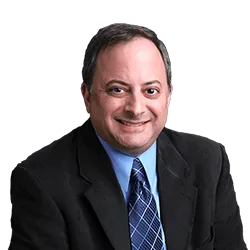
I am Steve Bliss, an Estate Planning Attorney and CPA in San Diego, and for more than 35 years I have cleaned up trust funding problems before they become public and expensive. The fact pattern is consistent: a La Jolla residence retitled correctly, a brokerage account aligned, and then one “outlier” asset (often real property or a closely held interest) remains in an individual name after a refinance or lender request.
When that mismatch is discovered, the trustee may need a petition to determine that the asset belongs to the trust, using admissible evidence of intent and trust terms under California Law. Legal Basis: Prob. Code § 850.
My CPA lens matters here: valuation discipline and basis awareness prevent a “quick fix” from creating avoidable tax friction and later credibility problems.

In San Diego County, a single unfunded property can expose a family to carrying costs and access delays while authority is clarified. The goal is administrative control with minimal public footprint.
- Confirm what the trust says about the asset.
- Build a clean evidence packet before filing.
- Stabilize governance so transactions can proceed.
Strategic Insight (San Diego): A common Mission Hills scenario is a trust that clearly names the home, but a later refinance left title in an individual name to satisfy lender workflow. The preventative strategy is a disciplined post-closing checklist with the escrow file, deed history, and trust schedules so the successor trustee is not forced into emergency motion practice. When a dispute arises, the court’s authority to confirm trust property turns on the petition framework. Legal Basis: Prob. Code § 856.
Why San Diego and California Law change the outcome
California Law sets the petition pathway, but San Diego realities change the stakes: coastal properties carry higher insurance, property tax, and maintenance costs, and delays can disrupt a sale, a planned 1031 coordination, or even a tenant transition. Where families bank locally, I often see urgency tied to San Diego financial institutions requiring documented authority before releasing information or honoring trustee instructions. Legal Basis: Prob. Code § 856.
This is general information under California Law; specific facts change strategy.
If a transfer is challenged, the timing and optics of “fixing” ownership after a liability event can become part of the dispute narrative, which is why I treat documentation and sequence as risk control rather than paperwork. Legal Basis: Civ. Code § 3439.04.
- Higher carrying costs make delay expensive in San Diego.
- Privacy expectations are higher in Rancho Santa Fe and Del Mar families.
- Clean documentation reduces the surface area for contest posture.
Fiduciary exposure when trust ownership is unclear
When an asset sits outside the trust on paper, the successor trustee can face fiduciary risk: beneficiaries may claim delay, lost value, or mismanagement if the trustee cannot demonstrate a disciplined plan. California Law imposes duties of administration that make documentation part of the fiduciary record, not an optional extra. Legal Basis: Prob. Code § 16000.
If a beneficiary alleges breach, remedies can include orders to compel performance, unwind acts, or surcharge losses, which is why I treat governance as a compliance system. Legal Basis: Prob. Code § 16420.
- Proceeding without a complete evidence file and creating avoidable credibility gaps.
- Allowing property expenses to lapse while authority is unresolved.
- Executing transactions before ownership is confirmed, inviting later challenge.
- Failing to document communications and decision rationale to beneficiaries.
- Overlooking community property character issues that change assumptions.
- Letting a dispute posture form before stabilizing the record.
Tax and accounting posture: the CPA discipline behind defensible fixes
A Heggstad petition is often discussed as “getting the asset into the trust,” but the real control is the record you create: valuation support, a consistent timeline, and a documented explanation for why the asset was intended as trust property. As a CPA, I also watch for basis and capital gain exposure so the cure does not create new friction later.
- Keep appraisals and broker statements consistent with the asserted timeline.
- Document why the asset was omitted (refinance, lender process, escrow error).
- Maintain a clean file that can be understood years later without interpretation.
The Immediate 5: Heggstad petition intake questions I use in San Diego
1) Is the asset truly intended to be trust property, or are we trying to change the plan after the fact?
The threshold issue is intent supported by documents created before the triggering event, not a retroactive rewrite; I look for trust schedules, correspondence, escrow instructions, and consistent behavior showing the trust was the intended owner under California Law. Legal Basis: Prob. Code § 850.
FAQ Answer (Plain Text): The threshold issue is intent supported by documents created before the triggering event, not a retroactive rewrite; I look for trust schedules, correspondence, escrow instructions, and consistent behavior showing the trust was the intended owner under California Law. Legal Basis: Prob. Code § 850.
2) What is the risk that the timing looks like a creditor-avoidance move?
If the “fix” is attempted after a lawsuit, judgment, or known liability, the sequence can be framed as a voidable-transfer tactic, even when the family believes it is merely correcting an administrative error. Legal Basis: Civ. Code § 3439.04.
FAQ Answer (Plain Text): If the “fix” is attempted after a lawsuit, judgment, or known liability, the sequence can be framed as a voidable-transfer tactic, even when the family believes it is merely correcting an administrative error. Legal Basis: Civ. Code § 3439.04.
3) Do we have a clean court order pathway that matches the relief we actually need?
In practice, the goal is a court order confirming trust ownership so the trustee can act with administrative control, and the petition and proposed order must match the relief authorized under California Law. Legal Basis: Prob. Code § 856.
FAQ Answer (Plain Text): In practice, the goal is a court order confirming trust ownership so the trustee can act with administrative control, and the petition and proposed order must match the relief authorized under California Law. Legal Basis: Prob. Code § 856.
4) What fiduciary record will we create for beneficiaries and future scrutiny?
I treat the petition file as a fiduciary record: what was known, when it was known, what steps were taken, and why the chosen path was reasonable, because trustees have a duty to administer the trust in compliance with California Law. Legal Basis: Prob. Code § 16000.
FAQ Answer (Plain Text): I treat the petition file as a fiduciary record: what was known, when it was known, what steps were taken, and why the chosen path was reasonable, because trustees have a duty to administer the trust in compliance with California Law. Legal Basis: Prob. Code § 16000.
5) What is the controlled path that preserves privacy and avoids avoidable cost?
When the evidence is clean, the controlled approach is to stabilize title authority with a focused petition, limit the surface area for dispute posture, and keep the family’s private details out of unnecessary conflict whenever possible under California Law. Legal Basis: Prob. Code § 16420.
FAQ Answer (Plain Text): When the evidence is clean, the controlled approach is to stabilize title authority with a focused petition, limit the surface area for dispute posture, and keep the family’s private details out of unnecessary conflict whenever possible under California Law. Legal Basis: Prob. Code § 16420.

A Heggstad petition is not “paperwork”; it is governance under pressure. When you want control, you build the record first, then file with precision.
- Protect privacy by keeping the request narrow and well-supported.
- Preserve transaction flexibility by clarifying authority early.
- Reduce conflict by making the evidence easy to verify.
Procedural realities: what actually determines outcomes
A) Evidence and documentation discipline
For real property in San Diego County, the evidence file must show consistent intent and trust terms, not a post-event reconstruction, because petitions rise or fall on what the record objectively supports under California Law. Legal Basis: Prob. Code § 850.
Where timing is sensitive, I also evaluate whether any “correction” could be framed as voidable-transfer behavior, and we sequence actions accordingly. Legal Basis: Civ. Code § 3439.04.
- Transfer documents vs actual control and ownership behavior.
- Valuation support vs later audit or challenge risk.
- Timeline consistency for planning vs creditor or liability exposure.
- Tie every step to California compliance and defensibility.
B) Negotiation vs transaction-challenge reality
Once a transaction is challenged, you are no longer “fixing title”; you are defending credibility, sequence, and intent, and the requested relief must match what the court can order under California Law. Legal Basis: Prob. Code § 856.
That is why I focus on a controlled evidentiary narrative and avoid unnecessary motions that expand conflict and cost, particularly where San Diego real estate transactions are time-sensitive. Legal Basis: Prob. Code § 16420.
- What changes once a transaction is challenged.
- Documentation, timing, valuation, and compliance posture.
- Procedural reality only: the record controls the outcome.
C) Complex scenarios (HNW micro-specialization)
Digital assets and cryptocurrency access planning matters when a trustee must take control without delay; where this becomes relevant is when exchanges and custodians require documented authority and a lawful access pathway under California Law. Legal Basis: Prob. Code § 870.
No-contest clause boundaries matter when a beneficiary uses a title dispute as leverage; where this becomes relevant is when the plan includes deterrence language and you need to assess enforceability before escalation. Legal Basis: Prob. Code § 21311.
Community property issues change assumptions in San Diego planning and disputes; where this becomes relevant is when an asset was acquired during marriage and the characterization affects what belongs to the trust and what rights a spouse may assert. Legal Basis: Fam. Code § 760.
Lived Experiences
Laura I. “We discovered a trust funding gap right as a San Diego property transaction was moving forward. Steve brought calm structure, built the evidence file, and restored administrative control without creating unnecessary conflict.”
CThomas D. “Our family wanted privacy and clarity after a title issue surfaced. Steve explained the petition path, organized the documentation, and helped us resolve the problem with a record we can rely on for years.”
California Statutory Framework & Legal Authority
|
Attorney Advertising, Legal Disclosure & Authorship
ATTORNEY ADVERTISING.
This content is provided for general informational and educational purposes only and does not constitute legal, financial, or tax advice.
Under the California Rules of Professional Conduct and State Bar advertising regulations, this material may be considered attorney advertising.
Reading this content does not create an attorney-client relationship or any professional advisory relationship.
Laws vary by jurisdiction and are subject to change, including recent 2026 developments under California’s AB 2016 and evolving federal estate and reporting requirements.
You should consult a qualified attorney or advisor regarding your specific circumstances before taking action.
Responsible Attorney:
Steven F. Bliss, California Attorney (Bar No. 147856).
Local Office:
San Diego Probate Law3914 Murphy Canyon Rd San Diego, CA 92123 (858) 278-2800
San Diego Probate Law is a practice location and trade name used by Steven F. Bliss, Esq., a California-licensed attorney.
About the Author & Legal Review Process
This article was researched and drafted by the Legal Editorial Team of the Law Firm of Steven F. Bliss, Esq.,
a collective of attorneys, legal writers, and paralegals dedicated to translating complex legal concepts into clear, accurate guidance.
Legal Review:
This content was reviewed and approved by Steven F. Bliss, a California-licensed attorney (Bar No. 147856).
Mr. Bliss concentrates his practice in estate planning and estate administration, advising clients on proactive planning strategies and representing fiduciaries in probate and trust administration proceedings when formal court involvement becomes necessary.
With more than 35 years of experience in California estate planning and estate administration,
Mr. Bliss focuses on structuring enforceable estate plans, guiding fiduciaries through court-supervised proceedings,
resolving creditor and notice issues, and coordinating asset management to support compliant, timely distributions and reduce fiduciary risk.
|