
The “Contingency Fee” is the key to the courthouse for regular people. Under California Business & Professions Code § 6147, a contingency fee agreement must be in writing and clearly state the percentage the lawyer will take (typically 33% to 40%). Crucially, the law requires us to state that the fee is negotiable and not set by law. This arrangement aligns our interests with yours: the more money we recover for you, the more we earn. If we recover nothing, our fee is zero. We take all the financial risk so you don’t have to.
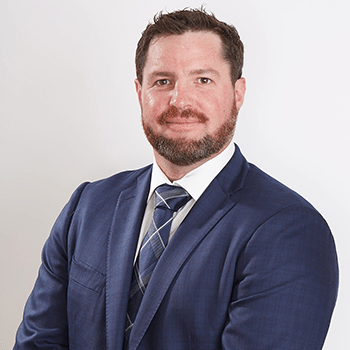
How contingency fees work in San Diego when you can’t afford to finance the case
The most important rule under California Law: a contingency fee is only legitimate if the agreement is in writing and compliant with the statutory disclosures that protect you, including the core requirements in Bus. & Prof. Code § 6147.
What I’ve seen in real San Diego fee disputes and why the paperwork matters
I’ve handled personal injury cases in San Diego long enough to know this: a “contingency” fee isn’t just a percentage. It’s a risk allocation contract that has to be clean, because if the relationship breaks down, the fee fight becomes its own litigation problem in San Diego Superior Court.
An anonymized scenario: a crash near Downtown, solid liability, and obvious medical treatment, but the client signed a one-page fee sheet that didn’t clearly explain what “costs” meant or when they’d be repaid. Months later, the insurer pushed the case into a coverage-positioning posture, and the client felt ambushed by lien letters and litigation expenses. The fix wasn’t spin; it was clarifying the fee and cost structure up front under California Law so the case strategy could stay trial-focused instead of mistrust-focused.

When the fee agreement is compliant, you can make rational decisions about settlement pressure, litigation expense, and timing. When it’s sloppy, the insurer’s delay tactics get amplified because the client starts doubting their own side.
- Fee is the attorney’s compensation, usually a percentage of recovery.
- Costs are case expenses like filing fees, records, depositions, and experts.
- Liens and reimbursement claims reduce what actually lands in your pocket if they aren’t negotiated hard.
Jurisdictional authority: why California Law and San Diego Superior Court change the leverage
Contingency fees in California aren’t just “industry custom.” They’re regulated. The baseline requirements for a contingency fee contract are spelled out in Bus. & Prof. Code § 6147, and fee agreement rules for many non-contingent representations live in Bus. & Prof. Code § 6148. If the case is a medical malpractice claim, contingency fees are subject to statutory limits under Bus. & Prof. Code § 6146.
In practice, once a case is moving toward filing in San Diego Superior Court, the cost curve changes and the defense starts pricing trial risk. That is exactly when a client needs to understand how fees, costs, and lien resolution interact so the litigation strategy doesn’t get derailed late.
The “Immediate 5” contingency-fee questions real San Diego victims ask
1) What must a contingency fee agreement include under California Law?
Under Bus. & Prof. Code § 6147, a contingency fee contract generally must be in writing, signed, and disclose the fee rate and how it is calculated, along with how disbursements and costs will affect the client’s recovery. It also must include required statements that the fee is negotiable and address what happens to fees and costs if there is no recovery.
2) Is the “percentage” the only money that comes out of my settlement?
No. Most contingency cases involve a separate category: litigation costs advanced to build proof and prosecute the case, which are usually reimbursed from the recovery after settlement or judgment. If you don’t understand whether costs come “off the top” before the fee or after the fee, you can’t accurately evaluate the net result, and that is why the disclosures in Bus. & Prof. Code § 6147 matter.
3) What’s the difference between costs and medical liens in a San Diego injury case?
Costs are case expenses like filing fees, depositions, expert work, and medical records, while liens are repayment claims asserted by providers or payers against your recovery. Liens can be negotiated, but they have to be identified early so your “settlement number” isn’t a fantasy, and the agreement should explain how those deductions are handled consistent with Bus. & Prof. Code § 6147.
4) What happens if I fire my lawyer or my lawyer withdraws before the case resolves?
That is where people get burned if they don’t read the contract. A contingency agreement should address how fees are handled if the relationship ends early, including whether a discharged lawyer may claim a fee interest in the eventual recovery, and the contract terms must still comply with Bus. & Prof. Code § 6147. In the real world, fee disputes can become a distraction that the insurer benefits from, especially if litigation is pending in San Diego Superior Court.
5) Are contingency fees capped in California, and when does that matter?
For most non-medical-malpractice injury cases, the statute does not impose a single universal “cap,” but the agreement must meet the disclosure and form requirements in Bus. & Prof. Code § 6147. In medical malpractice cases, contingency fees are limited by statute under Bus. & Prof. Code § 6146, and that changes how cases are financed and staffed.

If you want the clean truth: insurers love confusion. When the client doesn’t understand fees, costs, and liens, the carrier’s delay-and-discount tactics work better because the client becomes risk-averse at the wrong time.
A solid contingency agreement is part of litigation strategy, because it keeps decision-making rational when the defense tries to create panic.
Magnitude expansion: what contingency fees change about how a San Diego case is built
A) Evidence Evaluation in San Diego Cases
Contingency work forces discipline: you only spend money where it increases provable value. That means aligning liability and damages proof with realistic insurer evaluation, because the fee only exists if the result exists.
- Police reports vs medical records: police reports help liability, but medical records drive causation and damages credibility.
- Scene photos vs repair documentation: these are inexpensive, high-impact proof tools that cut down “minimal impact” defenses.
- Treatment timeline consistency: gaps create discount leverage for insurers and increase the cost required to rehabilitate the file.
B) Settlement vs Litigation Reality
Once a case is filed in San Diego Superior Court, costs can increase because discovery and expert needs become non-optional in contested cases. A proper agreement under Bus. & Prof. Code § 6147 should make it clear how that spending is handled, so you can decide whether to accept a settlement or fund the proof required to win.
Settlement pressure changes when the defense sees you can actually litigate, but litigation only helps if the case is organized and the costs are spent on proof, not on noise.
C) San Diego-Specific Claim Wrinkles
San Diego claims often involve multi-vehicle freeway collisions and contested causation arguments, which can require records, imaging review, and sometimes experts. Those choices are inseparable from how costs are advanced and reimbursed under the fee agreement, and the contract terms must be clear and compliant with Bus. & Prof. Code § 6147.
- Traffic density and rear-end patterns: chain impacts create sequencing disputes that require early documentation.
- Freeway merge collisions: the defense will argue shared fault unless the file is built around objective proof.
- Insurer resistance patterns: delay, recorded-statement traps, and “gap in care” narratives are predictable and beatable with disciplined documentation.
Lived Experiences
Jack
“I was scared I’d end up owing money I didn’t have. Richard walked me through the difference between fees, costs, and liens like it was a checklist, not a sales pitch. Once I understood the net math, I stopped panicking and focused on getting better.”
Cheyenne
“The insurer kept dragging things out and I felt pressure to take a low offer just to end it. Richard explained how the case expenses worked and why certain proof was worth funding if we were going to litigate. That clarity made the decision feel controlled instead of desperate.”
California Statutory Framework & Legal Authority
|
Attorney Advertising, Legal Disclosure & Authorship
ATTORNEY ADVERTISING.
This content is provided for general informational and educational purposes only and does not constitute legal advice.
Under the California Rules of Professional Conduct and applicable State Bar of California advertising regulations,
this material may be considered attorney advertising.
Viewing or reading this content does not create an attorney-client relationship.
Laws and procedures governing personal injury claims vary by jurisdiction and may change over time.
You should consult a qualified California personal injury attorney regarding your specific situation before taking any legal action.
Responsible Attorney:
Richard Morse, California Attorney (Bar No. 289241).
Morse Injury Law is a practice name and location used by Richard Peter Morse III, a California-licensed attorney.
About the Author & Legal Review Process
This article was prepared by the legal editorial team supporting Richard Peter Morse III,
with the goal of explaining California personal injury law and claims procedures in clear, accurate, and practical terms for injured individuals in San Diego and surrounding communities.
Legal Review:
This content was reviewed and approved by Richard Morse, a California-licensed attorney (Bar No. 289241),
who concentrates his practice on personal injury litigation and insurance claim disputes.
With more than 13 years of experience representing injury victims throughout California,
Mr. Morse focuses on serious personal injury matters including motor vehicle collisions, uninsured and underinsured motorist claims,
premises liability, catastrophic injury, and wrongful death.
His practice emphasizes claims evaluation, insurance carrier accountability, and litigation in California courts when fair resolution cannot be achieved.
|