
Real property transfer structures in California are dictated by the formal requirements of Civil Code § 1091, which mandates that ownership interests be transferred through a written instrument or by operation of law. Effective administration requires aligning title with the Probate Code’s simplified transfer thresholds; for deaths on or after April 1, 2025, AB 2016 (Prob. Code § 13101) permits the transfer of primary residences worth up to $750,000 via affidavit, bypassing formal probate. Furthermore, the “Heggstad” logic under Prob. Code § 850 provides the enforcement mechanism to confirm trust ownership of assets where formal titling was omitted, provided the settlor’s intent is evidenced in writing. Evidentiary standards for non-probate transfers, such as Joint Tenancy, require the recordation of an Affidavit of Death of Joint Tenant per Prob. Code § 210, supported by a certified death certificate. These mechanics ensure that the “chain of title” remains resilient against creditor claims and satisfies the “clear and convincing” standard required to prove equitable ownership interests during a judicial audit of the estate’s transfer history.
Ownership transfer structures live or die on formalities and proof under California Law: the correct instrument, the correct capacity and authority, and the correct title alignment to the intended governance plan. For real property, a valid written instrument is the baseline, and informal intent does not replace execution discipline. Legal Basis: Civ. Code § 1091.
Ownership transfer structures are about title control, not paperwork volume

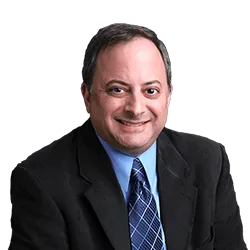
I am Steve Bliss, an Estate Planning Attorney and CPA in San Diego, and for more than 35 years my focus has been preventing “almost transferred” assets from quietly undermining families. In La Jolla, a family had a well-drafted trust, but ownership of a brokerage account at San Diego County Credit Union and a rental property interest stayed in the wrong name because the transfer structure was never executed end-to-end. Under California Law, trustees must administer property according to the governing instrument, which presumes the asset is actually owned where the instrument says it is. Legal Basis: Prob. Code § 16000. My CPA discipline adds valuation awareness and basis tracking so transfers remain defensible years later, not just “done.”
Strategic Insight (San Diego): A frequent San Diego nuance is that title work and privacy goals collide when families try to move real property into a trust while maintaining calm relationships with tenants, lenders, and HOA managers. The preventative strategy is to treat recording, notices, and internal ledgers as one controlled sequence, not separate tasks handled by different people. When that sequence is consistent, administration stays quiet and the ownership story is easy to prove. Legal Basis: Civ. Code § 1213.
Why San Diego realities make ownership transfers either stable or fragile
In San Diego, timing and access matter: escrow scheduling, HOA documentation, lender requirements, and coastal property maintenance can create months of friction if ownership is not aligned before a triggering event. California Law also imposes a communication duty that increases pressure when beneficiaries sense uncertainty about who controls what. Legal Basis: Prob. Code § 16060.
- Transfers “intended” but not executed, leaving authority gaps at banks and brokerages.
- Real property deeds not recorded, creating priority and proof problems later.
- Entity interests assigned informally, without matching operating documents.
- Community property not analyzed, causing spousal consent exposure.
- Beneficiary designations that contradict the trust’s governance plan.
If a transfer is challenged by a family member or a creditor, the focal point becomes documentation discipline: the instrument, the chain of title, and the timing narrative. Trustees and agents need an evidentiary-ready file that matches the plan and can be produced without improvisation. Legal Basis: Prob. Code § 16062.
My CPA advantage is operational: I treat every ownership transfer as a balance-sheet event that affects basis, capital gains posture, and long-term defensibility, especially with San Diego real property and concentrated investment positions. This is general information under California Law; specific facts change strategy.
The Immediate 5: the questions that determine whether an ownership transfer structure holds under pressure
These are the first questions I ask to test whether a transfer structure is real, provable, and aligned with governance. They are designed to surface timing gaps, authority gaps, and title mismatches while there is still room to correct them quietly.
- Identify what you own and how it is titled today.
- Confirm who has authority to sign and deliver transfer documents.
- Match the transfer method to the asset class and institution.
- Preserve a clean proof file for later administration.
Practitioner’s Note: In Mission Hills, a family tried to “transfer” a duplex by signing an unrecorded deed and emailing a scan to a relative, then discovered the lender and insurer still treated ownership as unchanged. The diagnostic signal was that every third party record contradicted the plan; the corrective move was re-executing and delivering a compliant instrument with a disciplined recording sequence. Legal Basis: Civ. Code § 1091.
Exactly which assets are you transferring, and what name is on title today?
Start with specificity: every account number, parcel, membership interest, and policy, and the exact current title language. Ownership transfer structures fail when the plan describes one owner but the institution recognizes another. Legal Basis: Civ. Code § 1213.
What transfer method matches each asset class without creating an authority gap?
Real property often requires a deed, bank and brokerage accounts may require institution forms, and entity interests may require assignments that match governing documents. A trust can be created and funded through multiple legally recognized methods, but the method must match the asset and the proof you will need later. Legal Basis: Prob. Code § 15200. Connection: a trust funding method under Prob. Code § 15200 still depends on a compliant real property instrument when Civ. Code § 1091 is implicated.
Do your beneficiary designations and pay-on-death terms contradict your governance plan?
Many ownership transfer structures bypass a trust by design, but contradictions create fragmented control and tax reporting complexity. Nonprobate transfers can be effective when coordinated, yet they must be intentionally aligned with the trustee’s administration path and disclosure expectations. Legal Basis: Prob. Code § 5000. Connection: nonprobate transfers under Prob. Code § 5000 should still be documented within the accounting framework expected under Prob. Code § 16062.
Who has signing authority right now, and is that authority accepted by third parties?
The practical test is recognition: does the bank, title company, or managing agent accept the signer’s authority without escalation. If authority is unclear, the transfer becomes a dispute magnet and privacy risk, especially when urgent access is needed to pay carrying costs or maintain a property.
What is the proof file you would hand a trustee or agent if you could not speak tomorrow?
A controlled proof file includes executed instruments, recording confirmations, acceptance letters, and a dated transfer log that shows what changed and when. The focus is not volume; it is clarity and consistency so administration proceeds without reconstruction or argument.

In San Diego, ownership transfers often run through escrow, lenders, and property managers, which means your structure should anticipate third-party verification. I design transfer sequences so the paper trail and the real-world control story are the same.
- Title alignment that matches governance and privacy goals.
- Institution acceptance steps documented in writing.
- Transfer logs that support later fiduciary accounting.
Procedural realities that make ownership transfers defensible
Evidence & Documentation Discipline
The evidentiary posture is simple: if you cannot prove the transfer cleanly, the transfer is vulnerable to delay or challenge. Your file should be organized as business records, with consistent dates, signers, and supporting documents that can be produced without editing. Legal Basis: Evid. Code § 1271.
- Transfer documents vs actual control/ownership
- Valuation support vs later audit/challenge risk
- Timeline consistency for planning vs creditor/liability exposure
- Tie to California compliance and defensibility
For San Diego real property, recording and priority are not administrative details; they are the proof mechanism that third parties rely on when ownership is questioned. Legal Basis: Civ. Code § 1213.
Negotiation vs Transaction-Challenge Reality
Once a transfer is challenged, the conversation shifts from intent to timing, value, and whether the transfer can be attacked as a voidable transaction. Where this becomes relevant is when family members, former business partners, or creditors argue that ownership was shifted to defeat legitimate claims rather than for governance. Legal Basis: Civ. Code § 3439.04.
- What changes once a transaction is challenged
- Documentation, timing, valuation, compliance posture
- Procedural reality only
Complex Scenarios
Digital assets and cryptocurrency ownership require access planning that proves control without exposing private keys in the wrong hands. Where this becomes relevant is that missing access turns “ownership” into a practical zero, even when the plan is correct on paper. Legal Basis: Prob. Code § 870.
No-contest clause enforceability boundaries influence how beneficiaries raise concerns about transfers, and community property rules can require spousal participation when ownership is moved or re-characterized. In San Diego, this frequently surfaces when a couple holds real property jointly and one spouse attempts a unilateral shift into a separate trust structure. Legal Basis: Fam. Code § 1102. Legal Basis: Prob. Code § 21311.
Lived experiences from clients who wanted quiet, controlled transfers
Yolanda V. We had a plan, but the ownership details were scattered and we were worried it would create conflict later. Steve organized the transfer steps, verified acceptance with our institutions, and gave us a clean proof file. The practical outcome was control and clarity without broadcasting our business.
Jay F. Our biggest obstacle was keeping everything consistent across real property and financial accounts while preserving privacy. Steve stabilized the governance structure, aligned title to the trust, and reduced the chances of future disputes. The practical outcome was smoother administration and fewer points of friction for our family.
California statutory framework & legal authority
This authority table consolidates every California code section referenced above so you can verify the legal basis quickly and keep your transfer structure documentation-disciplined.
A controlled next step for ownership transfer clarity
If your goal is quiet continuity, the focus should be a documented ownership transfer structure that third parties will recognize without escalation and that a trustee can administer without reconstruction.
- Inventory title as it exists today, not as you believe it exists.
- Choose transfer methods that match each asset class and institution.
- Preserve a proof file that supports later fiduciary accounting and privacy.
|
Attorney Advertising, Legal Disclosure & Authorship
ATTORNEY ADVERTISING.
This content is provided for general informational and educational purposes only and does not constitute legal, financial, or tax advice.
Under the California Rules of Professional Conduct and State Bar advertising regulations, this material may be considered attorney advertising.
Reading this content does not create an attorney-client relationship or any professional advisory relationship.
Laws vary by jurisdiction and are subject to change, including recent 2026 developments under California’s AB 2016 and evolving federal estate and reporting requirements.
You should consult a qualified attorney or advisor regarding your specific circumstances before taking action.
Responsible Attorney:
Steven F. Bliss, California Attorney (Bar No. 147856).
Local Office:
San Diego Probate Law3914 Murphy Canyon Rd San Diego, CA 92123 (858) 278-2800
San Diego Probate Law is a practice location and trade name used by Steven F. Bliss, Esq., a California-licensed attorney.
About the Author & Legal Review Process
This article was researched and drafted by the Legal Editorial Team of the Law Firm of Steven F. Bliss, Esq.,
a collective of attorneys, legal writers, and paralegals dedicated to translating complex legal concepts into clear, accurate guidance.
Legal Review:
This content was reviewed and approved by Steven F. Bliss, a California-licensed attorney (Bar No. 147856).
Mr. Bliss concentrates his practice in estate planning and estate administration, advising clients on proactive planning strategies and representing fiduciaries in probate and trust administration proceedings when formal court involvement becomes necessary.
With more than 35 years of experience in California estate planning and estate administration,
Mr. Bliss focuses on structuring enforceable estate plans, guiding fiduciaries through court-supervised proceedings,
resolving creditor and notice issues, and coordinating asset management to support compliant, timely distributions and reduce fiduciary risk.
|