
The ultimate deadline for your case is the Statute of Limitations. Under Code of Civil Procedure § 335.1, you generally have exactly two years from the date of the accident to file a lawsuit in California. However, we never want to settle too early. We wait until you reach “Maximum Medical Improvement” (MMI). If we settle while you are still hurting, and you discover you need surgery a month later, you cannot come back for more money. The case is closed forever. Balancing the MMI timeline against the 2-year statute is the delicate art of case management.
How long will my case take in San Diego, and what can I do to avoid the slow lane?
The most important rule under California Law: do not let “we’re still evaluating” lull you into missing hard deadlines, especially the lawsuit filing deadline in CCP § 335.1. Timing is leverage, and insurers know it.
What case timelines really look like when the defense is stalling
I’ve tried and litigated injury cases in San Diego long enough to tell you the truth: most of the delay is engineered, not accidental. Under California Law, you can push a case forward, but only if you’re building proof and using procedure instead of waiting for a “fair” adjuster.
A realistic San Diego scenario: a client is hit in a multi-vehicle chain on the 5 near Sorrento Valley. Liability looks clear, but the carrier plays the “treatment is still ongoing” song while quietly collecting surveillance, fishing for prior records, and trying to lock in a low valuation. When we prepared the file to be trial-ready and filed in San Diego Superior Court, the pace changed because deadlines, discovery, and trial risk are real there.

Here’s the clean reality: your case duration depends on proof maturity, liability dispute level, and whether the insurer believes you will actually litigate. If the file is thin, they slow-walk it. If the file is organized and lawsuit-ready, they price it sooner.
- Soft tissue / clear liability: often months, not years, if treatment stabilizes and proof is tight.
- Liability disputes / gaps in care: longer, because the defense has a narrative to sell.
- Surgery / future care: longer, because damages take time to quantify and document.
Jurisdictional authority: why San Diego Superior Court changes the timeline
Pre-suit claims run on the insurer’s schedule unless you force decision points. Once a case is filed in San Diego Superior Court, procedure takes over: the defendant has a deadline to serve you after filing, and you have a deadline to serve them after filing. One of the biggest “silent delays” is failing to move service promptly under CCP § 583.210 and the mandatory consequences in CCP § 583.250.
Then discovery creates a rhythm. You don’t get to “wait forever” to take depositions and exchange the proof. The trial system imposes cutoff pressure, including a discovery cutoff rule in CCP § 2024.020, which is one reason cases tend to compress near trial settings.
The “Immediate 5” timeline questions real San Diego victims ask
1) What is the real deadline to file my injury lawsuit in California?
For most personal injury cases in California, the baseline deadline is two years from the date of injury under CCP § 335.1. If you miss it, your case can be time-barred no matter how legitimate the injuries are, and insurers often stall precisely to pressure that clock.
2) Why do some San Diego cases settle in months and others take a year or more?
The biggest drivers are proof maturity and dispute level: clear liability plus stable medical outcome moves faster; contested fault, gaps in treatment, or future care projections slow everything down. If you file, court procedure and discovery deadlines in San Diego Superior Court reduce open-ended delay, including the discovery cutoff framework in CCP § 2024.020.
3) After a lawsuit is filed, how fast does the case start moving?
Filing isn’t the finish line; it’s the starting gun for enforceable timelines. You generally must serve the defendant within the statutory window under CCP § 583.210, and courts treat noncompliance seriously under CCP § 583.250. Once service is done, the defense typically shifts from “adjusting” to “defending,” and discovery becomes the battleground.
4) What slows a case down even when the insurance company admits fault?
Admissions don’t equal valuation. The defense can still dispute causation, necessity of treatment, and the size of damages, and they often do it by dragging out records, requesting duplicative authorizations, or waiting for you to get tired. The cure is disciplined proof-building and procedural pressure so the carrier can’t keep the file in “pending” status indefinitely.
5) If the crash was serious, should I wait until I’m “fully healed” before the case resolves?
You should not confuse medical stabilization with doing nothing. Many serious-injury cases require time to understand prognosis and future care, but deadlines under CCP § 335.1 do not pause just because treatment is ongoing. The practical approach is to move the case forward while building the medical story responsibly, instead of waiting and losing leverage.

If you want a usable timeline, think in phases, not dates: (1) treatment and documentation, (2) demand and valuation, (3) litigation and discovery, (4) trial pressure or trial. Insurers delay where you’re unprepared and accelerate where you’re dangerous.
- Phase 1: medical records, bills, photos, witnesses, and consistency.
- Phase 2: demand package that anticipates defenses, not just a list of expenses.
- Phase 3: filing, service, discovery, and deadlines that force decisions.
Magnitude expansion: what actually controls how long a San Diego case takes
A) Evidence Evaluation in San Diego Cases
Time shrinks when your evidence is clean. Time explodes when the defense smells uncertainty and thinks it can buy a discount with delay.
- Police reports vs medical records: reports help liability; records prove injury mechanism, timing, and causation.
- Scene photos vs repair documentation: objective damage proof reduces “low impact” arguments that create months of dispute.
- Treatment timeline consistency: gaps and missed follow-ups give insurers a reason to “re-evaluate” forever.
B) Settlement vs Litigation Reality
Pre-suit negotiation has no built-in finish line. Litigation in San Diego Superior Court creates one, because procedure forces the defense to respond, appear, and participate.
Discovery is not unlimited, and cutoffs matter. The discovery cutoff rule in CCP § 2024.020 is a real clock that changes how both sides schedule depositions, medical exams, and expert work.
C) San Diego-Specific Claim Wrinkles
San Diego traffic patterns create predictable defense plays: chain-reaction disputes, “who hit whom” sequencing, and “pre-existing condition” narratives. Those plays are timed; they get stronger the longer the file stays vague.
- Traffic density and rear-end patterns: insurers try to shift fault to a “phantom” vehicle or a prior impact.
- Multi-vehicle freeway collisions: they delay while they hunt comparative negligence angles.
- Common SoCal resistance patterns: slow records, repeated “status checks,” and surveillance when treatment continues.
Lived Experiences
Tanner
“I thought the insurance company was just busy. Richard explained the timeline like a chessboard and showed me where the delays were coming from. Once the case moved into real deadlines, the tone changed and the offers stopped drifting.”
Bailey
“I kept hearing ‘give us another 30 days.’ Richard built the proof early and didn’t let the adjuster control the pace. The practical outcome wasn’t just money—it was finally getting out of limbo and back to normal.”
California Statutory Framework & Legal Authority
|
Attorney Advertising, Legal Disclosure & Authorship
ATTORNEY ADVERTISING.
This content is provided for general informational and educational purposes only and does not constitute legal advice.
Under the California Rules of Professional Conduct and applicable State Bar of California advertising regulations,
this material may be considered attorney advertising.
Viewing or reading this content does not create an attorney-client relationship.
Laws and procedures governing personal injury claims vary by jurisdiction and may change over time.
You should consult a qualified California personal injury attorney regarding your specific situation before taking any legal action.
Responsible Attorney:
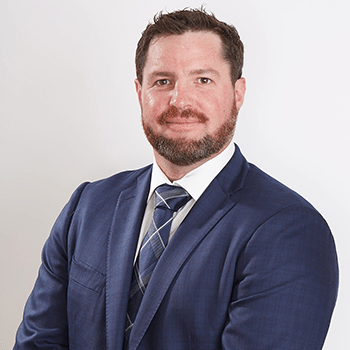
Richard Morse, California Attorney (Bar No. 289241).
Morse Injury Law is a practice name and location used by Richard Peter Morse III, a California-licensed attorney.
About the Author & Legal Review Process
This article was prepared by the legal editorial team supporting Richard Peter Morse III,
with the goal of explaining California personal injury law and claims procedures in clear, accurate, and practical terms for injured individuals in San Diego and surrounding communities.
Legal Review:
This content was reviewed and approved by Richard Morse, a California-licensed attorney (Bar No. 289241),
who concentrates his practice on personal injury litigation and insurance claim disputes.
With more than 13 years of experience representing injury victims throughout California,
Mr. Morse focuses on serious personal injury matters including motor vehicle collisions, uninsured and underinsured motorist claims,
premises liability, catastrophic injury, and wrongful death.
His practice emphasizes claims evaluation, insurance carrier accountability, and litigation in California courts when fair resolution cannot be achieved.
|