
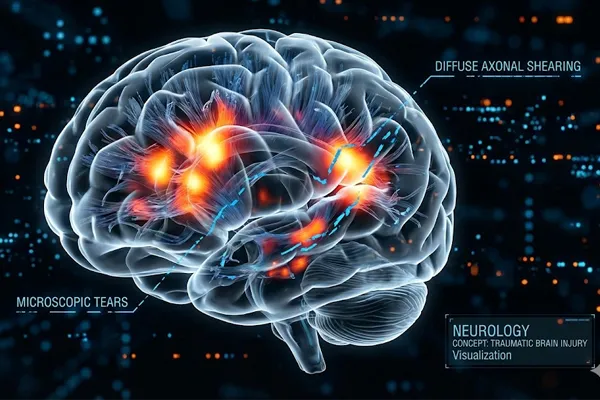
Insurance adjusters frequently label concussions as “Mild TBI” to cap settlements, often citing “normal” CT scans. However, under California tort law, you are entitled to full compensation for Non-Economic Damages (pain and suffering) and future cognitive loss. We overcome the “negative scan” defense by using Diffusion Tensor Imaging (DTI), which visualizes the microscopic “axonal shearing” that standard MRIs miss, proving the injury is physical, permanent, and high-value.
Traumatic Brain Injury Lawyer in San Diego: what you must do immediately under California Law
Here’s the rule that protects your case: treat concussion symptoms like a paper trail problem, not a pain problem. Under California Law, insurers attack “subjective” brain-injury claims first—so you lock in objective documentation early, before the story gets rewritten and before the timeline gets used against you.
What concussion and post-concussion syndrome look like in a real San Diego claim
I’ve watched perfectly reasonable people get cornered by a simple narrative: “No fracture, normal CT, therefore no real injury.” That’s not medicine and it’s not litigation reality. A concussion can change cognition, sleep, mood, balance, and tolerance to screens without leaving a clean signature on early imaging.
In one San Diego matter, the initial ER record said “no loss of consciousness,” and the carrier treated that line like a verdict. The client’s symptoms evolved over weeks—headaches, word-finding trouble, and a crash in stamina that made work unsafe. California Law doesn’t require you to be knocked out to be injured, but San Diego Superior Court requires your proof to be disciplined and consistent.
The strategy was not dramatic. It was meticulous: a symptom timeline, witness statements about functional change, neurocognitive testing, and expert framing that fits the legal elements of negligence and damages. The result was a claim that could survive cross-examination instead of one that collapsed under “it’s just stress.”
- Concussion cases win or lose on consistency: symptoms, treatment steps, and daily impact have to line up.
- Post-concussion syndrome invites defense tactics: they’ll call it anxiety, pre-existing issues, or “screen fatigue.”
- The record is the battlefield: one sloppy note can cost you leverage for months.
Why venue and California procedure change the leverage in a brain injury case
San Diego cases don’t turn on slogans—they turn on whether your proof fits what judges allow and what juries trust. California Law supplies the duty and damages framework (see Civ. Code § 1714 and Civ. Code § 3333), but the venue reality in San Diego Superior Court is what forces carriers to price risk instead of “delay and deny.”
Brain injury claims also draw more expert scrutiny than a straightforward orthopedic file. If your neuropsych and medical opinions don’t meet the legal standard for expert testimony, you lose your anchor points. That’s why I build these cases around admissible, explainable opinions—before litigation is filed, not after.
The Immediate 5: questions real San Diego concussion victims ask when the insurer starts pushing back
1) If my CT scan was “normal,” how do I prove a concussion claim in San Diego?
You prove function and change, then connect it to mechanism and timing. Under California Law, you still have a negligence and damages case if you can show duty and breach (often grounded in Civ. Code § 1714) and then prove harm through credible evidence. In practice, that means contemporaneous symptom reports, consistent follow-up care, neurocognitive testing when appropriate, and witnesses who can describe the before/after shift.
2) What is the deadline to file a traumatic brain injury lawsuit in California?
Most injury cases run on a two-year statute of limitations under C.C.P. § 335.1. For concussions, waiting is dangerous because the defense will argue intervening causes and “normal life stress” once the timeline gets muddy. You protect leverage by acting while the records are still clean and the witnesses still remember what changed.
3) How do insurers in San Diego attack post-concussion syndrome claims?
They attack credibility first, then causation, then duration. Expect a push toward “pre-existing anxiety,” “malingering,” or “symptoms inconsistent with daily activity,” and expect them to cherry-pick gaps in treatment. The counter is disciplined documentation and expert testimony that meets the standards of Evid. Code § 801—an opinion based on reliable methods and facts, not vibes.
4) If I was partly at fault, does that kill my concussion case?
No. California uses comparative fault, which means fault can reduce damages but doesn’t automatically erase them. Practically, carriers will use any shared fault to discount value and stall, especially in a “subjective symptom” file. You still prove full damages under Civ. Code § 3333, and you prepare for how fault allocation will play in San Diego Superior Court.
5) What if the concussion happened on public property or involved a city bus or trolley area?
Then the first deadline is often not the lawsuit—it’s the government claim. California requires a timely administrative claim in many public-entity cases under Gov. Code § 911.2, and failure to do it can block a later lawsuit under Gov. Code § 945.4. With brain injuries, that early procedural step matters because the defense will argue the symptoms are “unrelated” once time passes and life happens.
How value expands in San Diego concussion cases when the evidence is built correctly
A) Evidence evaluation in San Diego cases
Police reports can establish mechanics and fault, but they rarely capture cognitive change. Medical records carry weight, but only when the symptom reporting is consistent and specific. Scene photos and repair documentation help explain force and direction, and the treatment timeline is what prevents the defense from calling it “something else.”
- Timeline consistency: symptom onset, work impact, and follow-up care should match.
- Function evidence: screen tolerance, driving limitations, errors at work, and daily fatigue are measurable.
- Medical anchor points: referrals, testing, and documented restrictions create negotiation gravity.
B) Settlement vs litigation reality
Once a case is filed in San Diego Superior Court, the carrier’s risk changes: discovery obligations, expert exchange, and the cost of defending a disputed brain injury claim become real. That’s when “we don’t see enough proof” often turns into “let’s talk about numbers,” but only if the file can survive deposition and expert scrutiny.
C) San Diego-specific claim wrinkles
- Traffic density and recurring crash patterns: short merge zones and stop-and-go conditions create “minor impact” arguments that don’t match concussion reality.
- Work culture in San Diego: hospitality, biotech, military-adjacent contracting, and remote desk work all create different functional losses—carriers exploit generic job descriptions.
- Common Southern California insurer resistance: they slow-roll neuro referrals, demand recorded statements early, and then weaponize normal life activities to argue “you’re fine.”
Lived experiences
Sean
“I kept getting told I was ‘lucky’ because nothing was broken, but I couldn’t read a full email without my head pounding. Richard treated it like a proof problem—records, timeline, and the right specialists—so the insurance company stopped acting like I was making it up.”
Shelby
“The adjuster tried to use one ER note to erase months of symptoms. Richard walked me through what mattered in San Diego—consistency, follow-up, and experts who can explain the change. Once the case was built, the tone from the defense changed fast.”
California Statutory Framework & Legal Authority
These are the specific California statutes referenced above, with the plain-English reason each one matters in a San Diego traumatic brain injury claim.
|
Attorney Advertising, Legal Disclosure & Authorship
ATTORNEY ADVERTISING.
This content is provided for general informational and educational purposes only and does not constitute legal advice.
Under the California Rules of Professional Conduct and applicable State Bar of California advertising regulations,
this material may be considered attorney advertising.
Viewing or reading this content does not create an attorney-client relationship.
Laws and procedures governing personal injury claims vary by jurisdiction and may change over time.
You should consult a qualified California personal injury attorney regarding your specific situation before taking any legal action.
Responsible Attorney:
Richard Morse, California Attorney (Bar No. 289241).
Morse Injury Law is a practice name and location used by Richard Peter Morse III, a California-licensed attorney.
About the Author & Legal Review Process
This article was prepared by the legal editorial team supporting Richard Peter Morse III,
with the goal of explaining California personal injury law and claims procedures in clear, accurate, and practical terms for injured individuals in San Diego and surrounding communities.
Legal Review:
This content was reviewed and approved by Richard Morse, a California-licensed attorney (Bar No. 289241),
who concentrates his practice on personal injury litigation and insurance claim disputes.
With more than 13 years of experience representing injury victims throughout California,
Mr. Morse focuses on serious personal injury matters including motor vehicle collisions, uninsured and underinsured motorist claims,
premises liability, catastrophic injury, and wrongful death.
His practice emphasizes claims evaluation, insurance carrier accountability, and litigation in California courts when fair resolution cannot be achieved.
|