
The biggest mistake in injury law is stopping at the driver’s insurance. Under California Civil Code § 2338, a “principal” (employer or homeowner) is responsible for the negligence of their “agent” (employee or worker) if the act occurred within the “scope of employment.” This is the key to unlocking millions in coverage. If a driver was running an errand for a business, or a gardener was working on a homeowner’s property, we can bypass their small personal policy and trigger the massive Commercial General Liability (CGL) or Homeowners Umbrella policy. We move the target from the individual with no money to the corporation or property owner with substantial assets.
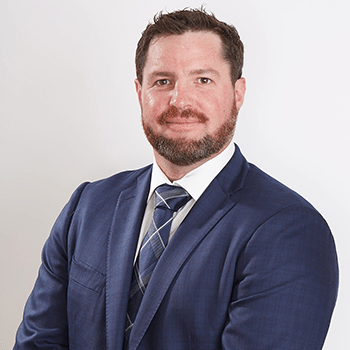
Insurance Claims: Commercial & Homeowners in San Diego — how to avoid getting shoved into the wrong policy
The most important rule in these cases is simple: under California Law, you must identify the correct policy type (commercial liability vs homeowners liability vs medical payments) and lock down who is legally responsible before the insurer frames your injury as a “small coverage” problem instead of a full-value claim.
What I see when insurers juggle commercial and homeowners coverage in real San Diego injuries
In San Diego Superior Court, I’ve watched “easy” cases turn into coverage chess because carriers know most injured people don’t understand how commercial general liability (CGL) and homeowners policies get triggered. Under California Law, liability still rides on the underlying duty of care, including premises responsibility under Civ. Code § 1714, and damages are measured by the harm caused under Civ. Code § 3333.
A realistic San Diego scenario: a backyard party in Clairemont ends with a serious fall on a broken step. The homeowner’s carrier wants to treat it like “med pay only,” while a contractor’s carrier points to exclusions and tries to deny being on the risk. The injured person gets bounced between claims numbers while treatment continues. My strategy is to prove the liability story first, then force the insurance story into the open: identify every potentially responsible party, document notice and control, and use procedure to prevent the carriers from hiding the ball on what coverage exists and what defenses they’re actually asserting.
Once the case posture looks trial-ready, coverage posturing gets more expensive for insurers. That’s when “we’re still investigating” often turns into real disclosure, because insurers hate litigating blind in front of a San Diego judge.
Why California venue and procedure matter when the policy is commercial or homeowners
Commercial and homeowners claims are not just “forms.” They’re contracts filtered through civil procedure. If a carrier keeps coverage vague, you use California discovery tools to force clarity on insurance agreements under CCP § 2017.210.
And when the real dispute becomes “who owes what under which policy,” insurers understand the risk of a court-resolved controversy. Declaratory relief exists to resolve actual disputes over rights and duties under CCP § 1060. That procedure changes leverage because delay stops being a free tactic.
The “Immediate 5” questions San Diego victims ask about commercial and homeowners insurance coverage
1) How do I figure out whether my injury is covered by a business policy or a homeowner’s policy?
You start with the liability facts: who owned or controlled the property, who created the hazard, and who had the duty to fix it, which is the core premises framework under Civ. Code § 1714. Then you confirm what policies exist and what agreements apply, and if the insurer stonewalls, you push insurance-agreement discovery under CCP § 2017.210. The carrier’s preferred label is not the legal answer.
2) What’s the difference between “medical payments” and a liability settlement in a homeowners claim?
Medical payments coverage is typically small, fast, and designed to pay limited medical bills without deciding fault; liability coverage is where the real case value lives because it addresses damages caused by negligence. Under California Law, the measure of damages for personal injury is tied to harm caused under Civ. Code § 3333, not the carrier’s “goodwill” payment. If you let the insurer treat your injury like med-pay-only, you can lose the leverage needed to resolve the actual liability claim.
3) If multiple policies might apply, how do insurers decide who pays first?
Insurers look for ways to shift responsibility through “other insurance” clauses, additional insured fights, and tender arguments, especially in San Diego contractor and landlord cases. Practically, you don’t wait for carriers to sort it out privately; you identify every potentially responsible party and force the insurance agreements into the record using CCP § 2017.210. When the coverage controversy is real and active, court-driven clarity under CCP § 1060 becomes a leverage point.
4) What does it mean when the insurer says “we’re investigating coverage” or sends a rights letter?
It means the insurer is preserving contract defenses while it decides whether it wants to pay, defend, or deny. In liability contexts, insurers often reference required policy frameworks tied to claims against insureds, including structures reflected in Ins. Code § 11580, while simultaneously looking for exclusions. Your job is to treat that as a litigation issue, not a customer service issue, because “investigating” is often code for “delaying leverage.”
5) When does a commercial or homeowners coverage dispute become an “unfair insurance practice” problem?
When the carrier uses misrepresentation, unreasonable delay, or patterned conduct to pressure you into accepting less than the claim merits, you document it and treat it as part of the case posture. California identifies unfair methods and deceptive acts in the insurance business under Ins. Code § 790.03. In San Diego, that matters because claims handling behavior often dictates whether you get a real negotiation or a slow bleed.
Commercial and homeowners claims are where insurers try to re-frame your case into the smallest pocket of money with the most confusion. The defense-side training is straightforward: split the parties, split the coverage, and let time do the rest.
Your leverage comes from clarity: prove the duty, prove the damages, and force the coverage positions into the open so settlement math is real instead of imagined.
Magnitude expansion: what actually changes value in San Diego commercial and homeowners cases
A) Evidence Evaluation in San Diego Cases
These cases rise or fall on proof that the hazard existed, it was foreseeable, and the responsible party had time and control to fix it. That ties directly to premises duty concepts under Civ. Code § 1714.
- Police reports vs medical records: for falls and dog bites, the medical timeline often matters more than a short incident report.
- Scene photos vs repair documentation: repairs and “we fixed it” photos can become powerful proof of a prior dangerous condition.
- Treatment timeline consistency: gaps invite carriers to treat the claim as minor or unrelated.
- Insurance agreement visibility: discovery under CCP § 2017.210 prevents policy games from erasing the real claim value.
B) Settlement vs Litigation Reality
Before filing, insurers can pretend confusion is “normal.” After filing in San Diego Superior Court, confusion becomes a decision with consequences. If a carrier wants to deny, it has to own the denial; if it wants to defend, it has to commit resources.
And if the parties genuinely dispute who owes coverage duties, California’s declaratory relief mechanism under CCP § 1060 is why the insurer’s internal debate can turn into courtroom risk. That’s leverage you either know how to use, or you don’t.
C) San Diego-Specific Claim Wrinkles
San Diego has a high volume of short-term rentals, multi-tenant properties, and contractor-heavy maintenance. Those realities create predictable coverage fights: landlord vs tenant, owner vs property manager, and vendor vs business.
- Downtown and beach-area foot traffic: high turnover and crowded walkways create slip-and-fall disputes and rapid evidence loss.
- Multi-tenant buildings: insurers try to pin the hazard on “the other unit” to delay payment responsibility.
- Homeowner-party injuries: carriers often try to steer people into small medical-pay lanes instead of full liability evaluation tied to Civ. Code § 3333.
Lived Experiences
Shane
“The business insurer kept saying the ‘vendor might be responsible’ and nothing moved. Once Richard forced the parties to commit to positions, the case finally had a real settlement path.”
Erika
“The homeowner’s carrier tried to pay a small amount and close the file. Richard treated it like a liability case from day one, and the insurer stopped pretending medical-pay was the whole story.”
California Statutory Framework & Legal Authority
|
Attorney Advertising, Legal Disclosure & Authorship
ATTORNEY ADVERTISING.
This content is provided for general informational and educational purposes only and does not constitute legal advice.
Under the California Rules of Professional Conduct and applicable State Bar of California advertising regulations,
this material may be considered attorney advertising.
Viewing or reading this content does not create an attorney-client relationship.
Laws and procedures governing personal injury claims vary by jurisdiction and may change over time.
You should consult a qualified California personal injury attorney regarding your specific situation before taking any legal action.
Responsible Attorney:
Richard Morse, California Attorney (Bar No. 289241).
Morse Injury Law is a practice name and location used by Richard Peter Morse III, a California-licensed attorney.
About the Author & Legal Review Process
This article was prepared by the legal editorial team supporting Richard Peter Morse III,
with the goal of explaining California personal injury law and claims procedures in clear, accurate, and practical terms for injured individuals in San Diego and surrounding communities.
Legal Review:
This content was reviewed and approved by Richard Morse, a California-licensed attorney (Bar No. 289241),
who concentrates his practice on personal injury litigation and insurance claim disputes.
With more than 13 years of experience representing injury victims throughout California,
Mr. Morse focuses on serious personal injury matters including motor vehicle collisions, uninsured and underinsured motorist claims,
premises liability, catastrophic injury, and wrongful death.
His practice emphasizes claims evaluation, insurance carrier accountability, and litigation in California courts when fair resolution cannot be achieved.
|