
Legal & Tax Disclosure
ATTORNEY ADVERTISING.
This article is provided for general informational purposes only and does not constitute legal, financial, or tax advice.
Reading this content does not create an attorney-client or professional advisory relationship.
Laws vary by jurisdiction and are subject to change. You should consult a qualified professional regarding your specific circumstances. |
Delivery van and fleet accidents in San Diego are governed by the complex doctrine of Vicarious Liability, where employers are held responsible for driver negligence occurring within the “scope of employment.” In 2026, California’s AB 390 has expanded “Slow Down, Move Over” requirements, making fleet operators even more vulnerable to liability when they obstruct traffic or double-park on busy corridors like El Cajon Blvd. At Morse Injury Law, we specialize in overcoming the “Contractor Defense”—using GPS telemetry, Netradyne camera logs, and Amazon DSP routing data to prove corporate control. Whether your collision involved an Amazon van, a UPS truck, or a local courier fleet, we build trial-ready files for San Diego Superior Court to secure the commercial insurance limits required for high-stakes recovery.
Amanda is driving through Mission Valley when a delivery van darts from the curb, clips her front quarter, and sends her into the next lane. The driver apologizes, then a supervisor calls minutes later asking for photos and “a quick statement” before her tow truck even arrives. By the time she gets home, the ER visit and missed shifts are already piling up, and the number is $18,907.
Delivery van & fleet crashes in San Diego: what is the one move you must make first under California Law?
Preserve the fleet evidence before it gets “rolled up” into a corporate summary. Under California Law, the case is still about duty, breach, and causation, but delivery operations add telematics, routing data, and layered responsibility that insurers routinely use to dilute fault and cut value.
How these cases actually get defended, and how I counter it in San Diego
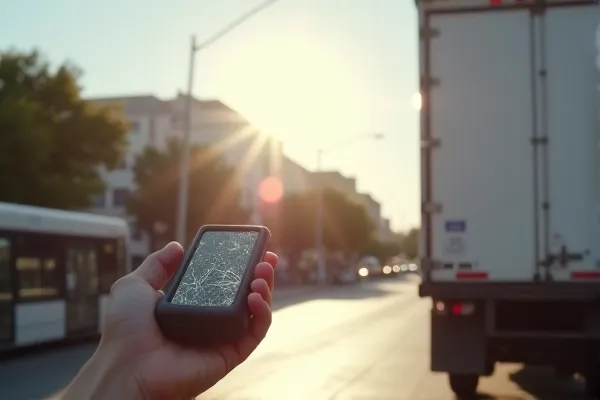
Fleet cases are not “just car accidents with a bigger policy.” I have enough insurer-side training in my background to tell you what happens behind the scenes: the carrier wants to convert a messy operational failure into a clean, driver-only mistake, then price it like a routine claim. When the facts justify it, we build the file as if it will be filed in San Diego Superior Court, because that is where corporate narratives get stress-tested.
A realistic San Diego scenario: a delivery van double-parks near Little Italy, merges out without a clear lane, and the crash turns into a shoulder injury and radicular neck pain. The defense tries to shrink the case by pointing at “low speed” and pushing comparative fault, while the company insists the driver was “independent” and the route data is “proprietary.” The strategy is to anchor negligence under Civ. Code § 1714, tie driving conduct to core safety rules like Veh. Code § 22350 and Veh. Code § 21702, and establish operational responsibility when the driver is acting for the company under Civ. Code § 2338.
- Defense play: isolate the driver, hide the system, and offer a number before you understand the data.
- My response: lock the timeline, document injury progression, and preserve fleet records before “routine retention” wipes them.
- Valuation reality: corporate responsibility changes leverage only when it is proven, not assumed.
Why California Law and San Diego Superior Court venue matter in fleet collisions
Fleet insurers and corporate risk departments respond to leverage, not outrage. Under California Law, you still prove negligence through duty and causation, which is why Civ. Code § 1714 remains the backbone even when the driver is plainly careless.
Venue matters because litigation forces accountability to become specific. In San Diego Superior Court, the defense has to commit to positions, preserve evidence, and answer discovery, instead of floating indefinite “we are reviewing” language. And the civil clock does not pause: the filing deadline is governed by CCP § 335.1.
The “Immediate 5”: questions San Diego victims ask after a delivery van or fleet crash
1) Who is legally responsible: the driver, the delivery company, or both under California Law?
Often, it is both, but it has to be proven with real facts. The negligence framework starts with Civ. Code § 1714, and when the driver is acting for the company, responsibility can extend to the principal for the agent’s acts under Civ. Code § 2338.
2) What evidence disappears fastest in San Diego fleet cases, and why do insurers care so much?
Telematics, route logs, dispatch notes, and “driver coaching” records can be overwritten or summarized quickly. Insurers care because when the objective fleet data is gone, the claim becomes a credibility contest, and that is where low numbers get justified.
3) If the van was speeding or driving too fast for conditions, what statute actually matters?
The practical anchor is the basic speed law, Veh. Code § 22350, because it ties speed to conditions, not just a posted limit. When commercial vehicles are involved, statutory speed limits for certain vehicles can also matter under Veh. Code § 22406.
4) What if the fleet driver claims I was following too closely or “came out of nowhere”?
Insurers love comparative fault theories in delivery cases because they reduce payout without proving the company did everything right. One commonly cited rule is Veh. Code § 21702, but the real question is whether the physical evidence, vehicle dynamics, and timeline support their version.
5) How long do I have to file in San Diego, and what is the risk of waiting while the company “investigates”?
The civil deadline does not wait for a corporate review cycle. In many California personal injury cases, the limitations period is CCP § 335.1, and delay is how evidence retention windows close and leverage evaporates.

Fleet crashes are papered differently than passenger claims. The company wants a narrow story, the insurer wants an early recorded statement, and both want your medical course to look inconsistent.
- Fleet data: preserve it early or it becomes “unavailable” later.
- Medical timeline: consistent care and clear symptom onset cut off the minimization playbook.
- Responsibility: corporate liability is a proof issue, and proof is built on records.
Magnitude expansion: what makes delivery van and fleet cases win or die in San Diego
A) Evidence Evaluation in San Diego Cases
Police reports can identify parties and initial statements, but fleet claims rarely live or die on the report alone. I weigh the report against medical records, photographs, vehicle damage patterns, and the fleet’s own objective data. When the file is missing the objective layer, the insurer prices uncertainty.
- Police reports vs medical records: the report frames the event, the records prove its effects over time.
- Scene photos vs repair documentation: impact mechanics matter, and “minor damage” arguments still show up in fleet claims.
- Treatment timeline consistency: gaps are where insurers argue you recovered or changed the story.
B) Settlement vs Litigation Reality
Before suit, a fleet insurer can talk “evaluation” indefinitely while evidence retention clocks run quietly in the background. Once a case is filed in San Diego Superior Court, discovery obligations force decisions, and the defense has to choose a story that will survive scrutiny. The civil deadline is governed by CCP § 335.1, not by how long the company wants to “review.”
C) San Diego-Specific Claim Wrinkles
Delivery van crashes in San Diego often occur in curbside loading zones, dense neighborhoods, and freeway merges where time pressure creates predictable mistakes. The common resistance pattern is the same: blame-shift to the victim, deny operational control, and reduce the claim to a generic number. A clean liability frame anchored to Civ. Code § 1714 and supported by driving rules like Veh. Code § 22350 is how you stop the discounting.
- Delivery-zone conflicts: sudden curb departures, double-parking, and blind merges in tight corridors.
- Freeway pressure: short on-ramps and aggressive lane changes when schedules are tight.
- Common Southern California insurer resistance patterns: comparative fault, “low impact” messaging, and selective medical review.
Verified Outcomes or Lived Experiences
Rachel
“They treated it like a simple fender-bender until the route records and timeline made it clear the van driver was rushing and merging unsafely. Once the file had structure and proof, the negotiation stopped being a guessing game and started being about responsibility.”
Brian
“The company kept saying they were investigating and asked for another statement, but nothing moved. After we focused on documentation and the real deadlines, the insurer stopped stalling and the case finally progressed.”
California Statutory Framework & Legal Authority
Attorney Advertising, Legal Disclosure & Authorship
ATTORNEY ADVERTISING.
This content is provided for general informational and educational purposes only and does not constitute legal, financial, or tax advice.
Under the California Rules of Professional Conduct and State Bar advertising regulations, this material may be considered attorney advertising.
Reading this content does not create an attorney-client relationship or any professional advisory relationship.
Laws vary by jurisdiction and are subject to change, including recent 2026 developments under California’s AB 2016 and evolving federal estate and reporting requirements.
You should consult a qualified attorney or advisor regarding your specific circumstances before taking action.
Responsible Attorney:
Richard Morse, California Attorney (Bar No. 289241).
Morse Injury Law is a practice location and trade name used by Richard Peter Morse III, a California-licensed attorney.
About the Author & Legal Review Process
This article was researched and drafted by the Legal Editorial Team of Richard Peter Morse III,
a collective of attorneys, legal writers, and paralegals dedicated to translating complex legal concepts into clear, accurate guidance.
Legal Review:
This content was reviewed and approved by Richard Morse, a California-licensed attorney (Bar No. 289241).
Mr. Morse concentrates his practice in estate planning and estate administration, advising clients on proactive planning strategies and representing fiduciaries in probate and trust administration proceedings when formal court involvement becomes necessary.
With more than 13 years of experience in California personal injury law,
Mr. Morse focuses on structuring enforceable estate plans, guiding fiduciaries through court-supervised proceedings,
resolving creditor and notice issues, and coordinating asset management to support compliant, timely distributions and reduce fiduciary risk. |