
The most powerful evidence in modern injury cases is video surveillance (Ring, Nest, or business CCTV). However, most systems are set to auto-overwrite old footage every 3 to 7 days. Once it is gone, it is gone forever. We immediately send a formal “Letter of Preservation / Non-Spoliation” to all nearby businesses and homeowners. This legal notice creates a duty to save the footage. If they destroy it after receiving our letter, we can often obtain sanctions against them for Spoliation of Evidence.
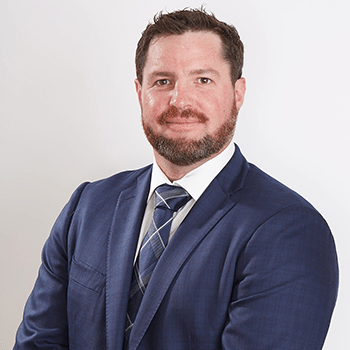
Investigation Phase: Evidence Gathering & Preservation — what you must do first in San Diego
The single most important rule: preserve the proof before anyone “summarizes” what happened. Under California Law, evidence that disappears becomes a liability problem, and that liability problem becomes a discount when your case is evaluated for settlement or trial.
If you are waiting for the adjuster to be fair, you are already behind.
What I do in the first week to stop evidence loss
I’ve handled enough San Diego cases to know the pattern: insurers move fast on statements and slow on accountability. Evidence gathering is where the claim is either built or quietly capped.
Here’s a realistic example: a freeway collision near University City with conflicting witness accounts and a “minor damage” push from the carrier. We immediately preserve the vehicle condition, document the scene geometry, identify nearby cameras, and lock down medical timing so the mechanics match the injuries.
- Problem: the insurer frames the story before the evidence is collected.
- Escalation: video overwrites, vehicles are repaired or salvaged, and witnesses go cold.
- Legal strategy: preservation first, then compulsory tools when the case requires it.
- Resolution: the negotiation becomes about proof and risk, not adjuster confidence.
When litigation is necessary, I’m thinking about San Diego Superior Court from day one because that venue is where discovery deadlines, subpoenas, and sanctions become real leverage under California Law.
Evidence gathering is not just “collect what you can.” It’s identifying what will matter six months from now when the defense starts attacking fault, causation, and damages.
When third parties hold key items—camera footage, incident logs, dispatch records, or business records—California Law has compulsory tools like subpoenas under Code of Civil Procedure § 1985.010 and business-records production under Evidence Code § 1560.
Why California Law and San Diego Superior Court venue change the preservation plan
In San Diego Superior Court, cases are shaped by what can be compelled and what can be proven. If the defense knows you can’t force production, they stall; if they know you can, they evaluate risk differently.
California’s discovery system gives teeth to preservation. For example, if a case is filed, a party can demand inspection of tangible evidence (like vehicle condition or components) under Code of Civil Procedure § 2031.010, and courts can impose sanctions for discovery misuse under Code of Civil Procedure §§ 2023.010 and 2023.030.
- Claims handling: early evidence control reduces “comparative fault” inflation and “minimal impact” defenses.
- Leverage: the ability to compel production changes the insurer’s timeline and the defense posture.
- Litigation outcomes: courts care about foundation, documentation, and compliance with procedure.
The “Immediate 5” evidence questions real San Diego victims ask
1) What evidence should I gather in the first 24–72 hours after a San Diego crash?
Get scene photos from multiple angles, damage photos with reference points, contact details for witnesses, and any business locations that may have cameras facing the roadway. Document your symptoms and treatment timeline immediately because insurers argue gaps equal alternative causes, especially in common San Diego rear-end patterns.
2) How do we preserve surveillance video, dashcam footage, and third-party records before they disappear?
Video overwrites quickly, so preservation starts with identifying custodians and demanding retention while you track the exact camera location and time window. If the custodian refuses or delays and the case requires compulsion, subpoenas under Code of Civil Procedure § 1985.010 and business-records production under Evidence Code § 1560 are the procedural tools used to force production.
3) What happens if my car is totaled or sitting in a tow yard—can it still be inspected?
It can, but time is the enemy: vehicles get repaired, dismantled, or sold, and once the condition changes the defense will say the “best evidence” is gone. When litigation is warranted, inspection and testing can be formally demanded under Code of Civil Procedure § 2031.010, which turns “please let us see it” into a procedural obligation.
4) Can the insurer control my medical records, and how do we keep the evidence clean?
The insurer will try to broaden the record universe because noise helps them argue preexisting issues and alternative explanations. The cleaner approach is organized treatment documentation, consistent reporting, and targeted production so the timeline and mechanism of injury stay aligned with the crash proof you preserved.
5) If we file in San Diego Superior Court, what tools exist when the defense or a custodian stonewalls evidence?
Once the case is in San Diego Superior Court, discovery has enforcement power: parties can be compelled to respond, and misuse of discovery is addressed under Code of Civil Procedure § 2023.010 with sanctions available under Code of Civil Procedure § 2023.030. That matters because “delay until it overwrites” is a strategy, and California Law gives the court tools to punish it when the facts support enforcement.
How evidence quality drives settlement versus litigation in San Diego
A) Evidence Evaluation in San Diego Cases
- Police reports vs medical records: the report frames liability, but medical timing proves the human damage and closes causation gaps.
- Scene photos vs repair documentation: photos establish dynamics; repair documents anchor severity beyond “looks minor.”
- Treatment timeline consistency: early, consistent care reduces “delay” and “it was something else” defenses.
- San Diego claims handling: adjusters discount uncertainty; clean evidence removes uncertainty.
B) Settlement vs Litigation Reality
Before filing, the insurer can posture and stall because enforcement is limited. After filing in San Diego Superior Court, the case shifts into deadlines, compelled responses, and court supervision—meaning the defense can’t “wait out” evidence the same way.
- Discovery obligations: formal demands create response duties and accountability.
- Leverage: documented preservation plus compulsory tools convert your story into provable risk.
- Risk: weak preservation invites comparative fault and causation attacks that depress value.
C) San Diego-Specific Claim Wrinkles
- Traffic density and rear-end patterns: chain reactions get oversimplified unless you preserve sequence proof early.
- Multi-vehicle freeway collisions: liability depends on timing, spacing, and impact order—evidence either supports it or it doesn’t.
- Common SoCal insurer resistance: “minimal damage,” “preexisting,” and “you contributed” are standard scripts when evidence is thin.
Lived Experiences
Carlos
“The adjuster kept calling it a ‘small bump’ and wanted a statement the same day. Richard focused on preserving what mattered first, and once the records and footage were secured, the tone completely changed.”
Caitlin
“I didn’t realize the tow yard could move the car out so fast. Richard treated evidence like a deadline, not a task list, and the case stopped being a debate and started being a file of proof.”
California Statutory Framework & Legal Authority
|
Attorney Advertising, Legal Disclosure & Authorship
ATTORNEY ADVERTISING.
This content is provided for general informational and educational purposes only and does not constitute legal advice.
Under the California Rules of Professional Conduct and applicable State Bar of California advertising regulations,
this material may be considered attorney advertising.
Viewing or reading this content does not create an attorney-client relationship.
Laws and procedures governing personal injury claims vary by jurisdiction and may change over time.
You should consult a qualified California personal injury attorney regarding your specific situation before taking any legal action.
Responsible Attorney:
Richard Morse, California Attorney (Bar No. 289241).
Morse Injury Law is a practice name and location used by Richard Peter Morse III, a California-licensed attorney.
About the Author & Legal Review Process
This article was prepared by the legal editorial team supporting Richard Peter Morse III,
with the goal of explaining California personal injury law and claims procedures in clear, accurate, and practical terms for injured individuals in San Diego and surrounding communities.
Legal Review:
This content was reviewed and approved by Richard Morse, a California-licensed attorney (Bar No. 289241),
who concentrates his practice on personal injury litigation and insurance claim disputes.
With more than 13 years of experience representing injury victims throughout California,
Mr. Morse focuses on serious personal injury matters including motor vehicle collisions, uninsured and underinsured motorist claims,
premises liability, catastrophic injury, and wrongful death.
His practice emphasizes claims evaluation, insurance carrier accountability, and litigation in California courts when fair resolution cannot be achieved.
|