
“Special Damages” (medical bills) are exact math. “General Damages” (Pain and Suffering) are subjective. Insurance adjusters often try to use a low multiplier (1.5x your bills). We fight for a Higher Multiplier (3x to 5x) by documenting not just your physical pain, but your Loss of Enjoyment of Life. If you can no longer hike, hold your children, or sleep through the night, the compensation must reflect that reality.
Pain and suffering lawyer in San Diego: how do you calculate non-economic damages without getting lowballed?
The single most important rule under California Law is this: your non-economic damages must be proven with specific, consistent life-impact evidence tied to medical documentation—because insurers treat “pain and suffering” as a negotiable word game until you make it a trial-ready record.
How pain and suffering actually gets valued in San Diego cases
I’ve handled enough San Diego claims to tell you the quiet truth: non-economic damages rarely rise because someone “deserves” them. They rise when your evidence makes the defense afraid of what twelve jurors in San Diego Superior Court will believe about the change in your daily life.
In an anonymized San Diego case, a client had modest property damage but months of documented sleep disruption, driving anxiety on the 5 and 805 corridors, and a treatment course that matched the symptom timeline. Under California Law, we built non-economic damages the same way we build liability: dates, witnesses, medical anchors, and functional restrictions. Once the defense realized we could show the before-and-after without exaggeration, the valuation stopped being “a gut number.”
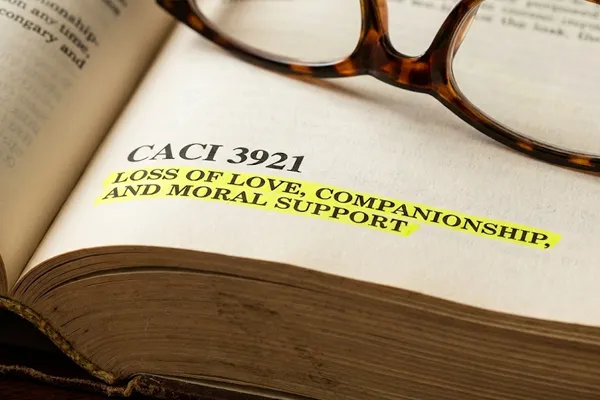
What insurers typically do in San Diego is predictable:
- They detach your pain from the records (“nothing objective”).
- They shrink the duration (“you got better in weeks”).
- They attack credibility (“subjective complaints,” “secondary gain”).
- They anchor low and hope you sign before your case matures.
Non-economic damages exist under Civ. Code § 3333, but the amount is won or lost on proof that reads clean to a jury.
Why California Law and San Diego Superior Court venue change leverage on non-economic damages
“Pain and suffering” is where claims handling becomes theater. Pre-suit, insurers can delay, cherry-pick records, and talk in circles. Once you file in San Diego Superior Court, discovery forces the defense to commit to positions you can test—especially when their valuation depends on downplaying duration, function loss, and credibility.
Discovery scope under CCP § 2017.010, document demands under CCP § 2031.010, and depositions under CCP § 2025.010 matter because non-economic damages are proven through patterns: daily life, work function, relationships, and corroboration over time.
The “Immediate 5”: non-economic damage questions real San Diego victims ask
1) Is there a formula for pain and suffering in California, or is it just “whatever the adjuster says”?
There’s no statutory multiplier in California Law; that’s insurance folklore. Non-economic damages are part of general damages under Civ. Code § 3333, and the number must be supported by evidence a jury would accept. In practice, adjusters use internal formulas as anchors, not truth, and those anchors change when the case becomes credible in San Diego Superior Court.
2) What proof actually increases non-economic damages without sounding exaggerated?
Consistency beats drama. The strongest proof is a treatment timeline that matches symptoms, objective restrictions (work notes, therapy goals, medication side effects), and third-party corroboration that’s specific: what you stopped doing, how long, and what changed. The defense attacks “subjective” complaints, so we build non-economic damages with contemporaneous notes, routine entries, and witnesses who can describe function—not feelings.
3) How do comparative fault and multiple defendants affect pain and suffering recovery?
Comparative fault is used to discount everything—economic and non-economic—by arguing you share responsibility for the incident or for worsening your condition. If there are multiple defendants, allocation principles under Civ. Code § 1431.2 can change how carriers assess non-economic exposure and settlement posture. In San Diego cases, that translates to more finger-pointing and more reason to lock down liability early.
4) What deadlines control a non-economic damages claim in California?
Non-economic damages travel with the underlying personal injury claim, so the limitations period generally tracks CCP § 335.1. The two-year deadline is not a planning tool—it’s a backstop. In San Diego, waiting too long often means losing video, losing witnesses, and letting the defense frame your recovery as “quick” because the record is thin.
5) What changes once we file in San Diego Superior Court for pain and suffering damages?
Filing triggers enforceable discovery and sworn testimony that exposes the defense’s talking points. Under CCP § 2017.010 and related procedures, we can compel what matters: claim file assumptions, surveillance, prior statements, and the factual basis for “you were fine.” Once those positions are locked, non-economic valuation becomes a litigation-risk decision, not an adjuster mood.

If you want your pain and suffering taken seriously, you document it like a professional would:
- Function loss: what tasks you can’t do, what you can do slower, and what you avoid.
- Duration: when symptoms started, how they evolved, and what still hasn’t resolved.
- Corroboration: work, family, and friends who can describe specific changes.
- Treatment alignment: care that matches symptoms without gaps that invite “recovered” arguments.
That is how a non-economic claim stops being “soft” and starts being defensible.
Magnitude expansion: how non-economic damages are evaluated and fought in San Diego
A) Evidence Evaluation in San Diego Cases
Non-economic damages get attacked as “unverifiable,” so we tie the story to objective anchors and a clean timeline. The defense will elevate whatever looks inconsistent, so we remove the openings before they get used against you.
- Police reports vs medical records: we align mechanism-of-injury statements with treatment notes and symptom onset.
- Scene photos vs repair documentation: we prevent “minor impact, minor injury” shortcuts from driving valuation.
- Treatment timeline consistency: we show persistence, effort, and functional limits over time, not one dramatic day.
B) Settlement vs Litigation Reality
Pre-suit, insurers price pain and suffering like a commodity. Post-filing in San Diego Superior Court, it becomes a risk problem: will a jury believe the life impact, and can the defense impeach it?
- Discovery obligations force the defense to show what they rely on, not just say it.
- Depositions lock in testimony on function, daily limitations, and credibility attacks.
- Litigation leverage increases when your non-economic evidence reads clean and consistent.
C) San Diego-Specific Claim Wrinkles
San Diego cases often involve commuting realities—dense freeway patterns and repeated aggravation events—that insurers try to reframe as “normal life stress.” They also lean on common resistance patterns: surveillance hints, “you’re fine” narratives, and offers timed to pressure people before treatment stabilizes.
- Traffic density and rear-end patterns can fuel defense narratives that pain complaints are routine or unrelated.
- Multi-vehicle freeway collisions create liability disputes that carriers use to discount non-economic exposure.
- Common Southern California insurer resistance patterns include delay, credibility attacks, and “quick recovery” framing.
Lived Experiences
Bryan
“The insurance company kept acting like my pain didn’t count because nothing was ‘broken.’ Richard organized my timeline and daily limitations so it was clear what changed and why it mattered.”
Katelyn
“I didn’t want to exaggerate, so I barely talked about it. Richard showed me how to document function and consistency, and the case stopped being treated like a nuisance.”
California Statutory Framework & Legal Authority
|
Attorney Advertising, Legal Disclosure & Authorship
ATTORNEY ADVERTISING.
This content is provided for general informational and educational purposes only and does not constitute legal advice.
Under the California Rules of Professional Conduct and applicable State Bar of California advertising regulations,
this material may be considered attorney advertising.
Viewing or reading this content does not create an attorney-client relationship.
Laws and procedures governing personal injury claims vary by jurisdiction and may change over time.
You should consult a qualified California personal injury attorney regarding your specific situation before taking any legal action.
Responsible Attorney:
Richard Morse, California Attorney (Bar No. 289241).
Morse Injury Law is a practice name and location used by Richard Peter Morse III, a California-licensed attorney.
About the Author & Legal Review Process
This article was prepared by the legal editorial team supporting Richard Peter Morse III,
with the goal of explaining California personal injury law and claims procedures in clear, accurate, and practical terms for injured individuals in San Diego and surrounding communities.
Legal Review:
This content was reviewed and approved by Richard Morse, a California-licensed attorney (Bar No. 289241),
who concentrates his practice on personal injury litigation and insurance claim disputes.
With more than 13 years of experience representing injury victims throughout California,
Mr. Morse focuses on serious personal injury matters including motor vehicle collisions, uninsured and underinsured motorist claims,
premises liability, catastrophic injury, and wrongful death.
His practice emphasizes claims evaluation, insurance carrier accountability, and litigation in California courts when fair resolution cannot be achieved.
|