
Legal & Tax Disclosure
ATTORNEY ADVERTISING.
This article is provided for general informational purposes only and does not constitute legal, financial, or tax advice.
Reading this content does not create an attorney-client or professional advisory relationship.
Laws vary by jurisdiction and are subject to change. You should consult a qualified professional regarding your specific circumstances. |
Product liability for defective vehicles in San Diego is governed by the doctrine of Strict Liability, where manufacturers and retailers are held responsible for injuries caused by defects regardless of intent. As of 2026, new legislative shifts under SB 26 and SB 766 (CARS Act) have altered consumer protection timelines and dealer disclosure rules, making the preservation of physical evidence more critical than ever. At Morse Injury Law, we specialize in the “Strict Liability Trial Framework”—proving that a vehicle reached the San Diego consumer with a design, manufacturing, or warning defect that directly caused the collision. Whether your case involves an autonomous system failure, an airbag malfunction, or a structural defect, we build trial-ready files for San Diego Superior Court to neutralize corporate defenses that attempt to blame “user error” or “maintenance neglect.”
Ashley is merging onto I-805 near Clairemont when her SUV suddenly loses power and the dash lights up like a Christmas tree. She gets hit from behind in the slowdown that follows, and the tow yard tells her the vehicle will be released to an insurance auction if she can’t pay storage. By the time she’s discharged, the “repairs” estimate and rental bills are already at $12,940.
Product liability for defective vehicles in San Diego: what is the one rule you must follow under California Law?
Do not let the vehicle get altered, salvaged, or “inspected” by anyone you don’t control. Under California Law, defective-vehicle cases live or die on preservation: the part, the data, the repair history, and the chain of custody. If you lose the evidence, you lose leverage—no matter how obvious it felt on the freeway.
What I do when a vehicle defect causes a crash in San Diego, and why I build it for court immediately
When I see “defect” on intake, I assume two things: the evidence is already under threat, and the defense will try to reframe it as “driver error.” That’s not cynicism; that’s claims reality. I’ve spent enough time around insurance defense thinking to know the first move is to break causation and dilute responsibility under California Law, then starve the file of the one thing that matters—reliable proof.
A realistic San Diego scenario: sudden brake failure after prior service on a commuter vehicle running I-5 between UTC and downtown. The insurer wants recorded statements and a quick release to “resolve property damage,” while the tow yard pushes storage fees and the shop wants to swap parts to diagnose. If litigation becomes necessary, I position the case for San Diego Superior Court because formal discovery is how you force repair records, corporate documents, and the inspection history into the open.

- Preservation first: secure the vehicle and any suspected components before anyone “fixes” the evidence away.
- Data matters: event data, warning codes, and repair history can corroborate failure timing and severity.
- Defense posture: the default is to blame the driver under Civ. Code § 1714 and force you to prove the defect caused the crash.
Why California Law and San Diego Superior Court venue change leverage in defective vehicle cases
These cases are fought on causation and allocation: what failed, when it failed, and who bears responsibility for the harm. Even when strict product principles are in the background, the defense still leans on negligence framing and comparative fault themes, and Civ. Code § 1714 becomes a tool they use to argue “reasonable driver” behavior. Your job is to anchor the failure with physical proof and reliable documentation so fault arguments don’t drift into guesswork.
Once the case is filed in San Diego Superior Court, the leverage shifts because discovery can compel what insurers and manufacturers won’t voluntarily hand over: repair chain records, training materials, and internal communications that explain known issues. Damages allocation becomes a real, litigated topic under Civ. Code § 1431.2, and the defense has to price the risk of sworn testimony and document production rather than just deny responsibility. In the real world, courtroom pressure is what turns “maybe” into a settlement number that matches the harm.
The “Immediate 5”: questions San Diego victims ask after a crash caused by a suspected vehicle defect
1) What should I do right now to preserve a defective vehicle claim in San Diego under California Law?
Preserve the vehicle and any replaced components, and do not authorize repairs that change the condition without documentation you control. Under Civ. Code § 1714, the defense will attack causation and argue alternate explanations, so your first priority is locking down proof that the failure existed and contributed to the crash. Tow-yard pressure and quick “insurance inspections” are where cases get quietly destroyed.
2) Do I need a recall to bring a defective vehicle injury claim, or can I proceed without one?
A recall can help corroborate notice, but it is not a prerequisite to proving a defect caused your crash. The fight is still about causation and responsibility, and the defense will frame it as driver fault under Civ. Code § 1714 unless the evidence shows the defect and its timing. The cleanest cases are the ones where the physical condition and service history align with the failure mechanism.
3) Who can be legally responsible: manufacturer, dealer, repair shop, or parts supplier?
Liability depends on the role each party played in creating, introducing, or failing to correct the dangerous condition. Negligence principles under Civ. Code § 1714 are often used to analyze repair-shop conduct, inspection failures, and whether warnings or corrective steps were reasonable. In practice, the case is built around duty, control, and proof—because finger-pointing is easy and accountability is not.
4) What is the deadline to file a defective vehicle injury lawsuit in California, and what happens if I wait?
Many personal injury claims are governed by CCP § 335.1, and the clock keeps running even while you’re dealing with repairs, insurance, and medical care. Waiting risks losing the most valuable evidence: the vehicle gets salvaged, parts are swapped, data gets overwritten, and witnesses disappear. If you intend to pursue the claim, build it like it will be filed—because delays are what the defense is counting on.
5) If multiple parties share fault, how are damages handled in San Diego, and when does punitive exposure matter?
Allocation is a battlefield issue, and Civ. Code § 1431.2 affects how non-economic damages can be apportioned among responsible parties. Punitive exposure is not automatic, but Civ. Code § 3294 becomes relevant when there is credible proof of conscious disregard for safety, such as knowingly pushing a dangerous condition without adequate warning or correction. Those arguments only carry weight when the evidence is preserved and the paper trail supports what happened.
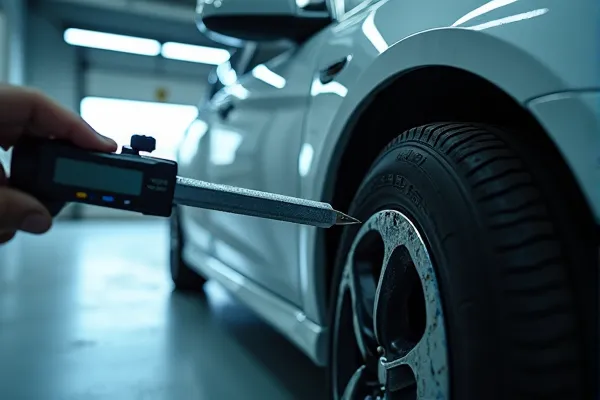
Defective vehicle cases don’t reward assumptions. They reward preservation, clean documentation, and a litigation posture that forces the other side to stop speculating and start producing. If you control the evidence early, you control the case narrative.
- Chain of custody: who had the vehicle, when, and what changed.
- Repair history: invoices, diagnostic codes, and any prior complaints.
- Discovery leverage: San Diego Superior Court is where “we don’t have that” becomes “produce it.”
Magnitude expansion: what moves a defective vehicle injury case in San Diego
A) Evidence Evaluation in San Diego Cases
Police reports can help with timing, impact, and witness identity, but they rarely prove the defect mechanism by themselves. Medical records prove injury and causation themes; vehicle condition proves the failure. The strongest files connect the crash timeline to objective proof, not to opinions after the fact.
- Police reports vs medical records: reports frame the incident; records anchor injury timing and progression.
- Scene photos vs repair documentation: photos preserve roadway context; repair documents show what was found and what was changed.
- Treatment timeline consistency: consistent care reduces causation attacks and stabilizes valuation.
B) Settlement vs Litigation Reality
Before filing, the defense posture is predictable: blame the driver, demand quick releases, and argue the defect is “unproven.” Once filed in San Diego Superior Court, discovery forces commitments—what the other side inspected, what they knew, and what their records show. Damages allocation and fault narratives become litigated, and Civ. Code § 1431.2 stops being an abstract concept and becomes a pricing variable.
C) San Diego-Specific Claim Wrinkles
San Diego freeway traffic patterns matter because stop-and-go conditions expose failures differently than open-road driving, and defense teams exploit that nuance. Multi-vehicle collisions on I-5, I-805, SR-163, and SR-94 can create noise in the causation analysis, especially when the defect event preceded the impact sequence. The common insurer resistance pattern is to treat it like a routine collision until you force the defect evidence into the valuation.
- Traffic density and rear-end patterns: stop-and-go congestion amplifies chain-reaction impacts and complicates causation sequencing.
- Multi-vehicle freeway collisions: multiple impacts invite “alternate cause” arguments unless the defect timing is documented.
- Common Southern California insurer resistance patterns: push quick property releases, dispute causation, and minimize damages until discovery pressure hits.
Lived Experiences
Rebecca
“The insurance company kept saying it was my fault and wanted the car released immediately. Richard Morse explained why preserving the vehicle mattered, helped lock down the records, and the case finally started getting treated like a defect claim instead of a routine crash.”
Adam
“I didn’t realize how fast evidence disappears once repairs start. Richard Morse stayed calm, pushed for the documentation that mattered, and the outcome reflected the injuries and the real cause of the collision.”
California Statutory Framework & Legal Authority
Attorney Advertising, Legal Disclosure & Authorship
ATTORNEY ADVERTISING.
This content is provided for general informational and educational purposes only and does not constitute legal, financial, or tax advice.
Under the California Rules of Professional Conduct and State Bar advertising regulations, this material may be considered attorney advertising.
Reading this content does not create an attorney-client relationship or any professional advisory relationship.
Laws vary by jurisdiction and are subject to change, including recent 2026 developments under California’s AB 2016 and evolving federal estate and reporting requirements.
You should consult a qualified attorney or advisor regarding your specific circumstances before taking action.
Responsible Attorney:
Richard Morse, California Attorney (Bar No. 289241).
Morse Injury Law is a practice location and trade name used by Richard Peter Morse III, a California-licensed attorney.
About the Author & Legal Review Process
This article was researched and drafted by the Legal Editorial Team of Richard Peter Morse III,
a collective of attorneys, legal writers, and paralegals dedicated to translating complex legal concepts into clear, accurate guidance.
Legal Review:
This content was reviewed and approved by Richard Morse, a California-licensed attorney (Bar No. 289241).
Mr. Morse concentrates his practice in estate planning and estate administration, advising clients on proactive planning strategies and representing fiduciaries in probate and trust administration proceedings when formal court involvement becomes necessary.
With more than 13 years of experience in California personal injury law,
Mr. Morse focuses on structuring enforceable estate plans, guiding fiduciaries through court-supervised proceedings,
resolving creditor and notice issues, and coordinating asset management to support compliant, timely distributions and reduce fiduciary risk. |