
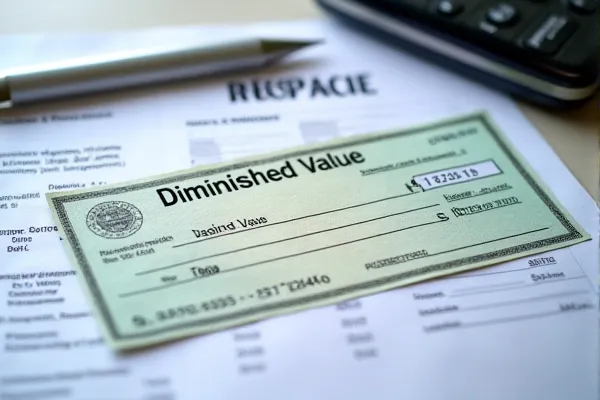
Even if the body shop makes your car look new, it now has a “bad Carfax.” When you go to sell it, you will lose thousands of dollars because of that accident history. Under California Civil Jury Instruction 3903J, you are entitled to recover the difference between the value of your property before the harm and its value after the repairs. This is called Diminished Value. Insurance companies never offer this voluntarily; we demand it.
Pre-Litigation Phase: Property Damage & Diminished Value — What San Diego Drivers Must Lock Down Under California Law
The single most important rule in a San Diego property-damage negotiation is this: don’t accept “repair paid” as the end of the claim until you’ve verified the car is restored and you’ve accounted for post-repair loss in market value under California Law.
- Verify repairs with proof that would hold up in litigation, not just a shop’s verbal reassurance.
- Document value loss while the evidence is fresh and before the insurer closes the file.
How Insurers Quietly Undervalue Property Damage in San Diego
I’ve seen this play out the same way across Southern California: the carrier will approve “reasonable” repairs quickly, then treat every follow-up issue like a separate inconvenience instead of part of the loss. That’s not an accident. It’s file management—close the claim fast, pay the obvious line items, and make you prove anything that costs more.
Here’s a realistic San Diego scenario: a late-model vehicle gets hit on the 805, repairs are routed to a preferred shop, and the first estimate misses hidden structural or suspension damage. The car “drives,” but it doesn’t drive right. The insurer resists supplements, pushes aftermarket or reconditioned parts, and refuses to discuss diminished value because “you can’t prove it.” If the carrier won’t correct the loss voluntarily, a filing posture in San Diego Superior Court becomes the leverage point, and California Law determines what you can recover and how you must prove it.
- Under California Law, you’re not required to accept a repair that leaves the vehicle measurably impaired.
- Under CCP § 335.1, delay can remove your ability to sue, even if the insurer keeps “talking.”
Property damage disputes are won on documentation, not frustration. In San Diego, carriers know most people won’t pay for an independent inspection, won’t preserve parts, and won’t build a paper trail. So they negotiate like those gaps will stay gaps.
- Measure the loss: Civil Code section 3333 frames damages as compensation for harm caused, and that’s the lens the insurer uses when it asks for “proof.”
- Build leverage: If litigation becomes necessary, Code of Civil Procedure section 998 can turn a reasonable offer into cost risk for an unreasonable defense posture.
Why California Law and San Diego Superior Court Venue Matter for Property Damage
San Diego property-damage negotiations aren’t just about shop invoices. They’re about what the carrier thinks will happen if the case is filed and litigated. San Diego Superior Court venue matters because litigation forces evidence production, expert opinions, and testimony under oath—exactly what insurers try to avoid paying for in pre-litigation resolution.
- California Law defines the damages framework and proof burdens that decide whether diminished value is “real” or “speculative.”
- San Diego Superior Court creates procedural deadlines and discovery obligations that make stalling expensive.
The “Immediate 5” Questions San Diego Drivers Ask About Property Damage & Diminished Value
1) What is the correct measure of property damage under California Law: repair cost, replacement, or something else?
In California, the core measure is what will reasonably compensate for the harm caused, which is why Civil Code section 3333 matters even in property-damage disputes. Practically, insurers evaluate whether repair restores the vehicle to its pre-loss condition and value, and if it does not, you need evidence showing the remaining loss. The defense play is to treat “repair invoice paid” as full compensation, even when the market still penalizes the vehicle.
- Use a post-repair inspection and documented defects to show the vehicle is not restored.
- Use market-based valuation evidence to show the remaining loss is real, not theoretical.
2) How do I prove diminished value in a San Diego claim when the insurer says “we don’t pay that”?
Diminished value is proof-driven: you need credible market evidence that the vehicle’s value dropped because of the collision history despite proper repair. That usually means a vehicle history report, pre-loss vs post-repair comparable sales analysis, and an appraisal that explains why the market discounts the car. Under Evidence Code section 801, expert opinion must be based on matter experts reasonably rely upon, and that standard is exactly why a real appraisal beats a guess or a dealer’s shrug.
- Do not rely on “what I feel it’s worth”; rely on documented market data and appraisal method.
- Preserve repair documentation, supplements, and photos to tie value loss to the collision event.
3) What deadlines matter if I’m negotiating property damage and diminished value but haven’t filed?
The hard deadline most people miss is the statute of limitations for filing, and for many claims it is governed by Code of Civil Procedure section 335.1. Negotiations do not extend that deadline unless a binding agreement does so, and carriers know most people won’t file over property damage unless the number gets big. In San Diego, that reality invites delay, especially when the insurer wants you to accept “good enough” repairs and move on.
- Track your injury-date and loss-date timeline and assume the clock is running unless proven otherwise.
- Set proof-based milestones: inspection, supplements, appraisal, and a written demand before the deadline crunch.
4) What changes once a case is filed in San Diego Superior Court, and why does that affect property damage offers?
Filing changes the economics. The defense must respond, preserve positions under oath, and participate in discovery; that means time, cost, and risk that do not exist when the insurer can simply delay emails. Once filed, Code of Civil Procedure section 998 becomes a lever because a reasonable offer can shift cost risk if the defense continues to undervalue the claim and the result beats the offer.
- Litigation forces the insurer’s “it’s not provable” stance to confront real evidence rules and testimony.
- Discovery can expose inconsistent estimates, parts decisions, and shop communications that matter to value.
5) How do insurers in Southern California reduce property damage payouts without technically “denying” the claim?
They do it through scope control and narrative control: low initial estimates, resistance to supplements, pressure for aftermarket parts, and “normalization” of post-repair defects as “maintenance.” They also discourage diminished value by demanding proof they know most consumers won’t obtain. Insurance Code section 790.03 sets the unfair claims practices framework insurers are trained on, and that training shapes how they document the file while still trying to keep payouts low.
- Push everything into writing: what was inspected, what was denied, and why.
- Match every request with documentation that anticipates the next defense argument.
What Actually Expands the Value of a San Diego Property Damage Claim
A) Evidence Evaluation in San Diego Cases
Police reports help with crash mechanics, but property damage disputes usually turn on repair proof and valuation proof. Photos of the scene and the vehicle matter when they support repair scope and causation for hidden damage. Repair documentation matters most when it shows supplements, part choices, alignment measurements, calibration procedures, and unresolved defects that remain after “completion.”
- Police reports vs medical records: the report frames impact; property damage is proven by inspections, estimates, and repair procedures.
- Scene photos vs repair documentation: photos show angle and force; repairs show what was actually fixed and what was missed.
- Timeline consistency: delays between repair and complaint give insurers room to blame “wear and tear.”
B) Settlement vs Litigation Reality
Once filed in San Diego Superior Court, the carrier’s decision-making shifts from “can we outlast this person” to “what does this cost to defend.” Discovery can require the defense to produce estimates, communications, and decisions about parts and supplements. A well-timed Code of Civil Procedure section 998 offer can turn a stubborn property-damage undervaluation into a measurable risk problem.
- Litigation forces the insurer to confront evidence standards instead of relying on phone-call persuasion.
- Defense risk increases when independent inspections and appraisals are structured for court use.
C) San Diego-Specific Claim Wrinkles
San Diego’s freeway density and chain-reaction patterns create repair complexity: multiple impact points, hidden suspension issues, and sensor/calibration work that estimates routinely miss. Southern California insurers also lean on preferred-network shops and standardized estimating software that can under-scope modern repairs. When diminished value is in play, the resale market here is unforgiving once the history report shows an accident, and insurers will demand an appraisal built on real comparables.
- Traffic density: multi-vehicle collisions create more disputed impact sequencing and repair scope fights.
- Carrier patterns: minimize supplements, push parts substitutions, and treat diminished value as “optional.”
Lived Experiences
Nathaniel
The insurer acted like the repairs were “done” because the shop closed the ticket, even though my car still pulled and the paint didn’t match. Once my attorney had an independent inspection and a clean supplement packet, the carrier stopped pretending it was normal and paid to correct it.
Jacqueline
I didn’t even know diminished value was a separate loss until a dealer offered thousands less because of the accident history. My attorney had the value drop documented with an appraisal and the negotiations finally became about evidence instead of excuses.
California Statutory Framework & Legal Authority
These are the only statutes cited on this page, linked to the official California Legislature site exactly as required.
|
Attorney Advertising, Legal Disclosure & Authorship
ATTORNEY ADVERTISING.
This content is provided for general informational and educational purposes only and does not constitute legal advice.
Under the California Rules of Professional Conduct and applicable State Bar of California advertising regulations,
this material may be considered attorney advertising.
Viewing or reading this content does not create an attorney-client relationship.
Laws and procedures governing personal injury claims vary by jurisdiction and may change over time.
You should consult a qualified California personal injury attorney regarding your specific situation before taking any legal action.
Responsible Attorney:
Richard Morse, California Attorney (Bar No. 289241).
Morse Injury Law is a practice name and location used by Richard Peter Morse III, a California-licensed attorney.
About the Author & Legal Review Process
This article was prepared by the legal editorial team supporting Richard Peter Morse III,
with the goal of explaining California personal injury law and claims procedures in clear, accurate, and practical terms for injured individuals in San Diego and surrounding communities.
Legal Review:
This content was reviewed and approved by Richard Morse, a California-licensed attorney (Bar No. 289241),
who concentrates his practice on personal injury litigation and insurance claim disputes.
With more than 13 years of experience representing injury victims throughout California,
Mr. Morse focuses on serious personal injury matters including motor vehicle collisions, uninsured and underinsured motorist claims,
premises liability, catastrophic injury, and wrongful death.
His practice emphasizes claims evaluation, insurance carrier accountability, and litigation in California courts when fair resolution cannot be achieved.
|