
Legal & Tax Disclosure
ATTORNEY ADVERTISING.
This article is provided for general informational purposes only and does not constitute legal, financial, or tax advice.
Reading this content does not create an attorney-client or professional advisory relationship.
Laws vary by jurisdiction and are subject to change. You should consult a qualified professional regarding your specific circumstances. |
Rideshare assault and misconduct in San Diego involve a complex intersection of intentional tort law and evolving common carrier standards. As of early 2026, California’s legal landscape is shifting toward holding Transportation Network Companies (TNCs) to a “heightened standard of care,” moving beyond the independent contractor defense to expose systemic failures in driver screening and real-time monitoring. At Morse Injury Law, we specialize in “Direct Negligence” claims—identifying gaps in FBI fingerprinting and seven-year criminal history limits that allow dangerous drivers onto San Diego streets. Whether your incident occurred in the Gaslamp Quarter or during a late-night airport transfer, we build trial-ready files for San Diego Superior Court to secure the accountability and compensation required for survivors of sexual misconduct and physical assault.
Jason orders a rideshare outside Gaslamp after a late shift, thinking he’s five minutes from home. The driver locks the doors, veers off the route, and the situation turns threatening fast. By sunrise, he’s juggling a hospital visit, a police report, and a ruined phone—while the company sends a templated email like it’s just a “service issue.” The first week’s out-of-pocket damage and missed wages hit $18,370.
Rideshare assault & misconduct in San Diego: what is the one rule you must follow under California Law?
Lock down your evidence before the platform “investigates” itself. Under California Law, your credibility is built on timestamps, ride data, medical documentation, and immediate reporting—not on what the app says later. If litigation is on the table, assume San Diego Superior Court will eventually see your record, not your emotions.
How I approach rideshare misconduct cases in San Diego when the story will end up in San Diego Superior Court
I don’t treat these files like ordinary auto claims, because they aren’t. The defense playbook is predictable: minimize, compartmentalize, and push the incident into “criminal-only” territory so the company avoids civil responsibility. I’ve been trained by insurer-side thinking to recognize the pattern—stall for data decay, force the victim to repeat the story, and then argue “no corroboration.”
A realistic San Diego scenario: a passenger picked up near Little Italy, route deviation toward an industrial block, unwanted touching, then the driver claims “consent” and the platform claims “independent contractor.” Under California Law, the civil case is still about duty, reasonable safety measures, and foreseeable risk, with Civ. Code § 1714 framing responsibility. If we have to file, San Diego Superior Court is where discovery forces production of screening practices, prior complaints, deactivation logs, and the ride metadata that the platform won’t hand over voluntarily.
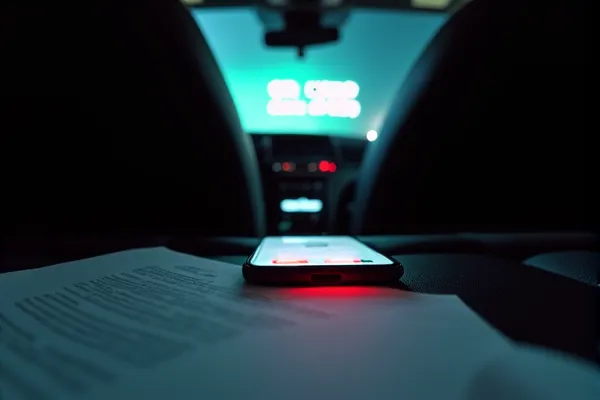
- Preserve the digital trail: screenshots, ride ID, route map, receipts, and all in-app messages.
- Medical documentation: it is evidence of injury timing, not just treatment.
- Defense reality: the company will argue it acted reasonably unless you can show a preventable safety failure.
Why California Law and San Diego Superior Court venue change leverage in rideshare assault cases
Rideshare companies evaluate these cases through risk, not empathy. In civil terms, the fight usually centers on whether the harm was foreseeable and whether the company’s safety measures were reasonable—issues that sit inside Civ. Code § 1714’s responsibility framework. They also try to split the driver from the company, hoping you accept a narrative that the platform has no meaningful responsibility for what happens in its rides.
Filing in San Diego Superior Court changes the conversation because it triggers enforceable discovery and sworn testimony. That is where a safety claim becomes measurable: what screening existed, what red flags were ignored, how prior complaints were handled, and what the platform’s own data shows. If multiple actors share blame, Civ. Code § 1431.2 can matter in how non-economic damages are allocated, and punitive exposure under Civ. Code § 3294 becomes a real question only when evidence supports conscious disregard.
The “Immediate 5”: questions San Diego victims ask after rideshare assault or misconduct
1) What should I do in the first 24 hours after a rideshare assault in San Diego to protect a California Law claim?
Preserve the ride data and your communications immediately, and report the incident so there is a contemporaneous record. Under Civ. Code § 1714, the defense will challenge foreseeability and causation, so your first-day documentation matters more than later statements. Medical care is also evidence: it timestamps injury and supports credibility when the company later claims “insufficient proof.”
2) If I filed a police report, does that replace a civil claim against the rideshare company?
No; a criminal investigation and a civil injury claim are different tracks with different burdens and different goals. Civil responsibility often turns on what safety measures were reasonable under Civ. Code § 1714 and what the company knew or should have known about risk. In practice, police reports help corroborate timeline and identity, but they do not force the platform to produce its internal records.
3) What evidence actually moves these cases in San Diego beyond “my word versus theirs”?
Objective proof is the difference: ride metadata, route deviation, timestamps, medical records, and any contemporaneous communications. The defense will frame the case as a credibility dispute under Civ. Code § 1714 unless your evidence ties the misconduct to a measurable failure in safety or response. The earlier the evidence is preserved, the harder it is for the platform to hide behind “we can’t retrieve that.”
4) What is the deadline to file a civil case in California, and why does waiting hurt rideshare assault claims?
Many personal injury claims are governed by CCP § 335.1, and delay is where these cases get quietly weakened. Waiting allows digital data to age out, devices to be replaced, memories to soften, and internal logs to become harder to obtain. If you may file, build the case early like it will be tested in San Diego Superior Court.
5) When do punitive damages or multi-party fault issues actually matter in a San Diego rideshare assault case?
Punitive damages are not automatic, but Civ. Code § 3294 becomes relevant when evidence supports conscious disregard for safety, not just a bad outcome. Multi-party issues matter when the company and driver each contribute to the harm, and Civ. Code § 1431.2 can affect allocation of non-economic damages. Those leverage points only exist when your evidence proves what happened and what the company did with prior warning signs.

The most common mistake I see is letting the platform control the narrative while your evidence degrades. You can be truthful and still lose if you can’t prove it. My job is to build a file the defense can’t dismiss as “unverifiable.”
- Document the sequence: pickup, route, deviation, time, and where the ride ended.
- Keep the receipts: ride confirmations, payment records, and any support tickets.
- Preserve devices: don’t wipe the phone or replace it before screenshots and exports are secured.
Magnitude expansion: what increases or destroys value in San Diego rideshare misconduct claims
A) Evidence Evaluation in San Diego Cases
Police reports help with initial credibility and identity, but they rarely contain the platform’s internal data. Medical records establish injury and timing; ride data establishes opportunity and sequence. When those two align, the defense loses room to argue “no corroboration.”
- Police reports vs medical records: reports frame the event; records anchor injury timing and symptoms.
- Scene photos vs repair documentation: photos preserve location and context; documentation preserves the digital trail and device evidence.
- Treatment timeline consistency: consistent care reduces causation attacks and stabilizes valuation.
B) Settlement vs Litigation Reality
Before filing, the company’s default response is scripted: “we take this seriously” while producing nothing meaningful. Once filed in San Diego Superior Court, discovery obligations force real answers, including who screened the driver, what complaints existed, and what the platform’s own data shows. Litigation is also where the defense has to price risk, including punitive exposure under Civ. Code § 3294 if evidence supports it.
C) San Diego-Specific Claim Wrinkles
San Diego nightlife corridors and pickup congestion create predictable risk patterns, and defense teams still try to treat assaults like isolated “bad actors.” The practical problem is evidence: crowded curb zones, ride swaps, and short trips that end quickly. Insurers and corporate defendants commonly resist by disputing identity, minimizing harm, and demanding privacy waivers before producing the records that matter.
- Traffic density and rear-end patterns: congested pickup zones create rapid route changes and disputed ride sequences.
- Multi-vehicle freeway collisions: when misconduct is followed by a crash, the defense argues “intervening cause” unless your timeline is clean.
- Common Southern California insurer resistance patterns: delay production, dispute corroboration, and push early low-value closure before discovery.
Lived Experiences
Emily
“I felt like the company was trying to make me prove everything while they held all the data. Richard Morse focused on what could be preserved immediately, and the case stopped being treated like a support ticket and started being treated like a safety failure.”
Steven
“I was overwhelmed and didn’t know what mattered. Richard Morse stayed precise, kept the process from spiraling, and the outcome reflected the real harm instead of the platform’s narrative.”
California Statutory Framework & Legal Authority
Attorney Advertising, Legal Disclosure & Authorship
ATTORNEY ADVERTISING.
This content is provided for general informational and educational purposes only and does not constitute legal, financial, or tax advice.
Under the California Rules of Professional Conduct and State Bar advertising regulations, this material may be considered attorney advertising.
Reading this content does not create an attorney-client relationship or any professional advisory relationship.
Laws vary by jurisdiction and are subject to change, including recent 2026 developments under California’s AB 2016 and evolving federal estate and reporting requirements.
You should consult a qualified attorney or advisor regarding your specific circumstances before taking action.
Responsible Attorney:
Richard Morse, California Attorney (Bar No. 289241).
Morse Injury Law is a practice location and trade name used by Richard Peter Morse III, a California-licensed attorney.
About the Author & Legal Review Process
This article was researched and drafted by the Legal Editorial Team of Richard Peter Morse III,
a collective of attorneys, legal writers, and paralegals dedicated to translating complex legal concepts into clear, accurate guidance.
Legal Review:
This content was reviewed and approved by Richard Morse, a California-licensed attorney (Bar No. 289241).
Mr. Morse concentrates his practice in estate planning and estate administration, advising clients on proactive planning strategies and representing fiduciaries in probate and trust administration proceedings when formal court involvement becomes necessary.
With more than 13 years of experience in California personal injury law,
Mr. Morse focuses on structuring enforceable estate plans, guiding fiduciaries through court-supervised proceedings,
resolving creditor and notice issues, and coordinating asset management to support compliant, timely distributions and reduce fiduciary risk. |