
In scarring cases, the visible injury is only half the battle. Under California law, you are entitled to the “reasonable cost of necessary medical care,” which includes Future Plastic Surgery. We do not settle until a board-certified plastic surgeon has evaluated your scar to determine if you need Z-plasty, laser resurfacing, or dermabrasion. We demand the full cash value of these future procedures now, so you can afford to fix the damage when you are ready.
Scarring & Disfigurement Compensation Lawyer: settlement for a facial scar when you need leverage in San Diego?
Under California Law, the single rule that matters is this: you do not let the defense define the scar before the medical story and long-term impact are documented. Once an insurer labels it “minor,” you spend the rest of the case trying to climb out of that hole.
What I see in real San Diego facial-scar claims

Facial scarring is not just a photo. It is a timeline: wound care, follow-up, revision options, and the way the scar behaves over months, not days. Insurers know that, which is why they push early, before pigment changes, hypertrophic thickening, or tethering becomes obvious.
In an anonymized San Diego case, a client was cut in the face during a crash near the I-5 merge, and the first adjuster memo called it “cosmetic only.” We anchored liability under Civ. Code § 1714 and damages under Civ. Code § 3333, then filed in San Diego Superior Court when the carrier kept “waiting for better photos” while refusing to take the scar seriously. The case stabilized when the evidence stopped being opinions and became records, dates, and objective comparisons.
- Photographic consistency: same lighting, angles, and distance over time.
- Medical specificity: location, length, depth, and whether there is tethering or contour change.
- Function and social impact: shaving, makeup, sun exposure, itching, tightness, and visibility in daily life.
Jurisdictional authority: why California Law and San Diego Superior Court venue change scar-case outcomes
Damages for scarring and disfigurement are part of the full compensatory recovery allowed by Civ. Code § 3333. When the injury has a future course, the law also recognizes future detriment under Civ. Code § 3283, which is exactly where revision consults, laser treatment timing, and long-term cosmetic change get litigated.
And if the defense is slow-walking, the leverage shift usually comes when you file in San Diego Superior Court before the deadline under CCP § 335.1. Litigation forces positions. Positions create accountability. Accountability creates value when the injury is visible and permanent.
The “Immediate 5”: facial scarring questions real San Diego victims ask
1) How is a facial scar valued in a California personal injury settlement?
A facial scar is valued as part of the damages proximately caused by the wrongful act under Civ. Code § 3333, which means the claim is built around what the injury changed: appearance, daily comfort, and long-term impact. Value rises and falls with credible documentation, consistency over time, and whether the defense can argue it is fading, hidden, or unrelated to the incident. The goal is not dramatics; it is proof that survives scrutiny.
2) What evidence matters most for scarring and disfigurement in San Diego cases?
The highest-impact evidence is longitudinal: photographs taken the same way over months, ER and follow-up records describing depth and location, and any plastic surgery or dermatology opinions tied to the injury. If future treatment is reasonably connected, you preserve it as future detriment under Civ. Code § 3283. If your evidence is a single flattering photo, the insurer will treat the scar as “resolved.”
3) Do I have to wait until the scar “fully heals” before pursuing a claim?
No. You pursue the claim while you document the evolution, because the defense will try to lock the narrative early and cheap. You can still prove ongoing change and future impact under Civ. Code § 3283 while grounding the core damages under Civ. Code § 3333. Practically, you do not let “wait and see” become “there is nothing to see.”
4) What deadlines apply to scarring and disfigurement claims in California?
Scarring is part of the personal injury claim, so the core deadline is the two-year statute of limitations under CCP § 335.1. If you miss it, the visible injury does not create a special exception, and the claim can be barred. Waiting also increases the risk that early photos, witness information, and site-condition evidence get lost.
5) What changes once we file a scar case in San Diego Superior Court?
Filing turns a “cosmetic dispute” into a case with deadlines, discovery, and consequences. The defense can no longer hide behind vague statements like “send more documentation” while paying nothing, and your damages remain anchored to Civ. Code § 3333 instead of an adjuster’s opinion. In San Diego Superior Court, the scar is evaluated through proof and credibility, not volume and pressure.
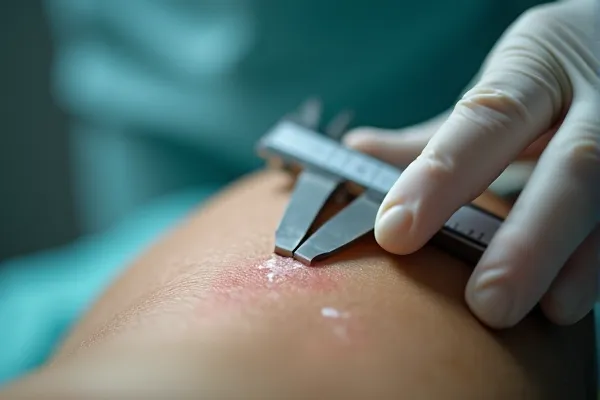
In facial-scar cases, the defense almost always tries one of three angles. We cut them off early.
- Minimize permanence: “It will fade” without any meaningful medical basis.
- Attack causation: “Pre-existing” or “from something else” when photos and records say otherwise.
- Rush closure: early money before the scar stabilizes and long-term impact is clear.
Magnitude expansion: what drives scar settlement value in San Diego
A) Evidence Evaluation in San Diego Cases
Facial scarring is won or lost on how disciplined the record is, not on how angry you are about it.
- Police reports vs medical records: we align the incident details with the initial wound description and treatment timeline.
- Scene photos vs repair documentation: we preserve the defect or hazard evidence and any later repairs that quietly admit the problem.
- Treatment timeline consistency: we keep the scar history clean so the defense cannot argue gaps mean “no real issue.”
B) Settlement vs Litigation Reality
Pre-suit, insurers try to negotiate scars like they are a line item. Post-filing in San Diego Superior Court, they have to defend their valuation with real positions and real documents.
- Future impact is addressed under Civ. Code § 3283, not “maybe someday” language.
- Core damages are grounded under Civ. Code § 3333, which keeps the discussion anchored to legally recognized harm.
- Deadlines and credibility start to matter more than adjuster “preferences.”
C) San Diego-Specific Claim Wrinkles
San Diego has patterns that show up in facial-scar claims: nightlife foot traffic, scooters, uneven sidewalks, and freeway collisions that throw glass, airbags, and debris into faces.
- Traffic density and rear-end patterns still matter because facial lacerations often come from secondary impacts and airbags on I-5, I-805, and I-15.
- Multi-vehicle freeway collisions complicate liability and often trigger multiple insurers trying to shift blame.
- Common Southern California insurer resistance patterns include quick “cosmetic” labels and photo-shopping the injury down with selective images.
Lived Experiences
Crystal
“I was told it was ‘just a small mark.’ Richard made them look at the progression photos and the medical notes, and the conversation finally matched what I was living with every day.”
Taylor
“The adjuster kept pushing me to settle before my follow-ups. Richard slowed it down, built the record, and my case stopped being about minimizing and started being about proof.”
California Statutory Framework & Legal Authority
|
Attorney Advertising, Legal Disclosure & Authorship
ATTORNEY ADVERTISING.
This content is provided for general informational and educational purposes only and does not constitute legal advice.
Under the California Rules of Professional Conduct and applicable State Bar of California advertising regulations,
this material may be considered attorney advertising.
Viewing or reading this content does not create an attorney-client relationship.
Laws and procedures governing personal injury claims vary by jurisdiction and may change over time.
You should consult a qualified California personal injury attorney regarding your specific situation before taking any legal action.
Responsible Attorney:
Richard Morse, California Attorney (Bar No. 289241).
Morse Injury Law is a practice name and location used by Richard Peter Morse III, a California-licensed attorney.
About the Author & Legal Review Process
This article was prepared by the legal editorial team supporting Richard Peter Morse III,
with the goal of explaining California personal injury law and claims procedures in clear, accurate, and practical terms for injured individuals in San Diego and surrounding communities.
Legal Review:
This content was reviewed and approved by Richard Morse, a California-licensed attorney (Bar No. 289241),
who concentrates his practice on personal injury litigation and insurance claim disputes.
With more than 13 years of experience representing injury victims throughout California,
Mr. Morse focuses on serious personal injury matters including motor vehicle collisions, uninsured and underinsured motorist claims,
premises liability, catastrophic injury, and wrongful death.
His practice emphasizes claims evaluation, insurance carrier accountability, and litigation in California courts when fair resolution cannot be achieved.
|