
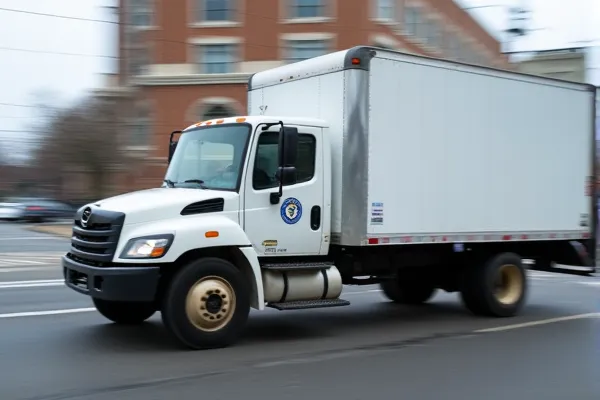
The standard 2-year deadline (CCP § 335.1) does not apply if the defendant is a government entity (e.g., a City bus, a police car, or a dangerous public sidewalk). Under Government Code § 911.2, you must file a specialized claim within 6 MONTHS of the accident. If you miss this window by even one day, your case is likely over forever. We investigate immediately to determine if there is a “hidden” government defendant.

Statute of Limitations & Deadlines in San Diego: what you must do before time does it for you?
Under California Law, the most important rule is simple: you do not “wait to see how you heal” without also protecting your deadlines. Time limits are defenses insurers can win on paper, even when they cannot win on the facts.
How deadline mistakes happen in real San Diego cases

Deadlines are where claims die quietly. Adjusters don’t need to call you a liar if they can call you late. And people get late for normal reasons: surgeries, missed work, kids, and the belief that “insurance will handle it.”
In an anonymized San Diego scenario, a client was injured in a collision near downtown, and early liability looked clear. The case changed when we learned there was a government entity in the chain, triggering a government claim deadline under Gov. Code § 911.2. We kept the civil statute of limitations under CCP § 335.1 in view and prepared for filing in San Diego Superior Court if negotiation turned into delay tactics. The legal strategy was not complicated; it was disciplined: preserve notice, preserve proof, and keep leverage intact.
- Deadlines are not “negotiable”: insurers don’t waive them because you were in treatment.
- Government involvement changes the clock: a six-month notice issue can show up late.
- Medical cases are not normal PI: CCP § 340.5 has its own rules.
Jurisdictional authority: why California Law and San Diego Superior Court venue control leverage
The statute of limitations is the gatekeeper. For most personal injury claims, CCP § 335.1 provides a two-year window to file suit. Miss it and the defendant has a clean, surgical defense that often ends the case, regardless of how bad the injuries are.
In medical malpractice, CCP § 340.5 imposes a different framework, and timing arguments become central early. For public entities, Gov. Code § 911.2 can require a claim presentation within six months, which is why “we’ll handle it later” is often the most dangerous sentence in the file. If litigation becomes necessary, San Diego Superior Court is where deadlines, compliance, and proof get tested in a way an adjuster can’t ignore.
The “Immediate 5”: deadline questions I hear from San Diego injury victims
1) What is the deadline to file a personal injury lawsuit in California?
For most personal injury cases, the statute of limitations is two years under CCP § 335.1, measured from the date of injury in a typical scenario. If you miss that deadline, the defendant can move to defeat the case on timing alone. In practice, you treat the two-year mark as a hard stop and work backward to preserve evidence and prepare for filing.
2) Does medical malpractice have a different statute of limitations in California?
Yes. Medical malpractice is governed by CCP § 340.5, and timing becomes a primary battleground because the statute is not the same as ordinary negligence cases. The defense will scrutinize when the injury occurred, when it was discovered, and whether the claim fits within the statutory framework. If you treat a malpractice case like routine PI, you can lose months you don’t have.
3) What if a government agency or city is involved in my San Diego injury case?
If a public entity is involved, you may need to present a government claim within six months under Gov. Code § 911.2. That is a separate, earlier deadline from the civil statute of limitations and it can apply even when the government involvement is not obvious on day one. When that six-month window is missed, the defense doesn’t debate your damages—they argue you never preserved the right to sue.
4) Can the insurer “extend” my deadline if they are still negotiating?
Not reliably. Negotiations do not stop the clock under CCP § 335.1, and carriers can keep talking while the deadline approaches because it benefits them if you wait. Any extension must be treated as a formal, enforceable agreement, not a friendly email. In the real world, you protect the deadline first and negotiate second.
5) What changes once we file in San Diego Superior Court before the deadline?
Filing before the deadline under CCP § 335.1 removes the defense’s easiest win and forces the case into a controlled process. In San Diego Superior Court, deadlines and compliance become court-managed instead of insurer-managed. That shift is often what stops “delay as a strategy” and turns the conversation back to responsibility and value.
Deadlines are not just dates on a calendar; they are leverage points insurers understand better than injured people do. When the clock is close, the file value drops because the carrier senses fear and urgency.
- Late notice equals reduced leverage: carriers stall when you are close to losing the right to sue.
- Government deadlines are the trap: Gov. Code § 911.2 often applies before victims even know it exists.
- Malpractice timing is technical: CCP § 340.5 is where good cases get lost by misclassification.
Magnitude expansion: how deadline discipline changes case value in San Diego
A) Evidence Evaluation in San Diego Cases
Insurers and defense counsel audit timing because it is an efficient way to cut exposure. Your job is to make timing boring and liability loud.
- Police reports vs medical records: we align incident date, mechanism of injury, and first treatment to prevent “late complaint” arguments.
- Scene photos vs repair documentation: we preserve conditions early, especially when a city, transit agency, or public property is involved.
- Treatment timeline consistency: consistent care supports causation and reduces “gap” attacks that undermine value.
B) Settlement vs Litigation Reality
Pre-suit, carriers can drag their feet while your deadlines approach. Post-filing in San Diego Superior Court, delay gets expensive for them and dangerous for nobody but them.
- Filing under CCP § 335.1 preserves the claim and forces formal responses.
- Government compliance under Gov. Code § 911.2 keeps public entities from winning by paperwork alone.
- Malpractice timing under CCP § 340.5 is treated as a core issue, not an afterthought.
C) San Diego-Specific Claim Wrinkles
San Diego has its own timing traps because public entities and quasi-public contractors show up in places people don’t expect: road work, MTS areas, port operations, and city-managed property.
- Tourism-heavy zones and downtown events can create witness churn, which makes early evidence preservation critical.
- Freeway and ramp collisions often involve Caltrans-related conditions, contractors, or signage issues that raise government-claim questions.
- Southern California carriers frequently use “still investigating” language as a stalling tactic when deadlines are near.
Lived Experiences
Kenneth1
“I thought the insurance claim was the whole case. Richard explained the deadlines, filed what needed filing, and suddenly the adjuster stopped dodging and started talking realistically.”
Paige
“We didn’t even realize a government deadline applied. Richard caught it, preserved the claim, and it prevented the defense from killing the case on a technicality.”
California Statutory Framework & Legal Authority
|
Attorney Advertising, Legal Disclosure & Authorship
ATTORNEY ADVERTISING.
This content is provided for general informational and educational purposes only and does not constitute legal advice.
Under the California Rules of Professional Conduct and applicable State Bar of California advertising regulations,
this material may be considered attorney advertising.
Viewing or reading this content does not create an attorney-client relationship.
Laws and procedures governing personal injury claims vary by jurisdiction and may change over time.
You should consult a qualified California personal injury attorney regarding your specific situation before taking any legal action.
Responsible Attorney:
Richard Morse, California Attorney (Bar No. 289241).
Morse Injury Law is a practice name and location used by Richard Peter Morse III, a California-licensed attorney.
About the Author & Legal Review Process
This article was prepared by the legal editorial team supporting Richard Peter Morse III,
with the goal of explaining California personal injury law and claims procedures in clear, accurate, and practical terms for injured individuals in San Diego and surrounding communities.
Legal Review:
This content was reviewed and approved by Richard Morse, a California-licensed attorney (Bar No. 289241),
who concentrates his practice on personal injury litigation and insurance claim disputes.
With more than 13 years of experience representing injury victims throughout California,
Mr. Morse focuses on serious personal injury matters including motor vehicle collisions, uninsured and underinsured motorist claims,
premises liability, catastrophic injury, and wrongful death.
His practice emphasizes claims evaluation, insurance carrier accountability, and litigation in California courts when fair resolution cannot be achieved.
|