
Legal & Tax Disclosure
ATTORNEY ADVERTISING.
This article is provided for general informational purposes only and does not constitute legal, financial, or tax advice.
Reading this content does not create an attorney-client or professional advisory relationship.
Laws vary by jurisdiction and are subject to change. You should consult a qualified professional regarding your specific circumstances. |
Phantom vehicle claims in San Diego—accidents caused by an unidentified driver who flees without stopping—are strictly governed by California Insurance Code § 11580.2. To unlock Uninsured Motorist (UM) benefits in 2026, you must navigate three non-negotiable hurdles: proving “actual physical contact” (including debris or chain-reaction strikes), reporting the incident to law enforcement within 24 hours, and filing a sworn statement with your carrier within 30 days. At Morse Injury Law, we specialize in “Corroborative Evidence” strategies—using dashcam metadata, witness statements, and paint-transfer forensics to prove the existence of the phantom driver. Whether your crash occurred on the I-805 or the 405, we build trial-ready files for San Diego Superior Court to ensure your own insurance company honors the coverage you’ve paid for.
Kevin had a car cut across him on I-8 near Mission Valley—no plate, no stop, just a blur that forced him into the divider. The airbags went off, his wrist snapped, and his neck locked up by that night. By the time he realized the “other driver” was never coming back, the bills were already piling up and the insurer was circling the easiest denial. $18,640.
Uninsured Motorist “Phantom Vehicle” Claims in San Diego: what must you do first under California Law?
If a hit-and-run driver forces your crash and disappears, your first job is to build proof like a trial is coming—because your insurer will evaluate it that way. Under California Law, a “phantom vehicle” UM claim lives or dies on corroboration and clean timelines, not on frustration or fairness.
What a real San Diego phantom-vehicle UM case looks like when it turns into litigation leverage
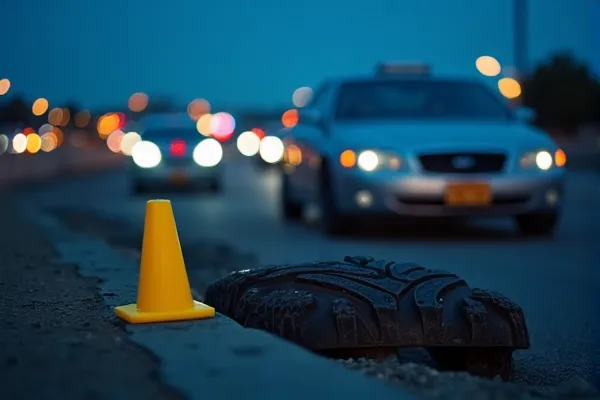
I’ve handled the “no-contact” and “no-plate” cases where the physical injuries are obvious, but the insurer treats liability like a loophole hunt. One San Diego client was pushed out of lane on SR-163 during a dense merge, clipped the curb, and rolled into a second impact. CHP documented the scene, but the adjuster immediately framed it as “single-vehicle loss” and started fishing for anything inconsistent in the treatment timeline.
We treated it the way California Law requires you to treat any disputed UM file: lock down the independent evidence early, map out sequence-of-events with objective data, and pressure-test every gap the carrier will exploit. When the insurer still tried to deny based on “phantom vehicle” proof issues, we prepared the matter for the dispute forum these cases usually live in—UM arbitration—with a trial-ready record that would hold up if the fight had to be pushed into San Diego Superior Court for related litigation issues.
Why venue and California Law matter in phantom vehicle claims
California Law controls what qualifies as an uninsured motor vehicle when the owner or operator is unknown, and it also dictates the dispute process for many UM claims. That isn’t academic—phantom vehicle cases are where insurers lean hardest on technical defenses, because there’s no opposing liability policy to negotiate with and no identified driver to depose.
- Proof standards shift fast when the other driver disappears, and carriers look for statutory hooks to argue “not covered” rather than “not enough money.”
- San Diego Superior Court venue realities influence leverage, because the insurer knows what discovery, subpoenas, and evidentiary pressure look like when a file is built like a courtroom case instead of an adjuster narrative.
- Timing discipline matters more than usual—phantom vehicle claims often start as a coverage argument, then become a credibility argument, then turn into a valuation argument. If your documentation is late or sloppy, you hand the carrier free ammunition.
The “Immediate 5”: the questions San Diego people ask when the other car vanishes
Do I need physical contact to make a San Diego “phantom vehicle” uninsured motorist claim?
California’s UM statute addresses unknown drivers and the conditions under which an “uninsured motor vehicle” includes a hit-and-run or unidentified operator. The insurer will test your case against the statutory language in Insurance Code § 11580.2, including the provisions aimed at preventing fabricated “phantom vehicle” losses.
Practically: carriers look for objective corroboration—scene evidence, independent witnesses, contemporaneous reporting, and consistent medical timing—because they know phantom-vehicle claims are where coverage defenses get traction. If your evidence is thin, they don’t “value it lower”; they try to defeat coverage outright.
What should I do in the first 24 hours after a phantom vehicle crash in San Diego?
Phantom vehicle claims are won on early documentation, not late explanations. The playbook is simple and unforgiving: call 911 or CHP when appropriate, get medical evaluation the same day if you’re symptomatic, and preserve every piece of time-stamped proof (photos, dashcam, app location history, tow paperwork, and names/contacts for witnesses).
If the hit-and-run involved injury, California imposes duties on drivers to stop and provide information—duties the phantom driver violated—under Vehicle Code § 20001. That matters because your insurer will measure how quickly and consistently you acted after a hit-and-run that, by definition, leaves no cooperative defendant.
How is fault decided when there is no identified driver to blame?
Fault still gets decided the same way: by reconstructing what happened and proving the unknown driver’s negligence caused you to take evasive action, lose control, or collide. In a phantom vehicle case, that reconstruction depends heavily on objective anchors—skid marks, roadway geometry, vehicle damage patterns, event data recorder downloads when available, and independent witness accounts.
Under Insurance Code § 11580.2, the insurer knows the “unknown operator” concept exists, but it also knows phantom claims are where credibility gets attacked. So the real question isn’t “who do we sue?”—it’s “how do we prove sequence-of-events well enough that a neutral decision-maker can’t dismiss it as speculation?”
Will my UM claim be forced into arbitration, and what changes once it’s set?
Many California UM disputes are resolved through the UM arbitration process established by statute, including the framework in Insurance Code § 11580.2. That’s why I build these files like trials: arbitration is still evidence-driven, and the insurer’s defenses don’t get “softer” just because it isn’t a jury.
- Discovery and subpoenas become a strategy question—you don’t get to assume informal cooperation in a contested UM matter.
- Medical timing gets stress-tested because insurers argue “late care = unrelated injury,” especially in soft tissue, spine, and headache cases.
- Damages become about proof: objective findings, functional loss, and credible future care projections, not just pain descriptions.
How long do I have, and what deadlines actually matter when the insurer pushes back?
There’s a hard public deadline for bodily injury actions in California: Code of Civil Procedure § 335.1 sets the general two-year limitations period for personal injury. In phantom vehicle cases, that deadline matters because it frames the underlying liability timeline the insurer will use to argue prejudice, delay, or diminished proof value.
Separately, UM policies can impose notice and procedure requirements that insurers use as leverage even when the statute of limitations hasn’t expired. The safest approach is to assume every week of delay makes your proof weaker—and in phantom vehicle claims, “weaker” often means “denied.”
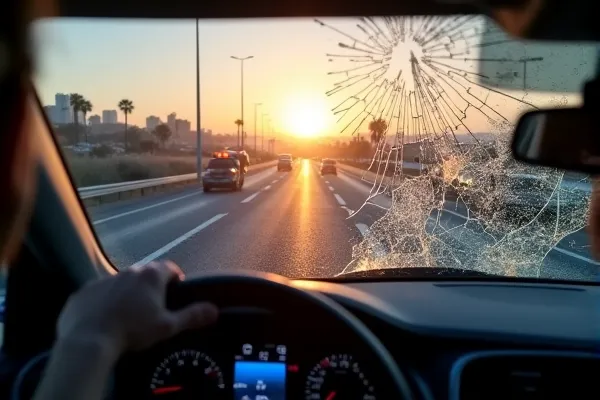
In San Diego, phantom vehicle claims often start on freeways and merges—SR-94, I-5, I-805—where traffic density makes witness identification difficult and insurers know it. The carrier’s first move is usually to reframe the crash as “driver error” or “single vehicle,” because that narrative undercuts UM coverage and damages at the same time.
That’s why you document early like you’re proving it to someone who doesn’t want to believe it. If you can’t corroborate the phantom vehicle’s role with clean, independent proof, you’ve handed the insurer its easiest defense.
Magnitude expansion: how these cases are actually evaluated in San Diego
Evidence Evaluation in San Diego Cases
In phantom vehicle files, I assume the insurer will treat “missing” evidence as a reason to deny rather than a reason to investigate. Here’s what moves the needle in real claims handling:
- Police reports vs. medical records: a report helps, but treatment timing and consistent symptom reporting are what insurers use to attack causation.
- Scene photos vs. repair documentation: photos show lane geometry, debris, signage, and impact points; repair records show force and directionality.
- Treatment timeline consistency: gaps become arguments. If symptoms are real, the record must show continuity.
- San Diego claims reality: carriers know freeway merges generate “he said / no one said” disputes, so they demand corroboration early and punish delay.
Settlement vs Litigation Reality
Once a dispute hardens, the insurer’s risk analysis changes. If the file is built like it can survive formal scrutiny—subpoena-proof witnesses, objective medical support, and a coherent reconstruction—the carrier starts pricing risk instead of pricing excuses.
When a matter touches San Diego Superior Court issues or litigation posture, the insurer also accounts for procedural consequences: motions, discovery enforcement, and what it costs to defend a file that won’t collapse under pressure. You don’t need theatrics—you need a record that doesn’t blink.
San Diego-Specific Claim Wrinkles
There are patterns here I see over and over:
- Traffic density and merge behavior create more “forced evasive action” crashes with fewer identifiable witnesses.
- Multi-vehicle freeway collisions invite blame-shifting, and phantom vehicle allegations are an easy target if your proof is late.
- Southern California insurer resistance patterns show up early: recorded statement traps, “single vehicle” reframes, and medical causation attacks aimed at minimizing non-objective injuries.
Lived Experiences
Mary
“The insurer acted like the other car ‘not existing’ meant my injuries didn’t count. Once my attorney organized the evidence and timeline, the denial posture changed and the process stopped feeling like a setup.”
Jacob
“I thought a hit-and-run with no plate meant I was stuck. The case got treated seriously once the documentation was handled like a real dispute, not a phone call with an adjuster.”
California Statutory Framework & Legal Authority
Attorney Advertising, Legal Disclosure & Authorship
ATTORNEY ADVERTISING.
This content is provided for general informational and educational purposes only and does not constitute legal, financial, or tax advice.
Under the California Rules of Professional Conduct and State Bar advertising regulations, this material may be considered attorney advertising.
Reading this content does not create an attorney-client relationship or any professional advisory relationship.
Laws vary by jurisdiction and are subject to change, including recent 2026 developments under California’s AB 2016 and evolving federal estate and reporting requirements.
You should consult a qualified attorney or advisor regarding your specific circumstances before taking action.
Responsible Attorney:
Richard Morse, California Attorney (Bar No. 289241).
Morse Injury Law is a practice location and trade name used by Richard Peter Morse III, a California-licensed attorney.
About the Author & Legal Review Process
This article was researched and drafted by the Legal Editorial Team of Richard Peter Morse III,
a collective of attorneys, legal writers, and paralegals dedicated to translating complex legal concepts into clear, accurate guidance.
Legal Review:
This content was reviewed and approved by Richard Morse, a California-licensed attorney (Bar No. 289241).
Mr. Morse concentrates his practice in estate planning and estate administration, advising clients on proactive planning strategies and representing fiduciaries in probate and trust administration proceedings when formal court involvement becomes necessary.
With more than 13 years of experience in California personal injury law,
Mr. Morse focuses on structuring enforceable estate plans, guiding fiduciaries through court-supervised proceedings,
resolving creditor and notice issues, and coordinating asset management to support compliant, timely distributions and reduce fiduciary risk. |